
October 2026 BBG eBook Deals
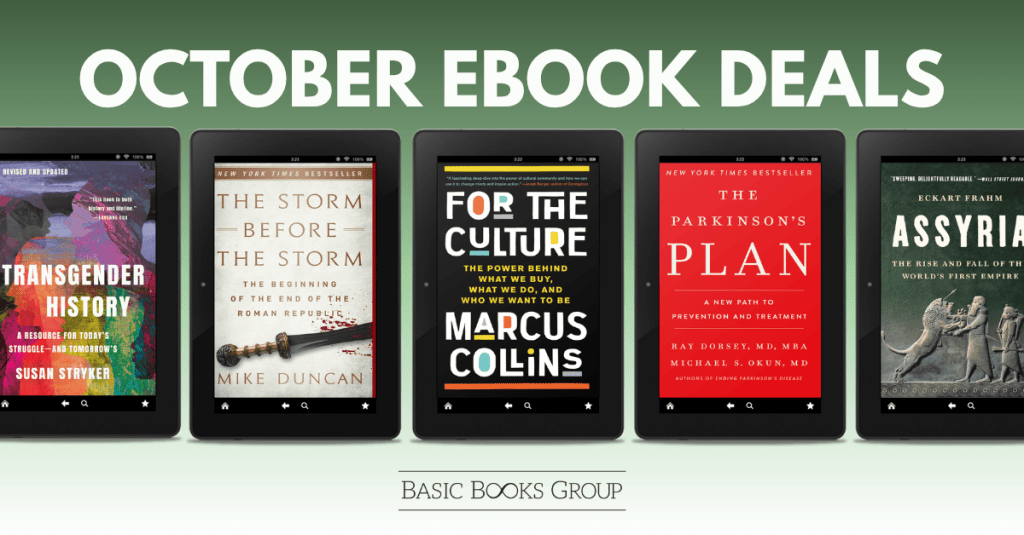
October 2026 BBG eBook Deals from Basic Books Group
We’re excited to share that many of our bestselling titles are on sale this month in digital formats! Select your preferred third-party eBook retailer using the buttons below to purchase these titles for under $3!
* $1.99 or $2.99 promo price only available from October 1, 2026–October 31, 2026 on US orders only from non-HBG third party ebook retailers.

In For the Culture, Marcus Collins argues that true cultural engagement is the most powerful vehicle for influencing behavior. If you want to get people to move, you must first understand the underlying cultural forces that make them tick.
Collins uses stories from his own work as an award-winning marketer—from spearheading digital strategy for Beyoncé, to working on Apple and Nike collaborations, to the successful launch of the Brooklyn Nets NBA team—to break down the ways in which culture influences behavior and how readers can do the same. With a deep perspective built on a century’s worth of data, For the Culture gives readers the tools they need to inspire collective change by leveraging the cheat codes used by some of the biggest brands in the world.
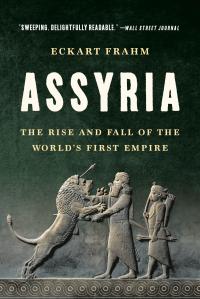
“Truly extraordinary.” —Times (London)
At its height in 660 BCE, the kingdom of Assyria stretched from the Mediterranean Sea to the Persian Gulf. It was the first empire the world had ever seen. Here, historian Eckart Frahm tells the epic story of Assyria and its formative role in global history.
Assyria’s wide-ranging conquests have long been known from the Hebrew Bible and later Greek accounts. But nearly two centuries of research now permit a rich picture of the Assyrians and their empire beyond the battlefield: their vast libraries and monumental sculptures, their elaborate trade and information networks, and the crucial role played by royal women.
Although Assyria was crushed by rising powers in the late seventh century BCE, its legacy endured from the Babylonian and Persian empires to Rome and beyond. Assyria is a stunning and authoritative account of a civilization essential to understanding the ancient world and our own.
A groundbreaking prescriptive guide to preventing and fighting Parkinson’s disease
“The Parkinson’s Plan meets this moment with science, clarity, and a path forward.” (Sanjay Gupta, chief medical correspondent, CNN)
In The Parkinson’s Plan, two doctors on the cutting edge of Parkinson’s research detail the steps necessary to prevent, slow, and treat this debilitating condition. They show readers how to prevent the disease through the food we eat, the water we drink, the air we breathe, and the lifestyles we live. They introduce the “Parkinson’s 25,” the most detailed checklist ever created to allow anyone to lower their risk of Parkinson’s. They interview the world’s top scientists, clinicians, and thought leaders in the Parkinson’s field to offer a detailed plan for treatment that includes cutting-edge methods and recent technological and medical advances.
The Parkinson’s Plan takes the next step in winning the battle against Parkinson’s, presenting a clear road map with the strategies and tactics necessary to create a world where the disease is increasingly rare and the treatments are more successful.
“The story is tragic, the scholarship exhilarating” (Elliott West, author of The Contested Plains) in this history of the massacre of the Lakota Sioux
On December 29, 1890, American troops opened fire with howitzers on hundreds of unarmed Lakota Sioux men, women, and children near Wounded Knee Creek in South Dakota, killing nearly 300 Sioux. As acclaimed historian Heather Cox Richardson shows in Wounded Knee, the massacre grew out of a set of political forces all too familiar to us today: fierce partisanship, heated political rhetoric, and an irresponsible, profit-driven media.
Richardson tells a dramatically new story about the Wounded Knee massacre, revealing that its origins lay not in the West but in the corridors of political power back East. Politicians in Washington, Democrat and Republican alike, sought to set the stage for mass murder by exploiting an age-old political tool – fear.
Assiduously researched and beautifully written, Wounded Knee will be the definitive account of an epochal American tragedy.
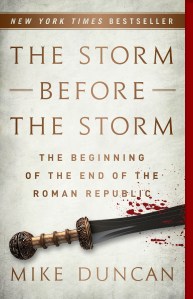
“Remarkably engaging.” —Washington Post
The Roman Republic was one of the most remarkable achievements in the history of civilization. Beginning as a small city-state in central Italy, Rome gradually expanded into a wider world filled with petty tyrants, barbarian chieftains, and despotic kings. Through the centuries, Rome’s model of cooperative and participatory government remained remarkably durable and unmatched in the history of the ancient world.
In 146 BC, Rome finally emerged as the strongest power in the Mediterranean. But the very success of the Republic proved to be its undoing. The republican system was unable to cope with the vast empire Rome now ruled: rising economic inequality disrupted traditional ways of life, endemic social and ethnic prejudice led to clashes over citizenship and voting rights, and rampant corruption and ruthless ambition sparked violent political clashes that cracked the once indestructible foundations of the Republic.
Chronicling the years 146-78 BC, The Storm Before the Storm dives headlong into the first generation to face this treacherous new political environment. Abandoning the ancient principles of their forbearers, men like Marius, Sulla, and the Gracchi brothers set dangerous new precedents that would start the Republic on the road to destruction and provide a stark warning about what can happen to a civilization that has lost its way.
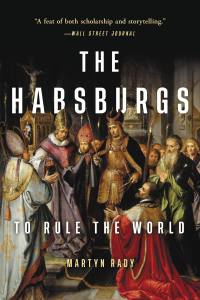
“A feat of both scholarship and storytelling.” —Wall Street Journal
In The Habsburgs, Martyn Rady tells the epic story of a dynasty and the world it built—and then lost—over nearly a millennium. From modest origins, the Habsburgs gained control of the Holy Roman Empire in the fifteenth century. Then, in just a few decades, their possessions rapidly expanded to take in a large part of Europe, stretching from Hungary to Spain, and parts of the New World and the Far East. The Habsburgs continued to dominate Central Europe through the First World War.
Historians often depict the Habsburgs as leaders of a ramshackle empire. But Rady reveals their enduring power, driven by the belief that they were destined to rule the world as defenders of the Roman Catholic Church, guarantors of peace, and patrons of learning. The Habsburgs is the definitive history of a remarkable dynasty that forever changed Europe and the world.
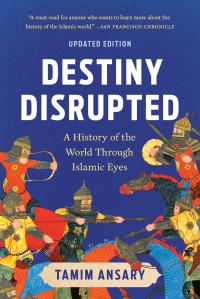
We in the West share a common narrative of world history. But our story largely omits a whole civilization whose citizens shared an entirely different narrative for a thousand years as the Islamic world saw it, from the time of Mohammed through the fall of the Ottoman Empire to the events of 9/11 and beyond.
In Destiny Disrupted, Tamim Ansary tells the rich story of world history as the Islamic world saw it. He clarifies why our civilizations grew up oblivious to each other, what happened when they intersected, and how the Islamic world was affected by its slow recognition that Europe—a place it long perceived as primitive and disorganized—had somehow hijacked destiny.
With sympathy to Muslim and Western perspectives alike, Destiny Disrupted offers a fresh and vital perspective on world conflicts we thought we understood.
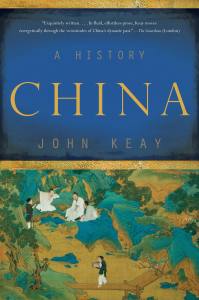
“Exquisitely written.” —Guardian
Many nations define themselves in terms of territory or people; China defines itself in terms of history. Taking into account the country’s unrivaled, voluminous tradition of history writing, John Keay has composed a vital and illuminating overview of the nation’s complex and vivid past.
Keay’s authoritative history examines 5,000 years in China, from the time of the Three Dynasties through Chairman Mao and the recent economic transformation of the country. Crisp, judicious, and engaging, China is the classic single-volume history for anyone seeking to understand the present and future of this immensely powerful nation.
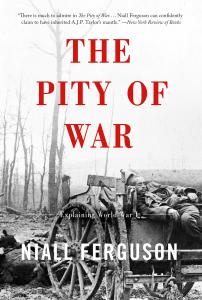
“A rich and provocative book, evocative and heartbreaking.” — Atlantic
The Pity of War makes a simple and provocative argument: the human atrocity known as the Great War was entirely England’s fault. According to Niall Ferguson, England entered into war based on naive assumptions of German aims, thereby transforming a Continental conflict into a world war, which it then badly mishandled, necessitating American involvement. The war was not inevitable, Ferguson argues, but rather was the result of the mistaken decisions of individuals who would later claim to have been in the grip of huge impersonal forces.
That the war was wicked, horrific, and inhuman is memorialized in part by the poetry of men like Wilfred Owen and Siegfried Sassoon, but also by cold statistics. Indeed, more British soldiers were killed in the first day of the Battle of the Somme than Americans in the Vietnam War. And yet, as Ferguson writes, while the war itself was a disastrous folly, the great majority of men who fought it did so with little reluctance and with some enthusiasm.
For anyone wanting to understand why wars are fought, why men are willing to fight them and why the world is as it is today, there is no sharper or more stimulating guide than Niall Ferguson’s The Pity of War.
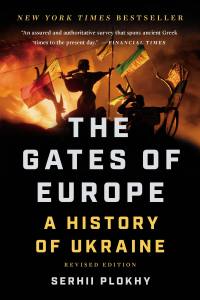
“An admirable new history…. In his elegant and careful exposition of Ukraine’s past, Mr. Plokhy has also provided some signposts to the future.” ―Economist
As Ukraine is embroiled in an ongoing struggle with Russia to preserve its territorial integrity and political independence, celebrated historian Serhii Plokhy explains that today’s crisis is a case of history repeating itself: the Ukrainian conflict is only the latest in a long history of turmoil over Ukraine’s sovereignty. Situated between Central Europe, Russia, and the Middle East, Ukraine has been shaped by empires that exploited the nation as a strategic gateway between East and West—from the Romans and Ottomans to the Third Reich and the Soviet Union.
In The Gates of Europe, Plokhy examines Ukraine’s search for its identity through the lives of major Ukrainian historical figures, from its heroes to its conquerors. As Ukraine once again finds itself at the center of global attention, Plokhy brings its history to vivid life as he connects the nation’s past with its present and future.
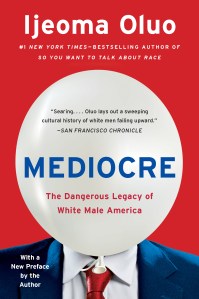
What happens to a country that tells generation after generation of white men that they deserve power? What happens when success is defined by status over women and people of color, instead of by actual accomplishments?
Through the last 150 years of American history — from the post-reconstruction South and the mythic stories of cowboys in the West, to the present-day controversy over NFL protests and the backlash against the rise of women in politics — Ijeoma Oluo exposes the devastating consequences of white male supremacy on women, people of color, and white men themselves. Mediocre investigates the real costs of this phenomenon in order to imagine a new white male identity, one free from racism and sexism.
As provocative as it is essential, this book will upend everything you thought you knew about American identity and offers a bold new vision of American greatness.
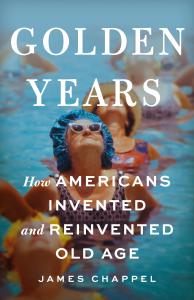
On farms and in factories, Americans once had little choice but to work until death. As the nation prospered, a new idea was born: the right to a dignified and secure old age. That project has benefited millions, but it remains incomplete—and today it’s under siege.
In Golden Years, historian James Chappel shows how old age first emerged as a distinct stage of life and how it evolved over the last century, shaped by politicians’ choices, activists’ demands, medical advancements, and cultural models from utopian novels to The Golden Girls. Only after World War II did government subsidies and employer pensions allow people to retire en masse. Just one generation later, this model crumbled. Older people streamed back into the workforce, and free-market policymakers pushed the burdens of aging back onto older Americans and their families. We now confront an old age mired in contradictions: ever longer lifespans and spiraling health-care costs, 401(k)s and economic precarity, unprecedented opportunity and often disastrous instability.
As the population of older Americans grows, Golden Years urges us to look to the past to better understand old age today—and how it could be better tomorrow.
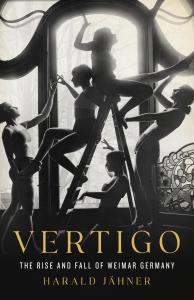
Out of the ashes of the First World War, Germany launched an unprecedented political project: its first democratic government. The Weimar Republic, named for the city where it was established, endured for only fifteen years before it was toppled by the insurgent Nazi Party in 1933. In Vertigo, prizewinning historian Harald Jähner tells the Republic’s full story, capturing a nation caught in a whirlwind of uncertainty and struggling toward a better future.
In the aftermath of World War I, Germany was buffeted by political partisanship, economic upheaval, and the constant threat of revolutionary violence. At the same time, many Germans embraced newly liberated lifestyles. They flouted gender norms, flooded racetracks and dance halls, and fostered a vibrant avant-garde that encompassed groundbreaking artists like filmmaker Fritz Lang, painter Wassily Kandinsky, and architect Walter Gropius. But this new Germany sparked a reactionary backlash that led to the Republic’s fall to the Nazis and, ultimately, the conflagration of World War II.
Blending deeply researched political history with the firsthand experiences of everyday people, Vertigo is a vital, kaleidoscopic portrait of a pivotal moment in German history.
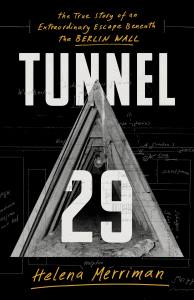
In September 1961, at the height of the Cold War, 22-year-old Joachim Rudolph escaped from East Germany, one of the world’s most brutal regimes. He’d risked everything to do it. Then, a few months later, working with a group of students, he picked up a spade… and tunneled back in.
The goal was to tunnel into the East to help people escape. They spend months digging, hauling up carts of dirt in a tunnel ventilated by stove pipes. But the odds are against them: a Stasi agent infiltrates their group and on their first attempt, and dozens of escapees and some of the diggers are arrested and imprisoned. Despite the risk of prison and death, a month later, Joachim and the other try again and hit more bad luck: the tunnel springs a leak. After several attempts, run-ins with a spy and secret police, and some unlikely financial aid from an American TV network, they finally break through into the East, and free 29 people.
This is the story of their great escape, the NBC documentary crew that filmed it, and the U.S. government’s attempts to block the film from ever seeing the light of day. But more than anything, this is the story of what people will do to be free.
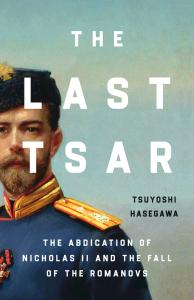
The definitive history of the self-destruction of the autocratic Romanov dynasty.
“Filled with revelations and fresh insights and rich with observations.” —The Wall Street Journal
In 1917, Imperial Russia faced a series of overlapping crises, from war to social unrest, that culminated in Tsar Nicholas II’s dramatic fall from power. Though Nicholas’s life is often described as tragic, a trove of new archival discoveries confirms that it was not fate that doomed the monarchy, but the tsar’s own poor leadership, blinkered faith in autocracy, and resistance to reform. The Last Tsar untangles the struggles between the era’s captivating personalities: the increasingly isolated Nicholas and Alexandra and the factions of scheming nobles, ruthless legislators, and pragmatic generals who sought to stabilize the restive Russian Empire either with the tsar or without him.
Definitive and engrossing, The Last Tsar uncovers how Nicholas II stumbled into revolution, taking his family, the Romanov dynasty, and the whole Russian Empire down with him.
“Gripping.” —New York Times
“A stinging indictment of slavery.” —NPR Books?
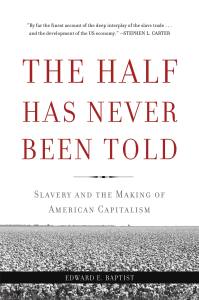
Americans tend to cast slavery as a pre-modern institution—the nation’s original sin, perhaps, but isolated in time and divorced from America’s later success. But to do so robs the millions who suffered in bondage of their full legacy. As historian Edward E. Baptist reveals in The Half Has Never Been Told, the expansion of slavery in the first eight decades after American independence drove the evolution and modernization of the United States.
In the span of a single lifetime, the South grew from a narrow coastal strip of worn-out tobacco plantations to a continental cotton empire, and the United States grew into a modern, industrial, and capitalist economy. Told through the intimate testimonies of survivors of slavery, plantation records, newspapers, as well as the words of politicians and entrepreneurs, The Half Has Never Been Told offers a radical new interpretation of American history.
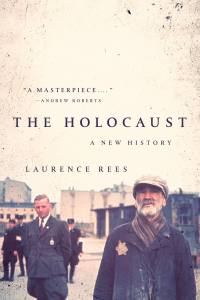
Laurence Rees has spent twenty-five years meeting survivors and perpetrators of the Holocaust. Now, he combines their never-before-seen eyewitness testimony with the latest academic research to create a uniquely accessible and authoritative account of the Holocaust.
In The Holocaust, Rees offers an examination of the decision-making process of the Nazi state, and in the process reveals the series of escalations that cumulatively created the horror. He argues that while hatred of the Jews was always at the epicenter of Nazi thinking, what happened cannot be fully understood without considering the murder of the Jews alongside plans to kill large numbers of non-Jews, including the disabled, Sinti, and Roma, plus millions of Soviet civilians.
Through a chronological, intensely readable narrative, featuring enthralling eyewitness testimony and the latest academic research, this is a compelling new account of the worst crime in history.
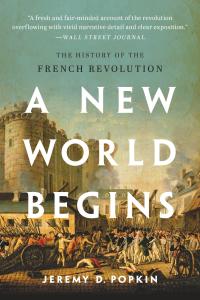
“A fresh and fair-minded account of the revolution overflowing with vivid narrative detail and clear exposition.” —Wall Street Journal
The French Revolution’s principles of liberty and equality still shape our ideas of a just society—even if, after more than two hundred years, their meaning is more contested than ever before. In A New World Begins, Jeremy D. Popkin offers a riveting account of the revolution that puts the reader in the thick of the debates and the violence that led to the overthrow of the monarchy and the establishment of a new society. We meet Mirabeau, Robespierre, and Danton, in all their brilliance and vengefulness; we witness the failed escape and execution of Louis XVI; we see women demanding equal rights and Black slaves wresting freedom from revolutionaries who hesitated to act on their own principles; and we follow the rise of Napoleon out of the ashes of the Reign of Terror.
Based on decades of scholarship, A New World Begins will stands as the definitive treatment of the French Revolution.
“Mojica Rodríguez’s electrifying debut channels mesmeric prose to heal the wounds of white supremacy.” —Los Angeles Times
For generations, Brown girls have had to push against powerful forces of sexism, racism, and classism, often feeling alone in the struggle. By founding Latina Rebels, Prisca Dorcas Mojica Rodríguez has created a community to help women fight together. In For Brown Girls with Sharp Edges and Tender Hearts, she offers wisdom and a liberating path forward for all women of color. She crafts powerful ways to address the challenges Brown girls face, from imposter syndrome to colorism. She empowers women to decolonize their worldview, and defy “universal” white narratives, by telling their own stories. Her book guides women of color toward a sense of pride and sisterhood and offers essential tools to energize a movement.
May it spark a fire within you.
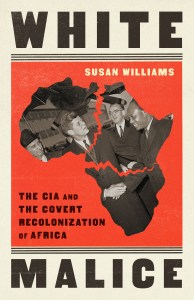
“Fascinating information, original research, and bold ideas.” —NPR
“A triumph of archival research.” —Jacobin
In 1958 in Accra, Ghana, the Hands Off Africa conference brought together the leading figures of African independence in a public show of political strength and purpose. The charismatic Kwame Nkrumah, who had just won Ghana’s independence, led a determined appeal for Pan-Africanism.
Young, idealistic leaders across the continent, as well as African Americans seeking civil rights at home, heeded his call. Yet, a moment that signified a new era of African freedom simultaneously marked a new era of foreign intervention and control. In White Malice, Susan Williams unearths the CIA’s covert operations from Ghana to the Congo to the UN, which frustrated the attempts of Africa’s new generation of nationalist leaders to establish democratic governance. These revelations dramatically upend the conventional wisdom that African nations failed to establish effective, democratic states on their own accord. As the old European powers moved out, the US moved in.
Drawing on original research and recently declassified documents, Williams introduces readers to idealistic African leaders and to the secret agents, ambassadors, and even presidents who deliberately worked against them, forever altering the future of a continent.
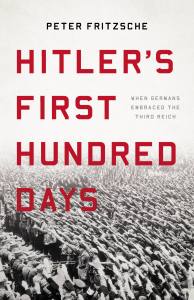
Amid the ravages of economic depression, Germans in the early 1930s were pulled to political extremes both left and right. Then, in the spring of 1933, Germany turned itself inside out, from a deeply divided republic into a one-party dictatorship. In Hitler’s First Hundred Days, award-winning historian Peter Fritzsche offers a probing account of the pivotal moments when the majority of Germans seemed, all at once, to join the Nazis to construct the Third Reich. Fritzsche examines the events of the period—the elections and mass arrests, the bonfires and gunfire, the patriotic rallies and anti-Jewish boycotts—to understand both the terrifying power the National Socialists exerted over ordinary Germans and the powerful appeal of the new era they promised.
Hitler’s First Hundred Days is the chilling story of the beginning of the end, when one hundred days inaugurated a new thousand-year Reich.
Transgender History is the modern classic on transgender life in America since the nineteenth century, encompassing the major movements, writings, and events that shape today’s gender revolution.
Susan Stryker’s sweeping, intersectional account charts more than a century of history, showing how rising acceptance in the 1960s and 2010s was met with waves of bigotry and intolerance that began in the ’70s and continue today.
Through her explanation of central concepts and terms, informative sidebars, and brief biographies of trans pioneers, Stryker reminds readers of one crucial truth: Transgender people have always been here. In good times and bad, they’ve built supportive and expansive communities, battled for freedom, and transformed American culture and society in the process.
Now completely revised and updated, including a longer, global history and a timely chronicle of the latest wave of anti-trans backlash, Transgender History remains both a vital resource and a powerful testament to the enduring legacy of trans lives.
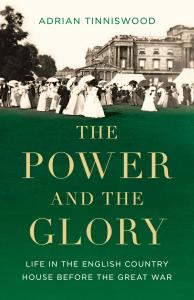
For generations, the great palaces of Britain were home to living histories, noble families that had reigned for centuries. But by the end of the nineteenth century, members of elite society found themselves, for the first time, in the company of arrivistes. Their new neighbors—from chorus girls to millionaire greengrocers to guano impresarios—lacked lineage and were unencumbered by the weight of tradition.
In The Power and the Glory, historian Adrian Tinniswood reconstructs life in the country house during its golden age before the Great War, when Britain ruled over a quarter of the earth’s population and its stately homes were at their most opulent. But change was on the horizon: the landed classes were being forced to grapple not only with new neighbors, but also with new social norms and expectations.
An exuberant story, The Power and the Glory offers a delicious, captivating, and often scandalous history of the British country house.
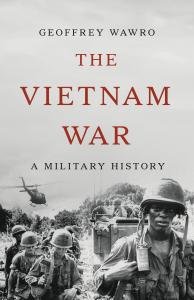
The Vietnam War cast a shadow over the American psyche from the moment it began. In its time it sparked budget deficits, campus protests, and an erosion of US influence around the world. Long after the last helicopter evacuated Saigon, Americans have continued to battle over whether it was ever a winnable war.
Based on thousands of pages of military, diplomatic, and intelligence documents, Geoffrey Wawro’s The Vietnam War offers a definitive account of a war of choice that was doomed from its inception. In devastating detail, Wawro narrates campaigns where US troops struggled even to find the enemy in the South Vietnamese wilderness, let alone kill sufficient numbers to turn the tide in their favor. Yet the war dragged on, prolonged by presidents and military leaders who feared the political consequences of accepting defeat. In the end, no number of young lives lost or bombs dropped could prevent America’s ally, the corrupt South Vietnamese regime, from collapsing the moment US troops retreated.
Broad, definitive, and illuminating, The Vietnam War offers an unsettling, resonant story of the limitations of American power.
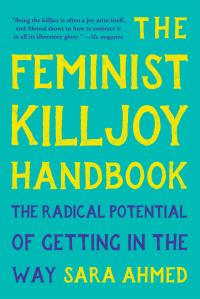
Do you refuse to laugh at offensive jokes? Have you ever been accused of ruining dinner by pointing out your companion’s sexist comment? Are you often told to stop being so “woke”? If so, you might be a feminist killjoy—and this handbook is for you. In this book, feminist theorist Sara Ahmed shows how killing joy can be a radical world-making project.
Presenting sharp analysis of literature, film, and influential feminist works, and drawing on her own experiences as a queer feminist scholar-activist of color, Ahmed reveals the invaluable lessons of the feminist killjoy, from the importance of asking questions to the power of the eye roll. The Feminist Killjoy Handbook offers an outstretched hand to feminist killjoys everywhere and an essential intellectual guide to the transformative power of getting in the way.
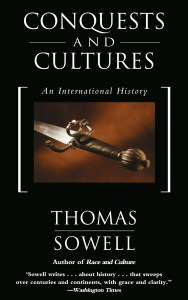
“Sowell writes with grace and clarity.” —Washington Post
Conquests and Cultures is the culmination of 15 years of research and travels that have taken the author completely around the world twice, as well as on other travels in the Mediterranean, the Baltic, and around the Pacific rim. Its purpose has been to try to understand the role of cultural differences within nations and between nations, today and over centuries of history, in shaping the economic and social fates of peoples and of whole civilizations.
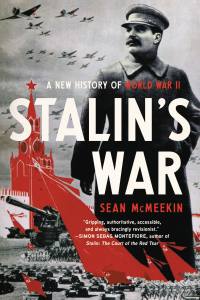
“A provocative revisionist take on the Second World War … McMeekin is a formidable researcher.” —Financial Times
We remember World War II as a struggle between good and evil, with Hitler propelling events and the Allied powers saving the day. But Hitler’s armies did not fight in multiple theaters, his empire did not span the Eurasian continent, and he did not inherit the spoils of war. That role belonged to Joseph Stalin.
Hitler’s genocidal ambition may have unleashed Armageddon, but as celebrated historian Sean McMeekin shows, the conflicts that emerged were distinctly shaped by Stalin’s maneuverings, orchestrated to unleash a war between Germany and her capitalist adversaries in Europe and between Japan and the “Anglo-Saxon” powers in Asia.
Meanwhile, the United States and Britain’s self-defeating strategy of supporting Stalin and his armies at all costs allowed the Soviets to conquer most of Eurasia, from Berlin to Beijing, for Communism. A groundbreaking reassessment, Stalin’s War is essential reading for anyone looking to understand the roots of the current world order.