
PublicAffairs & Bold Type Books – Ebook Deals – June 2023
MONTHLY DEALS
June 1, 2023 – June 30, 2023
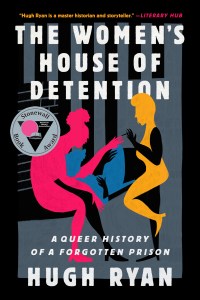
This "crucial" (The Advocate) and "compelling" (BuzzFeed) history of a prison, and the queer women and trans people held there, is a window into the policing of queerness and radical politics in the twentieth century.
The Women’s House of Detention, a landmark that ushered in the modern era of women’s imprisonment, is now largely forgotten. But when it stood in New York City’s Greenwich Village, from 1929 to 1974, it was a nexus for the tens of thousands of individuals who inhabited its crowded cells.
Historian Hugh Ryan reconstructs the little-known lives of these incarcerated New Yorkers, making a uniquely queer case for prison abolition—and demonstrating that by queering the Village, the House of Detention helped define queerness for the rest of America. From the lesbian communities forged through the Women’s House of D to the turbulent prison riots that presaged Stonewall, this is the story of one building and much more: the people it caged, the neighborhood it changed, and the resistance it inspired.
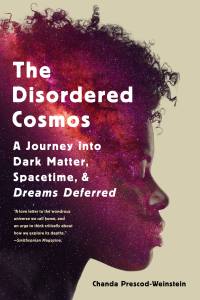
From a star theoretical physicist, “a love letter to the wonderous universe we call home, and an urge to think critically about how we explore its depths” (Smithsonian Magazine)
In The Disordered Cosmos, Dr. Chanda Prescod-Weinstein shares her love for physics, from the Standard Model of Particle Physics and what lies beyond it, to the physics of melanin in skin, to the latest theories of dark matter—all with a new spin informed by history, politics, and the wisdom of Star Trek.
One of the leading physicists of her generation, Prescod-Weinstein is also one of the first one hundred Black American women to earn a PhD from a department of physics. Her vision of the cosmos is vibrant, buoyantly nontraditional, and grounded in Black feminist traditions.
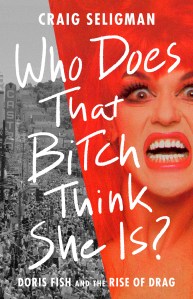
In the 1970s, queer people were openly despised, and drag queens scared the public. Yet this was the era when Doris Fish (born Philip Mills in 1952) painted and padded his way to stardom. He was a leader of the generation that prepared the world not just for drag queens on TV but for a society that is more tolerant and accepting of LGBTQ+ people. How did we get from there to here? In Who Does That Bitch Think She Is? Craig Seligman looks at Doris’ life to provide some answers.
After moving to San Francisco in the mid-’70s, Doris became the driving force behind years of sidesplitting drag shows that were loved as much as you can love throwaway trash—which is what everybody thought they were. No one, Doris included, perceived them as political theater, when in fact they were accomplishing satire’s deepest dream: not just to rail against society, but to change it.
From the rise of drag shows to the obsession with camp to the conservative backlash and the onset of AIDS, Seligman adds needed color and insight to this era in LGBTQ+ history, revealing the origins and evolution of drag.
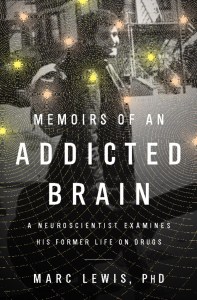
But unlike most addicts, Lewis recovered and became a developmental psychologist and researcher in neuroscience. In Memoirs of an Addicted Brain, he applies his professional expertise to a study of his former self, using the story of his own journey through addiction to tell the universal story of addictions of every kind. He explains the neurological effects of a variety of powerful drugs, and shows how they speak to the brain — itself designed to seek rewards and soothe pain — in its own language. And he illuminates how craving overtakes the nervous system, sculpting a synaptic network dedicated to one goal — more — at the expense of everything else.
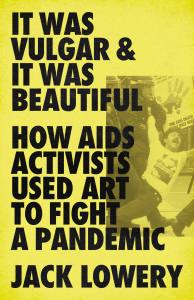
In the late 1980s, the AIDS pandemic was annihilating queer people, intravenous drug users, and communities of color in America, and disinformation about the disease ran rampant. Out of the activist group ACT UP (AIDS Coalition to Unleash Power), an art collective that called itself Gran Fury formed to campaign against corporate greed, government inaction, stigma, and public indifference to the epidemic.
Writer Jack Lowery examines Gran Fury’s art and activism from iconic images like the “Kissing Doesn’t Kill” poster to the act of dropping piles of fake bills onto the trading floor of the New York Stock Exchange. Lowery offers a complex, moving portrait of a collective and its members, who built essential solidarities with each other and whose lives evidenced the profound trauma of enduring the AIDS crisis.
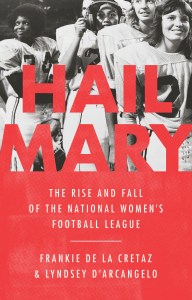
The groundbreaking story of the National Women’s Football League, and the players whose spirit, rivalries, and tenacity changed the legacy of women’s sports forever.
In 1967, a Cleveland promoter recruited a group of women to compete as a traveling football troupe. It was conceived as a gimmick—in the vein of the Harlem Globetrotters—but the women who signed up really wanted to play. And they were determined to win.
Hail Mary chronicles the highs and lows of the National Women’s Football League, which took root in nineteen cities across the US over the course of two decades. Drawing on new interviews with former players from the Detroit Demons, the Toledo Troopers, the LA Dandelions, and more, Hail Mary brings us into the stadiums where they broke records, the small-town lesbian bars where they were recruited, and the backrooms where the league was formed, championed, and eventually shuttered. In an era of vibrant second wave feminism and Title IX activism, the athletes of the National Women’s Football League were boisterous pioneers on and off the field: you’ll be rooting for them from start to finish.
-He rescued 118 enslaved people
-He won a medal at the first World’s Fair in London
-Queen Victoria invited him to Windsor Castle
-Rutherford B. Hayes entertained him at the White House
-He helped start a freeman settlement, called Dawn, that was known as one of the final stops on the Underground Railroad
-He was immortalized in Harriet Beecher Stowe’s Uncle Tom’s Cabin, the novel that Abraham Lincoln jokingly blamed for sparking the Civil War
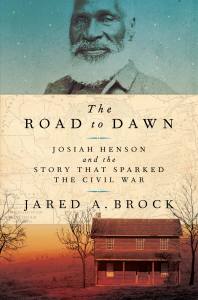
But before all this, Josiah Henson was brutally enslaved for more than forty years.
Author-filmmaker Jared A. Brock retraces Henson’s 3,000+ mile journey from slavery to freedom and re-introduces the world to a forgotten figure of the Civil War era, along with his accompanying documentary narrated by Hollywood actor Danny Glover.
The Road to Dawn is a ground-breaking biography lauded by leaders at the NAACP, the Smithsonian, senators, authors, professors, the President of Mauritius, and the 21st Prime Minister of Canada, and will no doubt restore a hero of the abolitionist movement to his rightful place in history.
When black settlers Keziah and Charles Grier started clearing their frontier land in 1818, they couldn’t know that they were part of the nation’s earliest struggle for equality; they were just looking to build a better life. But within a few years, the Griers would become early Underground Railroad conductors, joining with fellow pioneers and other allies to confront the growing tyranny of bondage and injustice.
The Bone and Sinew of the Land tells the Griers’ story and the stories of many others like them: the lost history of the nation’s first Great Migration. In building hundreds of settlements on the frontier, these black pioneers were making a stand for equality and freedom. Their new home, the Northwest Territory — the wild region that would become present-day Ohio, Illinois, Indiana, Michigan, and Wisconsin — was the first territory to ban slavery and have equal voting rights for all men. Though forgotten today, in their own time the successes of these pioneers made them the targets of racist backlash. Political and even armed battles soon ensued, tearing apart families and communities long before the Civil War. This groundbreaking work of research reveals America’s forgotten frontier, where these settlers were inspired by the belief that all men are created equal and a brighter future was possible.
Named one of Smithsonian’s Best History Books of 2018

DAILY DEALS
June 22, 2023
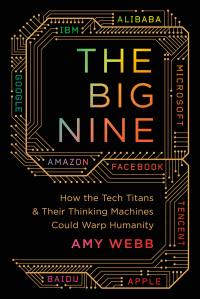
We like to think that we are in control of the future of “artificial” intelligence. The reality, though, is that we — the everyday people whose data powers AI — aren’t actually in control of anything. When, for example, we speak with Alexa, we contribute that data to a system we can’t see and have no input into — one largely free from regulation or oversight. The big nine corporations — Amazon, Google, Facebook, Tencent, Baidu, Alibaba, Microsoft, IBM and Apple–are the new gods of AI and are short-changing our futures to reap immediate financial gain.
In this book, Amy Webb reveals the pervasive, invisible ways in which the foundations of AI — the people working on the system, their motivations, the technology itself — is broken. Within our lifetimes, AI will, by design, begin to behave unpredictably, thinking and acting in ways which defy human logic. The big nine corporations may be inadvertently building and enabling vast arrays of intelligent systems that don’t share our motivations, desires, or hopes for the future of humanity.
Much more than a passionate, human-centered call-to-arms, this book delivers a strategy for changing course, and provides a path for liberating us from algorithmic decision-makers and powerful corporations.