November 2026 BBG eBook Deals

November 2026 BBG eBook Deals from Basic Books Group
We’re excited to share that many of our bestselling titles are on sale this month in digital formats! Select your preferred third-party eBook retailer using the buttons below to purchase these titles for under $3!
* $1.99 or $2.99 promo price only available from November 1, 2026–November 30, 2026 on US orders only from non-HBG third party ebook retailers.
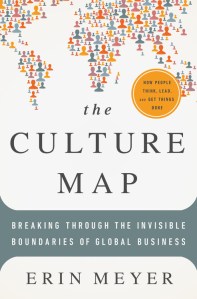
Americans precede anything negative with three nice comments; French, Dutch, Israelis, and Germans get straight to the point; Latin Americans and Asians are steeped in hierarchy; Scandinavians think the best boss is just one of the crowd. It’s no surprise that when they try and talk to each other, chaos breaks out.
In The Culture Map, INSEAD professor Erin Meyer is your guide through this subtle, sometimes treacherous terrain in which people from starkly different backgrounds are expected to work harmoniously together. She provides a field-tested model for decoding how cultural differences impact international business, and combines a smart analytical framework with practical, actionable advice.
The definitive translation of Plato’s Republic, the most influential text in the history of Western philosophy.
“To read The Republic as Bloom means it to be read is to question everything we think we know about government, politics, the best human life, and the nature of truth.” —Adam Kirsch, from the introduction
A cornerstone of Western thought, The Republic remains an unmatched exploration of justice in which lofty ideals collide with the practicalities of human existence. Just as the ancient city-states grappled with the notion of virtue and the proper role of the citizen, so too do we today face profound questions about our own society and its values.
In this masterful translation by Allan Bloom, readers encounter Plato’s timeless insights with clarity and vigor. And whether you’re approaching this seminal text for the first time or the fiftieth, Bloom’s insightful commentary provides a deeper understanding of Plato’s philosophical arguments.
The Republic of Plato invites you to engage with the eternal struggle to define justice and the nature of human flourishing.
“No one else has even come close to balancing Bloom’s fidelity to Greek with intelligible English prose. Add a lengthy, provocative interpretive essay and extensive textual notes, and one could almost be forgiven for playfully referring to the book as Bloom’s Republic.” –National Review
“A classic of a very special kind…Reading it is like looking up at the night sky and discovering a new constellation.” —Christian Science Monitor
Controversies in politics arise from many sources, but the conflicts that endure for generations or centuries show a remarkably consistent pattern. In this classic work, Thomas Sowell analyzes this pattern. He describes the two competing visions that shape our debates about the nature of reason, justice, equality, and power: the “constrained” vision, which sees human nature as unchanging and selfish, and the “unconstrained” vision, in which human nature is malleable and perfectible. A Conflict of Visions offers a convincing case that ethical and policy disputes circle around the disparity between both outlooks.

“A radical new history of the United States abroad” (Wall Street Journal) which uncovers U.S. complicity in the mass-killings of left-wing activists in Indonesia, Latin America and around the world
In 1965, the US government helped the Indonesian military kill approximately one million innocent civilians—eliminating the largest Communist Party outside China and the Soviet Union and inspiring other copycat terror programs.
In this bold and comprehensive new history, Vincent Bevins draws from recently declassified documents, archival research, and eyewitness testimony to reveal a shocking legacy that spans the globe. For decades, it’s been believed that the developing world passed peacefully into the US-led capitalist system. The Jakarta Method demonstrates that the brutal extermination of unarmed leftists was a fundamental part of Washington’s final triumph in the Cold War.

The bestselling historian explains the decline and fall of the once cherished idea of American citizenship.
“The Dying Citizen is essential reading for any American who cares about the fate of our nation.” ―Mark R. Levin
Human history is full of the stories of peasants, subjects, and tribes. Yet the concept of the “citizen” is historically rare—and was among America’s most valued ideals for over two centuries. But without shock treatment, warns Victor Davis Hanson, American citizenship may soon vanish.
In The Dying Citizen, Hanson outlines the forces that led to this crisis. The evisceration of the middle class has made many Americans dependent on the federal government. Open borders have undermined allegiance to a particular place. Identity politics have eradicated our collective sense of self. And a top-heavy state has endangered personal liberty.
The Dying Citizen is a clarion call to rebuild our collective national identity.
An argument for how understanding causality has revolutionized science and will revolutionize artificial intelligence.
“Illuminating.” —New York Times
“Extraordinary.” —Science Friday
“Correlation is not causation.” This mantra, chanted by scientists for more than a century, once led to a virtual prohibition on causal talk. Today, with causal analysis taking center stage in AI and other applications, the old taboos are a thing of the past.
The causal revolution, instigated by Judea Pearl and others, established causality on a firm scientific basis. Pearl showed how intuitive models can interface with data to help answer causal questions, such as whether a drug will cure an illness or, counterfactually, whether an illness would have persisted absent the drug. These models provide a blueprint for causal AI to learn and take responsibility for its mistakes.
Updated with a new preface and summary of recent advances, The Book of Why outlines the basics of cause and effect for lay readers and scientists alike, providing tools to explore the observable world and worlds that might have been.

From an award-winning historian, the definitive account of the golden age of Rome—an ultimate superpower at the pinnacle of its greatness.
“Rarely has the distant past seemed so vividly alive.” —Financial Times
The Pax Romana has long been shorthand for the empire’s golden age. Stretching from Caledonia to Arabia, Rome ruled over a quarter of the world’s population. It was the wealthiest and most formidable state in the history of humankind.
Pax is a captivating narrative history of Rome at the height of its power. From the gilded capital to realms beyond the frontier, historian Tom Holland shows ancient Rome in all its glory: Nero’s downfall, the destruction of Jerusalem and Pompeii, the building of the Colosseum and Hadrian’s Wall, the conquests of Trajan. Vividly sketching the lives of Romans both ordinary and spectacular, from slaves to emperors, Holland shows that Roman peace was the fruit of unprecedented military violence.
A stunning portrait of Rome’s glory days, this is the epic history of the Pax Romana.

Fully revised and updated, this beloved classic explores the history of soccer tactics, with fresh insights for fans, captains, and coaches worldwide.
In this modern classic, soccer journalist Jonathan Wilson pulls apart the finer details of the world’s game, tracing the global history of tactics from modern pioneers right back to the beginning, when chaos reigned. Along the way, he examines the lives of great players and thinkers who shaped the sport and probes why the English, in particular, have proved themselves unwilling to grapple with the abstract.
Masterfully crafted and delightfully readable,Inverting The Pyramid cleverly analyzes the evolution of modern international football, charts how Spanish, German, and Portuguese tacticians have influenced the game, and ponders the effects of football’s increased globalization and commercialization.
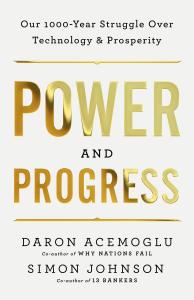
Throughout history, technological change — whether it takes the form of agricultural improvements in the Middle Ages, the Industrial Revolution, or today’s artificial intelligence — has been viewed as a main driver of prosperity, working in the public interest. The reality, though, is that technology is shaped by what powerful people want and believe, generating riches, social respect, cultural prominence, and further political voice for those already powerful. For most of the rest of us, there is the illusion of progress.
Daron Acemoglu and Simon Johnson debunk modern techno-optimism through a dazzling, original account of how technological choices have changed the course of history. From vivid stories of how the economic surplus of the Middle Ages was appropriated by an ecclesiastical elite to build cathedrals while the peasants starved, to the making of vast fortunes from digital technologies today as millions are pushed towards poverty, we see how the path of technology is determined and who influences its trajectory.
To achieve the true potential of innovation, we need to ensure technology is creating new jobs and opportunities rather than marginalizing most people, through automated work and political passivity. We need to use the tremendous digital advances of the last half century to create useful and empowering tools, and seize back control from a small elite of hubristic, messianic tech leaders pursuing
their own interests.
With their breakthrough economic theory and manifesto for building a better society, Acemoglu and Johnson provide the understanding and vision to reimagine and reshape the path of technology and create true shared prosperity.
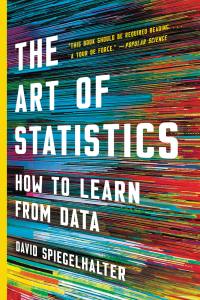
The age of big data has made statistical literacy more important than ever. In The Art of Statistics, David Spiegelhalter shows how to apply statistical reasoning to real-world problems. Whether we’re analyzing preventative medical screening or the terrible crime sprees of serial killers, Spiegelhalter teaches us how to clarify questions, assumptions, and expectations and, most importantly, how to interpret the answers we receive. Combining the incomparable insight of an expert with the playful enthusiasm of an aficionado, The Art of Statistics is the definitive guide to the power of data.

A physician reveals how right-wing backlash policies have mortal consequences—even for the white voters they promise to help
“A provocative, instructive contribution to the literature of public health as well as of contemporary politics.” —Kirkus Reviews
Named one of the most anticipated books of the year by Esquire and the Boston Globe
In the era of Donald Trump, many lower and middle class white Americans are drawn to politicians who pledge to make their lives great again. But as Dying of Whiteness shows, the policies that result actually place white Americans at ever-greater risk of sickness and death.
Physician Jonathan M. Metzl’s quest to understand the health implications of “backlash governance” leads him across America’s heartland.Interviewing a range of everyday Americans, he examines how racial resentment has fueled progun laws in Missouri, resistance to the Affordable Care Act in Tennessee, and cuts to schools and social services in Kansas. And he shows these policies’ costs: increasing deaths by gun suicide, falling life expectancies, and rising dropout rates. White Americans, Metzl argues, must reject the racial hierarchies that promise to aid them but in fact lead our nation to demise.
“Metzl paints a blistering portrait of a subculture so in thrall to racist ideology that they willingly invite rising gun suicides, poor healthcare, and falling life expectancies.” —Esquire
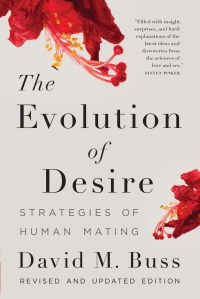
A stunning study that uses evolutionary psychology to explain human mating and the mysteries of love
“A drop-dead shocker.” —Washington Post Book World
If we all want love, why is there so much conflict in our most cherished relationships? To answer this question we must look into our evolutionary past, argues prominent psychologist David M. Buss.
Based on one of the largest studies of human mating ever undertaken, encompassing more than 10,000 people of all ages from thirty-seven cultures worldwide, The Evolution of Desire is the first work to present a unified theory of human mating behavior. Drawing on a wide range of examples of mating behavior—from lovebugs to elephant seals, from the Yanomamö tribe of Venezuela to online dating apps—Buss reveals what women want, what men want, and why their desires radically differ. Love has a central place in human sexual psychology, but conflict, competition, and manipulation also pervade human mating—something we must confront in order to control our own mating destiny.
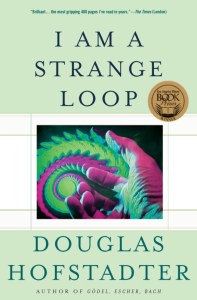
“I Am a Strange Loop is a work of rigorous thinking, but it’s also an extraordinary tribute to the memory of romantic love: The Year of Magical Thinking for mathematicians.” ―Time
Deep down, your brain is a chaotic seething soup of particles. On a higher level it is a jungle of neurons, and on a yet higher level it is a network of abstractions that we call “symbols.” The most central and complex symbol is the one you call “I.” An “I” is a strange loop where the brain’s symbolic and physical levels feed back into each other and flip causality upside down so that symbols seem to have gained the paradoxical ability to push particles around, rather than the reverse.
To each human being, this “I” is the realest thing in the world. But how can such a mysterious abstraction be real? Is our “I” merely a convenient fiction? Does “I” exert genuine power over the particles in our brain, or is it helplessly pushed around by the all-powerful laws of physics?
These are among the mysteries tackled in I Am a Strange Loop, Douglas Hofstadter’s first book-length journey into philosophy since his Pulitzer Prize-winning Gödel, Escher, Bach. It is a tale crisply told, rife with anecdotes, analogies, and metaphors – cutting-edge philosophy that any strange loop can understand.
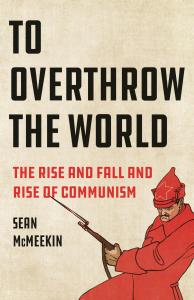
“With vivid prose, McMeekin punctures many myths of communism … This is history as a warning.” —Washington Examiner
Winner of the Hayek Book Prize
When the USSR collapsed in 1991, the world was certain that Communism was dead. Today, three decades later, it is clear that it was not. While Russia may no longer be Communist, Communism and sympathy for Communist ideas have proliferated across the globe.
In To Overthrow the World, Sean McMeekin investigates the evolution of Communism from a seductive ideal of a classless society into the ruling doctrine of tyrannical regimes. Tracing Communism’s ascent from theory to practice, McMeekin ranges from Karl Marx’s writings to the rise and fall of the USSR under Stalin to Mao’s rise to power in China to the acceleration of Communist or Communist-inspired policies around the world in the twenty-first century. McMeekin argues, however, that despite the endurance of Communism, it remains deeply unpopular as a political form. Where it has arisen, it has always arisen by force.
Blending historical narrative with cutting-edge scholarship, To Overthrow the World revolutionizes our understanding of the evolution of Communism—an idea that seemingly cannot die.
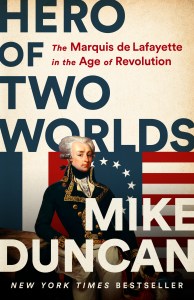
A NEW YORK TIMES BESTSELLER
The riveting story of the Marquis de Lafayette’s lifelong quest to defend the principles of liberty and equality, from the bestselling author of The Storm Before the Storm and the host of the Revolutions podcast.
“Immensely compelling.” —The New York Times
Few in history can match the revolutionary career of the Marquis de Lafayette. Over fifty incredible years at the heart of the Age of Revolution, he fought courageously on both sides of the Atlantic. He was a soldier, statesman, idealist, philanthropist, and abolitionist.
As a teenager, Lafayette ran away from France to join the American Revolution. Returning home a national hero, he helped launch the French Revolution, eventually spending five years locked in dungeon prisons. After his release, Lafayette sparred with Napoleon, joined an underground conspiracy to overthrow King Louis XVIII, and became an international symbol of liberty. Finally, as a revered elder statesman, he was instrumental in the overthrow of the Bourbon Dynasty in the Revolution of 1830.
From enthusiastic youth to world-weary old age, from the pinnacle of glory to the depths of despair, Lafayette never stopped fighting for the rights of all mankind. His remarkable life is the story of where we come from, and an inspiration to defend the ideals he held dear.

The powerful, untold story of the 1950 revolution in Puerto Rico and the long history of U.S. intervention on the island.
“A pointed, relentless chronicle of a despicable part of past American foreign policy.” –Kirkus Reviews
In 1950, after over fifty years of military occupation and colonial rule, the Nationalist Party of Puerto Rico staged an unsuccessful armed insurrection against the United States. Violence swept through the island: assassins were sent to kill President Harry Truman, gunfights roared in eight towns, police stations and post offices were burned down. In order to suppress this uprising, the US Army deployed thousands of troops and bombarded two towns, marking the first time in history that the US government bombed its own citizens.
Nelson A. Denis tells this powerful story through the controversial life of Pedro Albizu Campos, who served as the president of the Nationalist Party. A lawyer, chemical engineer, and the first Puerto Rican to graduate from Harvard Law School, Albizu Campos was imprisoned for twenty-five years and died under mysterious circumstances. By tracing his life and death, Denis shows how the journey of Albizu Campos is part of a larger story of Puerto Rico and US colonialism.
Through oral histories, personal interviews, eyewitness accounts, congressional testimony, and recently declassified FBI files, War Against All Puerto Ricans tells the story of a forgotten revolution and its context in Puerto Rico’s history, from the US invasion in 1898 to the modern-day struggle for self-determination. Denis provides an unflinching account of the gunfights, prison riots, political intrigue, FBI and CIA covert activity, and mass hysteria that accompanied this tumultuous period in Puerto Rican history.
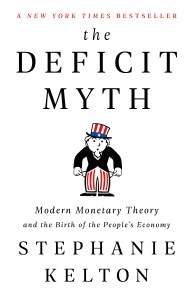
A “clear and vigorously written book” (Foreign Affairs), from the leading thinker of modern monetary theory, that delivers a bold new understanding for how to build a prosperous society
Stephanie Kelton’s brilliant exploration of modern monetary theory (MMT) dramatically changes our understanding of how we can best deal with crucial issues ranging from poverty and inequality to creating jobs, expanding health care coverage, climate change, and building resilient infrastructure. Any ambitious proposal, however, inevitably runs into the buzz saw of how to find the money to pay for it, rooted in myths about deficits that are hobbling us as a country.
Kelton busts through the myths that prevent us from taking action: that the federal government should budget like a household, that deficits will harm the next generation, crowd out private investment, and undermine long-term growth, and that entitlements are propelling us toward a grave fiscal crisis.
MMT, as Kelton shows, shifts the terrain from narrow budgetary questions to one of broader economic and social benefits. With its important new ways of understanding money, taxes, and the critical role of deficit spending, MMT redefines how to responsibly use our resources so that we can maximize our potential as a society. MMT gives us the power to imagine a new politics and a new economy and move from a narrative of scarcity to one of opportunity.
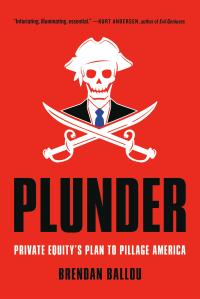
Private equity surrounds us. Firms like Blackstone, Carlyle, and KKR are among the largest employers in America and hold assets that rival those of small countries. Yet few understand what these firms are or how they work.
In Plunder, Brendan Ballou explains how private equity has reshaped American business by raising prices, reducing quality, cutting jobs, and shifting resources from productive to unproductive parts of the economy. Ballou vividly illustrates how many private equity firms buy up retailers, medical practices, prison services, nursing-home chains, and mobile-home parks, among other businesses, using little of their own money to do it and avoiding debt and liability for their actions. Forced to take on huge debts and pay extractive fees, companies purchased by private equity firms are often left bankrupt, or shells of their former selves, with consequences to communities that long depended on them.
Perhaps most startling is Ballou’s insight into how this is happening with the active support of various arms of the government. But, as Ballou reveals in an agenda for reining in the industry, private equity can be stopped from wreaking further havoc.

Award-winning food writer Bee Wilson’s secret history of kitchens, showing how new technologies—from the fork to the microwave and beyond—have fundamentally shaped how and what we eat.
“Like having a long dinner table discussion with a fascinating friend … A pure joy to read.” —Los Angeles Times
“Delightful … [An] ebulliently written and unobtrusively learned survey.” –Harper’s Magazine
Since prehistory, humans have braved sharp knives, fire, and grindstones to transform raw ingredients into something delicious—or at least edible. But these tools have also transformed how we consume, and how we think about, our food.
In Consider the Fork, award-winning food writer Bee Wilson takes readers on a wonderful and witty tour of the evolution of cooking around the world, revealing the hidden history of objects we often take for granted. Technology in the kitchen does not just mean the Pacojets and sous-vide machines of the modern kitchen, but also the humbler tools of everyday cooking and eating: a wooden spoon and a skillet, chopsticks and forks.
Blending history, science, and personal anecdotes, Wilson reveals how our culinary tools and tricks came to be and how their influence has shaped food culture today. The story of how we have tamed fire and ice and wielded whisks, spoons, and graters, all for the sake of putting food in our mouths, Consider the Fork is truly a book to savor.
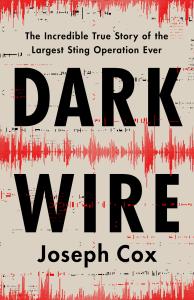
In 2018, a powerful app for secure communications called Anom took root among organized criminals. They believed Anom allowed them to conduct business in the shadows. Except for one thing: It was secretly run by the FBI.
Backdoor access to Anom and a series of related investigations granted American, Australian, and European authorities a front-row seat to the underworld. Tens of thousands of criminals worldwide appeared in full view of the same agents they were trying to evade. International smugglers, money launderers, hitmen: a sprawling illicit global economy as efficient and interconnected as the legal one. Officers watched drug shipments and murder plots unfold, making arrests without blowing their cover.
Featuring a new epilogue with crucial updates to the case, Dark Wire reveals the true scale and stakes of this unprecedented operation through the agents and criminals who were there. This is a fly-on-the-wall thriller for the modern world, where no one can be sure who is watching.

Blending Buddhism and psychotherapy, acclaimed psychiatrist Mark Epstein shows how to radically transform your emotional life.
“One of the most sophisticated integrations of the therapeutic and spiritual disciplines.” —New York Times
Today, the benefits of meditation practices like mindfulness and deep breathing are widely recognized by mainstream therapists. But what does Buddhist insight actually look like, how does it intersect with classic Western psychotherapy, and what can a synthesis of both traditions offer you?
In this landmark book, acclaimed psychotherapist Mark Epstein lays out the path to meditation-inspired healing. At the heart of Epstein’s exploration is the concept of the “self,” which Buddhism exposes as an illusory construct that breeds emotional suffering. With great clarity and insight, Epstein demonstrates how Buddhism and psychotherapy can be used in powerful tandem to loosen our attachment to the self and thereby free ourselves to experience real joy.
Now updated with a new preface, Thoughts without a Thinker offers a revolutionary and enduring road map to a healthy emotional life.
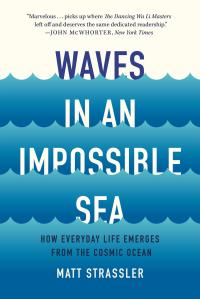
A theoretical physicist takes readers on an awe-inspiring journey to discover how the universe generates everything from nothing at all.
“If you want to know what’s really going on in the realms of relativity and particle physics, read this book” —Sean Carroll, bestselling author of The Biggest Ideas in the Universe
In Waves in an Impossible Sea, physicist Matt Strassler tells a startling tale of elementary particles, human experience, and empty space. He begins with a simple mystery of motion—our planet hurtles through the cosmos at 150 miles per second, and yet we feel nothing of it. How can our voyage be so tranquil?
The reason, Strassler reveals, is that empty space is a sea, albeit a paradoxical one. Much like water and air, it ripples in various ways, and we ourselves, made from its ripples, can move through space as effortlessly as waves crossing an ocean.
Deftly weaving together daily experience and fundamental physics—the musical universe, the enigmatic quantum, cosmic fields, and the Higgs boson—Strassler shows us how all things, familiar and unfamiliar, emerge from what seems like nothing at all.
Accessible and profound, Waves in an Impossible Sea is the ultimate guide to our place in the universe.
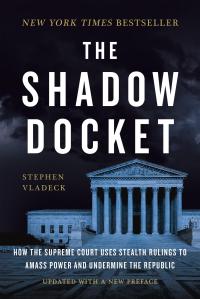
An instant New York Times bestseller: An acclaimed legal scholar’s “important” (New York Times) and “fascinating” (Economist) exposé of how the Supreme Court uses unsigned and unexplained orders to change the law behind closed doors.
The Supreme Court has always had the authority to issue emergency rulings in exceptional circumstances. But since 2017, the Court has dramatically expanded its use of the behind-the-scenes “shadow docket,” regularly making decisions that affect millions of Americans without public hearings and without explanation, through cryptic late-night rulings that leave lawyers—and citizens—scrambling.
The Court’s conservative majority has used the shadow docket to green-light restrictive voting laws and bans on abortion, and to curtail immigration and COVID vaccine mandates. But Americans of all political stripes should be worried about what the shadow docket portends for the rule of law, argues Supreme Court expert Stephen Vladeck. In this rigorous yet accessible book, he issues an urgent call to bring the Court back into the light. Updated with a new preface, The Shadow Docket is an essential read for understanding the inner workings of the Supreme Court—and American democracy.
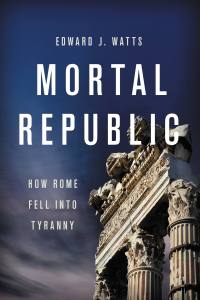
The gripping, definitive account of how the Romans lost their Republic.
“An incisive history … The parallels to the present day are striking.” —New Yorker
In Mortal Republic, prize-winning historian Edward J. Watts offers a new history of the fall of the Roman Republic that explains why Rome exchanged freedom for autocracy. For centuries, even as Rome grew into the Mediterranean’s premier military and political power, its governing institutions, parliamentary rules, and political customs successfully fostered negotiation and compromise.
By the 130s BC, however, Rome’s leaders increasingly used these same tools to cynically pursue individual gain and obstruct their opponents. As the center decayed and dysfunction grew, arguments between politicians gave way to political violence in the streets. The stage was set for destructive civil wars—and ultimately the imperial reign of Augustus.
The death of Rome’s Republic was not inevitable. In Mortal Republic, Watts shows it died because it was allowed to, from thousands of small wounds inflicted by Romans who assumed that it would last forever.