
PublicAffairs & Bold Type Books – Ebook Deals – January 2024
MONTHLY DEALS
January 1, 2024 to January 31, 2024
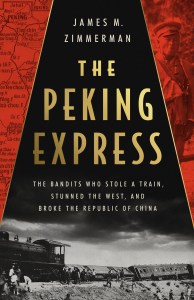
In May 1923, when Shanghai publisher and reporter John Benjamin Powell bought a first-class ticket for the Peking Express, he pictured an idyllic overnight journey on a brand-new train of unprecedented luxury—exactly what the advertisements promised. Seeing his fellow passengers, including mysterious Italian lawyer Giuseppe Musso, a confidante of Mussolini and lawyer for the opium trade, and American heiress Lucy Aldrich, sister-in-law of John D. Rockefeller Jr., he knew it would be an unforgettable trip.
Charismatic bandit leader and populist rabble rouser Sun Mei-yao had also taken notice of the new train from Shanghai to Peking. On the night of Powell’s trip of a lifetime, Sun launched his plan to make a brazen political statement: he and a thousand fellow bandits descended on the train, capturing dozens of hostages.
Aided by local proxy authorities, the humiliated Peking government soon furiously gave chase. At the bandits’ mountain stronghold, a five-week siege began.
Brilliantly written, with new and original research, The Peking Express tells the incredible true story of a clash that shocked the world—becoming so celebrated it inspired several Hollywood movies—and set the course for China’s two-decade civil war.
Financial Times, Best Business Books
Forbes, Best Business Books
The Next Big Idea Club, Best Leadership Books
The Globe & Mail, Best Management Books
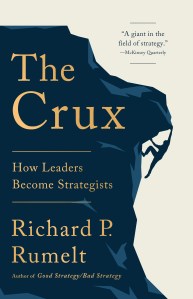
“A bracingly direct guide about the pitfalls of strategy, based around a climbing metaphor" (Financial Times)
What passes for strategy in too many businesses, government agencies, and military operations is a toxic mix of wishful thinking and incoherent policies. Richard P. Rumelt’s breakthrough concept is that leaders become effective strategists when they focus on challenges rather than goals, pinpointing the crux of their pivotal challenge—the aspect that is both surmountable and promises the greatest progress—and taking decisive, coherent action to overcome it.
Rumelt defines the essence of the strategist’s skill with vivid storytelling, from how Elon Musk found the crux that propelled the success of SpaceX to how the American military came to grips with the weaknesses of its battle strategy. He teaches that every person and every organization faces multiple challenges; the trick is to concentrate on those that can be solved— the addressable strategic challenges. His concept of a Strategy Foundry™ builds a new way for senior management to construct a strong strategy.
Ali Tamaseb has spent thousands of hours manually amassing what may be the largest dataset ever collected on startups, comparing billion-dollar startups with those that failed to become one—30,000 data points on nearly every factor: number of competitors, market size, the founder’s age, his or her university’s ranking, quality of investors, fundraising time, and many, many more. And what he found looked far different than expected. Just to mention a few:
- Most unicorn founders had no industry experience;
- There's no disadvantage to being a solo founder or to being a non-technical CEO;
- Less than 15% went through any kind of accelerator program;
- Over half had strong competitors when starting–being first to market with an idea does not actually matter.
You will also hear the stories of the early days of billion-dollar startups first-hand. The book includes exclusive interviews with the founders/investors of Zoom, Instacart, PayPal, Nest, Github, Flatiron Health, Kite Pharma, Facebook, Stripe, Airbnb, YouTube, LinkedIn, Lyft, DoorDash, Coinbase, and Square, venture capital investors like Elad Gil, Peter Thiel, Alfred Lin from Sequoia Capital and Keith Rabois of Founders Fund, as well as previously untold stories about the early days of ByteDance (TikTok), WhatsApp, Dropbox, Discord, DiDi, Flipkart, Instagram, Careem, Peloton, and SpaceX.
Packed with counterintuitive insights and inside stories from people who have built massively successful companies, Super Founders is a paradigm-shifting and actionable guide for entrepreneurs, investors, and anyone interested in what makes a startup successful.

The winners of the Nobel Prize in Economics upend the most common assumptions about how economics works in this gripping and disruptive portrait of how poor people actually live.
Why do the poor borrow to save? Why do they miss out on free life-saving immunizations, but pay for unnecessary drugs? In Poor Economics, Abhijit V. Banerjee and Esther Duflo, two award-winning MIT professors, answer these questions based on years of field research from around the world. Called “marvelous, rewarding” by the Wall Street Journal, the book offers a radical rethinking of the economics of poverty and an intimate view of life on 99 cents a day. Poor Economics shows that creating a world without poverty begins with understanding the daily decisions facing the poor.
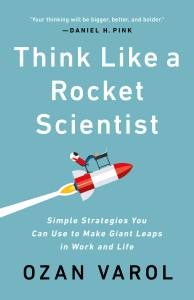
This is not just an engrossing read–it's bursting with practical insights. Ozan Varol's dazzling debut might change how you approach problems. Houston, this book has solutions."―Adam Grant
Rocket science is often celebrated as the ultimate triumph of technology. But it's not. Rather, it's the apex of a certain thought process — a way to imagine the unimaginable and solve the unsolvable. It's the same thought process that enabled Neil Armstrong to take his giant leap for mankind, that allows spacecraft to travel millions of miles through outer space and land on a precise spot, and that brings us closer to colonizing other planets.
Fortunately, you don't have to be a rocket scientist to think like one.
In this accessible and practical book, Ozan Varol reveals nine simple strategies from rocket science that you can use to make your own giant leaps in work and life — whether it's landing your dream job, accelerating your business, learning a new skill, or creating the next breakthrough product. Today, thinking like a rocket scientist is a necessity. We all encounter complex and unfamiliar problems in our lives. Those who can tackle these problems — without clear guidelines and with the clock ticking — enjoy an extraordinary advantage.
Think Like a Rocket Scientist will inspire you to take your own moonshot and enable you to achieve liftoff.
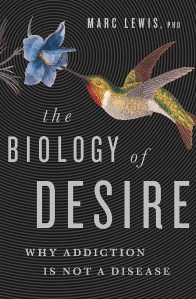
Through the vivid, true stories of five people who journeyed into and out of addiction, a renowned neuroscientist—and former addict himself—explains why the disease model of addiction is wrong and how it obstructs the path to recovery. Combining intimate human examples with clearly rendered scientific explanations, The Biology of Desire is enlightening and optimistic reading for anyone who has wrestled with addiction either personally or professionally.

Every year millions of tourists from around the world visit California’s famous redwoods. Yet few who strain their necks to glimpse the tops of the world’s tallest trees understand how unlikely it is that these last isolated groves of giant trees still stand at all. In this gripping historical memoir, journalist and famed redwood activist Greg King examines how investors and a growing U.S. economy drove the timber industry to cut down all but 4 percent of the original two-million-acre redwood ecosystem. King first examined redwood logging in the 1980s—as an award-winning reporter. What he found in the woods convinced him to leap the line of neutrality and become an activist dedicated to saving the very last ancient redwood groves remaining in private hands.
The land grab began in 1849, when a “green gold rush” of migrants came to exploit the legendary redwoods that grew along the Russian River. Several generations later, in 1987, Greg King discovered and named Headwaters Forest—at 3,000 acres the largest ancient redwood habitat remaining outside of parks—and he led the movement to save this grove. After a decade of one of the longest, most dramatic, and violent environmental campaigns in US history, in 1999 the state and federal governments protected Headwaters Forest.
The Ghost Forest explores a central question, an overhanging mystery: What was it like, this botanical Elysium that grew only along the Northern California coast, a forest so spectacular—but also uniquely valuable as a cornerstone of American economic growth—that in the end it would inspire life-and-death struggles? Few but loggers and surveyors ever saw such magnificent trees, ancient sentinels that, like ghosts, have informed King’s understanding of the world. On a lifelong journey, King finds himself through the generations, and through the trees.
A Next Big Idea Club Must-Read Title
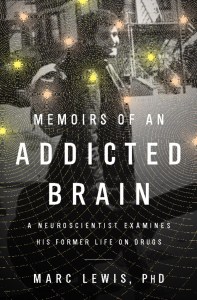
But unlike most addicts, Lewis recovered and became a developmental psychologist and researcher in neuroscience. In Memoirs of an Addicted Brain, he applies his professional expertise to a study of his former self, using the story of his own journey through addiction to tell the universal story of addictions of every kind. He explains the neurological effects of a variety of powerful drugs, and shows how they speak to the brain — itself designed to seek rewards and soothe pain — in its own language. And he illuminates how craving overtakes the nervous system, sculpting a synaptic network dedicated to one goal — more — at the expense of everything else.
Free market capitalism is one of humanity’s greatest inventions and the greatest source of prosperity the world has ever seen. But this success has been costly. Capitalism is on the verge of destroying the planet and destabilizing society as wealth rushes to the top. The time for action is running short.
Rebecca Henderson’s rigorous research in economics, psychology, and organizational behavior, as well as her many years of work with companies around the world, give us a path forward. She debunks the worldview that the only purpose of business is to make money and maximize shareholder value. She shows that we have failed to reimagine capitalism so that it is not only an engine of prosperity but also a system that is in harmony with environmental realities, the striving for social justice, and the demands of truly democratic institutions.
Henderson’s deep understanding of how change takes place, combined with fascinating in-depth stories of companies that have made the first steps towards reimagining capitalism, provide inspiring insight into what capitalism can be. Together with rich discussions of important role of government and how the worlds of finance, governance, and leadership must also evolve, Henderson provides the pragmatic foundation for navigating a world faced with unprecedented challenge, but also with extraordinary opportunity for those who can get it right.
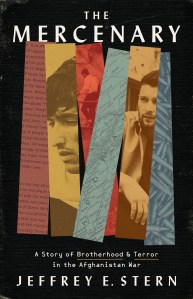
In the early days of the Afghanistan war, Jeff Stern was scouring the streets of Kabul for a big story. He was accompanied by a driver, Aimal, who had ambitions of his own: to get rich off the sudden infusion of foreign attention and cash.
In this gripping adventure story, Stern writes of how he and Aimal navigated an environment full of guns and danger and opportunity, and how they forged a deep bond.
Then Stern got a call that changed everything. He discovered that Aimal had become an arms dealer, and was ultimately forced to flee the country to protect his family from his increasingly dangerous business partners.
Tragic, powerful, and layered, The Mercenary is more than a wartime drama. It is a Rashomon-like story about how politics and violence warp our humanity, and keep the most important truths hidden.
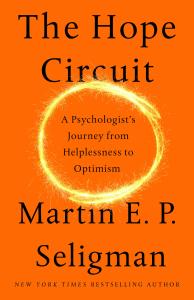
When Martin E. P. Seligman first encountered psychology in the 1960s, the field was devoted to eliminating misery: it was the science of how past trauma creates present symptoms. Today, thanks in large part to Seligman’s Positive Psychology movement, it is ever more focused not on what cripples life, but on what makes life worth living — with profound consequences for our mental health.
In this wise and eloquent memoir, spanning the most transformative years in the history of modern psychology, Seligman recounts how he learned to study optimism — including a life-changing conversation with his five-year-old daughter. He tells the human stories behind some of his major findings, like CAVE, an analytical tool that predicts election outcomes (with shocking accuracy) based on the language used in campaign speeches, the international spread of Positive Education, the launch of the US Army’s huge resilience program, and the canonical studies that birthed the theory of learned helplessness — which he now reveals was incorrect. And he writes at length for the first time about his own battles with depression at a young age.
In The Hope Circuit, Seligman makes a compelling and deeply personal case for the importance of virtues like hope, gratitude, and wisdom for our mental health. You will walk away from this book not just educated but deeply enriched.
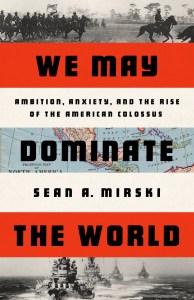
Finalist for the Council on Foreign Relations Arthur Ross Book Award
What did it take for the United States to become a global superpower? The answer lies in a missing chapter of American foreign policy with stark lessons for today
The cutthroat world of international politics has always been dominated by great powers. Yet no great power in the modern era has ever managed to achieve the kind of invulnerability that comes from being completely supreme in its own neighborhood. No great power, that is, except one—the United States.
In We May Dominate the World, Sean A. Mirski tells the riveting story of how the United States became a regional hegemon in the century following the Civil War. By turns reluctant and ruthless, Americans squeezed their European rivals out of the hemisphere while landing forces on their neighbors’ soil with dizzying frequency. Mirski reveals the surprising reasons behind this muscular foreign policy in a narrative full of twists, colorful characters, and original accounts of the palace coups and bloody interventions that turned the fledgling republic into a global superpower.
Today, as China makes its own run at regional hegemony and nations like Russia and Iran grow more menacing, Mirski’s fresh look at the rise of the American colossus offers indispensable lessons for how to meet the challenges of our own century.

We’ve all seen the ads on TV and in magazines-“50 is the new 30!” or “60 is the new 40!” A nice sentiment to be sure, but CEO of AARP Jo Ann Jenkins disagrees. 50 is 50, and she, for one, likes the look of it.
In Disrupt Aging, Jenkins focuses on three core areas-health, wealth, and self-to show us how to embrace opportunities and change the way we look at getting older. Here, she chronicles her own journey and that of others who are making their mark as disruptors to show readers how we can be active, healthy, and happy as we get older. Through this powerful and engaging narrative, she touches on all the important issues facing people 50+ today, from caregiving and mindful living to building age-friendly communities and making our money last.
This is a book for all the makers and doers who have a desire to continue exploring possibilities, to celebrate discovery over decline, and to seek out opportunities to live the best life there is.
The ability to connect with another person's physical and emotional state is one of the most elusive interpersonal skills to develop, but this book shows you just how approachable it can be.
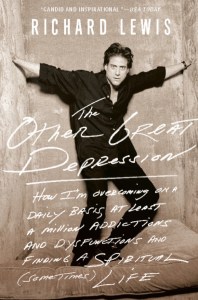
How he got there, how he finally got on the road to recovery, and how he copes with being Richard Lewis sober on a daily basis are the subjects of this very funny, deeply honest, inspiring, but very untreacly book. USA Today called it “candid and inspirational.… A journey through Lewis’ personal Inferno to eventual salvation.”
Let’s face it: Email is killing our productivity. The average person checks their email 11 times per hour, processes 122 messages a day, and spends 28 percent of their total workweek managing their inbox. What was once a powerful and essential tool for doing our daily work has become a near-constant source of frustration, anxiety, and distraction from our work.
Unsubscribe will show you how to tame your inbox and reclaim your focus, with tips on how to:
- Break free from email addiction and the “inbox zero” obsession
- Build a daily email routine that reduces stress and anxiety
- Process your inbox based on what (and who) really matters to you
- Write messages that get people to pay attention and take action
- Set boundaries and say “no” to time-wasting distractions
- Plan your day around meaningful work — not busywork
Swimming enthusiast Lynn Sherr explores every aspect of the sport, from the biology of swimming to the fame of Esther Williams; from turquoise pools and wild water to the training of Olympians; and she reveals the secret of buoyancy so that anyone can avoid the example of the English poet Percy Bysshe Shelley, who lamented, “Why can’t I swim, it seems so very easy?” When his friend, the biographer Edward John Trelawny, said, “because you think you can’t,” Shelley plunged into Italy’s Arno River and dropped like a rock. With Swim, you can avoid that happening to you.
A misfit kid at the best of times, Mishka Shubaly had his world shattered when, in a twenty-four-hour span in 1992, he survived a mass shooting on his school’s campus, then learned that his parents were getting divorced. His father, a prominent rocket scientist, abandoned the family and their home was lost to foreclosure. Shubaly swore to avenge the wrongs against his mother, but instead plunged into a magnificently toxic love affair with alcohol.
Almost two decades later, Shubaly’s life changed again when a fateful five-mile run after a bar fight inspired him to clean up his life. And when he finally reconnected with his estranged father, he discovered the story of his childhood was radically different from what he thought he knew.
In this fiercely honest, emotional, and self-laceratingly witty book, Shubaly relives his mistakes, misfortunes, and infrequent good decisions: the disastrous events that fractured his life; his incendiary romances; his hot-and-cold career as a rock musician; meeting his newborn nephew while out of his gourd on cough syrup. I Swear I’ll Make It Up to You is an apology for choices Shubaly never thought he’d live long enough to regret, a journey so far down the low road that it took him years of running to claw his way back.

As Roseann Sdoia waited to watch her friend cross the finish line of the Boston Marathon in 2013, she had no idea her life was about to change-that in a matter of minutes she would look up from the sidewalk, burned and deaf, staring at her detached foot, screaming for help amid the smoke and blood.
In the chaos of the minutes that followed, three people would enter Roseann’s life and change it forever. The first was Shores Salter, a college student who, when the bomb went off, instinctively ran into the smoke while his friends ran away. He found Roseann lying on the sidewalk and, using a belt as a tourniquet, literally saved her life that day. Then, Boston police officer Shana Cottone arrived on the scene and began screaming desperately at passing ambulances, all full, before finally commandeering an empty paddy wagon. Just then a giant appeared, in the form of Boston firefighter Mike Materia, who carefully lifted her into the fetid paddy wagon. He climbed in and held her burned hand all the way to the hospital. Since that day, he hasn’t left her side, and today they are planning their life together.
Perfect Strangers is about recovery, about choosing joy and human connection over anger and resentment, and most of all, it’s about an unlikely but enduring friendship that grew out of the tragedy of Boston’s worst day.
In Type R, Ama Marston and Stephanie Marston explore Transformative Resilience and the strategies of those who use difficult circumstances as catalysts for growth — springing forward rather than bouncing back during turbulent times.
Here, Ama and Stephanie share inspiring stories of Type Rs thriving during unprecedented world events and increasing global pressures — from climate change to financial crises. They share the individual and collective triumphs of people coping with the stress of daily life and the challenges and disruptions that rattle all our lives at some point. And they draw upon research that spans the personal and the professional, the local and the global. Reaching across psychology, neuroscience, business, and politics, Type R demonstrates how we can use challenges to innovate, create new strengths, and grow.
Type R also teaches leaders, businesses, and organizations how to cultivate the critical Type R Vision and Culture, which is essential for navigating and thriving in disruptive change. This thought-provoking book proves that there is much we can learn from those who use change, stress, and adversity as springboards to progress in a chaotic world.