PublicAffairs & Bold Type Books – Ebook Deals – July 2023
MONTHLY DEALS
July 1, 2023 – July 31, 2023
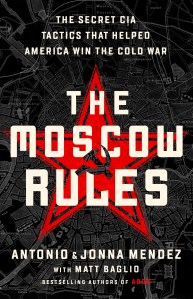
Antonio Mendez and his future wife Jonna were CIA operatives working to spy on Moscow in the late 1970s, at one of the most dangerous moments in the Cold War. Soviets kept files on all foreigners, studied their patterns, and tapped their phones. Intelligence work was effectively impossible. The Soviet threat loomed larger than ever.
The Moscow Rules tells the story of the intelligence breakthroughs that turned the odds in America's favor. As experts in disguise, Antonio and Jonna were instrumental in developing a series of tactics — Hollywood-inspired identity swaps, ingenious evasion techniques, and an armory of James Bond-style gadgets — that allowed CIA officers to outmaneuver the KGB.
As Russia again rises in opposition to America, this remarkable story is a tribute to those who risked everything for their country, and to the ingenuity that allowed them to succeed.

A tiny American town's plans for radical self-government overlooked one hairy detail: no one told the bears.
The anything-goes atmosphere soon caught the attention of Grafton's neighbors: the bears. Freedom-loving citizens ignored hunting laws and regulations on food disposal. They built a tent city in an effort to get off the grid. The bears smelled food and opportunity.
A Libertarian Walks Into a Bear is the sometimes funny, sometimes terrifying tale of what happens when a government disappears into the woods. Complete with gunplay, adventure, and backstabbing politicians, this is the ultimate story of a quintessential American experiment — to live free or die, perhaps from a bear.
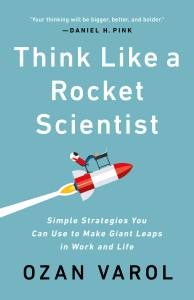
This is not just an engrossing read–it's bursting with practical insights. Ozan Varol's dazzling debut might change how you approach problems. Houston, this book has solutions."―Adam Grant
Rocket science is often celebrated as the ultimate triumph of technology. But it's not. Rather, it's the apex of a certain thought process — a way to imagine the unimaginable and solve the unsolvable. It's the same thought process that enabled Neil Armstrong to take his giant leap for mankind, that allows spacecraft to travel millions of miles through outer space and land on a precise spot, and that brings us closer to colonizing other planets.
Fortunately, you don't have to be a rocket scientist to think like one.
In this accessible and practical book, Ozan Varol reveals nine simple strategies from rocket science that you can use to make your own giant leaps in work and life — whether it's landing your dream job, accelerating your business, learning a new skill, or creating the next breakthrough product. Today, thinking like a rocket scientist is a necessity. We all encounter complex and unfamiliar problems in our lives. Those who can tackle these problems — without clear guidelines and with the clock ticking — enjoy an extraordinary advantage.
Think Like a Rocket Scientist will inspire you to take your own moonshot and enable you to achieve liftoff.

In 1865, the Confederacy was comprehensively defeated, its economy shattered, its leaders in exile or in jail. Yet in the years that followed, Lincoln’s vision of a genuinely united country never took root. Apart from a few brief months, when the presence of the Union army in the South proved liberating for newly freed Black Americans, the military victory was squandered. Old white supremacist efforts returned, more ferocious than before.
In Civil War by Other Means, Jeremi Suri shows how resistance to a more equal Union began immediately. From the first postwar riots to the return of Confederate exiles, to the impeachment of Andrew Johnson, to the highly contested and consequential election of 1876, Suri explores the conflicts and questions Americans wrestled with as competing visions of democracy, race, and freedom came to a vicious breaking point.
What emerges is a vivid and at times unsettling portrait of a country striving to rebuild itself, but unable to compromise on or adhere to the most basic democratic tenets. What should have been a moment of national renewal was ultimately wasted, with reverberations still felt today. The recent shocks to American democracy are rooted in this forgotten, urgent history.
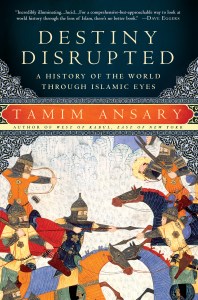
In Destiny Disrupted, Tamim Ansary tells the rich story of world history with the evolution of the Muslim community at the center. His story moves from the lifetime of Mohammed through a succession of far-flung empires, to the tangle of modern conflicts that culminated in the events of 9/11. He introduces the key people, events, ideas, legends, religious disputes, and turning points of world history, imparting not only what happened but how it is understood from the Muslim perspective.
He clarifies why two great civilizations—Western and Muslim—grew up oblivious to each other, what happened when they intersected, and how the Islamic world was affected by its slow recognition that Europe—a place it long perceived as primitive—had somehow hijacked destiny.
With storytelling brio, humor, and evenhanded sympathy to all sides of the story, Ansary illuminates a fascinating parallel to the narrative usually heard in the West. Destiny Disrupted offers a vital perspective on world conflicts many now find so puzzling.

James “Whitey” Bulger became one of the most ruthless gangsters in US history, and all because of an unholy deal he made with a childhood friend. John Connolly a rising star in the Boston FBI office, offered Bulger protection in return for helping the Feds eliminate Boston’s Italian mafia. But no one offered Boston protection from Whitey Bulger, who, in a blizzard of gangland killings, took over the city’s drug trade. Whitey’s deal with Connolly’s FBI spiraled out of control to become the biggest informant scandal in FBI history.
Black Mass is a New York Times and Boston Globe bestseller, written by two former reporters who were on the case from the beginning. It is an epic story of violence, double-cross, and corruption at the center of which are the black hearts of two old friends whose lives unfolded in the darkness of permanent midnight.

The Sicilian mafia, known as Cosa Nostra, is far from being Italy’s only dangerous criminal fraternity. The country hosts two other major mafias: the camorra from Naples; and, from the poor and isolated region of Calabria, the mysterious ‘ndrangheta, which has now risen to become the most powerful mob group active today.
Since they emerged, the mafias have all corrupted Italy’s institutions, drastically curtailed the life-chances of its citizens, evaded justice, and set up their own self-interested meddling as an alternative to the courts. Yet each of these brotherhoods has its own methods, its own dark rituals, its own style of ferocity. Each is uniquely adapted to corrupt and exploit its own specific environment, as it collaborates with, learns from, and goes to war with the other mafias.
Today, the shadow of organized crime hangs over a country racked by debt, political paralysis, and widespread corruption. The ‘ndrangheta controls much of Europe’s wholesale cocaine trade and, by some estimates, 3 percent of Italy’s total GDP. Blood Brotherhoods traces the origins of this national malaise back to Italy’s roots as a united country in the nineteenth century, and shows how political violence incubated underworld sects among the lemon groves of Palermo, the fetid slums of Naples, and the harsh mountain villages of Calabria.
Blood Brotherhoods is a book of breathtaking ambition, tracing for the first time the interlocking story of all three mafias from their origins to the present day. John Dickie is recognized in Italy as one of the foremost historians of organized crime. In these pages, he blends archival detective work, passionate narrative, and shrewd analysis to bring a unique criminal ecosystem — and the three terrifying criminal brotherhoods that have evolved within it — to life on the page.

In a secret meeting in 1981, a low-level Boston thief gave career gangster Ralph Rossetti the tip of a lifetime: the Isabella Stewart Gardner Museum was a big score waiting to happen. Though its collections included priceless artworks by Rembrandt, Vermeer, Degas, and others, its security was cheap, mismanaged, and out of date. And now, it seemed, the whole Boston criminal underworld knew it.
Nearly a decade passed before the Museum was finally hit. But when it finally happened, the theft quickly became one of the most infamous art heists in history: thirteen works of art valued at up to 500 million, by some of the most famous artists in the world, were taken. The Boston FBI took control of the investigation, but twenty-five years later the case is still unsolved and the artwork is still missing.
Stephen Kurkjian, one of the top investigative reporters in the country, has been working this case for over nearly twenty years. In Master Thieves, he sheds new light on some of the Gardner’s most abiding mysteries. Why would someone steal these paintings, only to leave them hidden for twenty-five years? And why, if one of the top crime bosses in the city knew about this score in 1981, did the theft happen in 1990? What happened in those intervening years? And what might all this have to do with Boston’s notorious gang wars of the 1980s?
Kurkjian’s reporting is already responsible for some of the biggest breaks in this story, including a meticulous reconstruction of what happened at the Museum that fateful night. Now Master Thieves will reveal the identities of those he believes plotted the heist, the motive for the crime, and the details that the FBI has refused to discuss. Taking you on a journey deep into the gangs of Boston, Kurkjian emerges with the most complete and compelling version of this story ever told.

In 2011, Carmen Segarra took a job as at the Federal Reserve Bank of New York supervising for Goldman Sachs. It was an opportunity, she believed, to monitor the big bank’s behavior in order to avoid another financial crisis.
Segarra was shocked to discover, however, the full extent of the relationship between Goldman and the Fed. She began making secret recordings that later became the basis of a This American Life episode that exposed the Fed’s ineffectiveness in holding banks accountable.
In Noncompliant, Segarra chronicles her experience blowing open the doors on the relationship between the big banks and the government bodies set up to regulate them.
As we mark the tenth anniversary of the 2008 financial crisis, Noncompliant shows us how little has changed, and offers an urgent call for real reforms.
Deal of the Day
July 9, 2023
A #1 ABA INDEPENDENT BOOKSTORE BESTSELLER
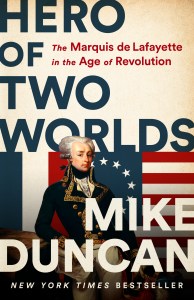
From the bestselling author of The Storm Before the Storm and host of the Revolutions podcast comes the "immensely compelling" (The New York Times) story of the Marquis de Lafayette’s lifelong quest to defend the principles of liberty and equality.
Few in history can match the revolutionary career of the Marquis de Lafayette. Over fifty incredible years at the heart of the Age of Revolution, he fought courageously on both sides of the Atlantic. He was a soldier, statesman, idealist, philanthropist, and abolitionist.
As a teenager, Lafayette ran away from France to join the American Revolution. Returning home a national hero, he helped launch the French Revolution, eventually spending five years locked in dungeon prisons. After his release, Lafayette sparred with Napoleon, joined an underground conspiracy to overthrow King Louis XVIII, and became an international symbol of liberty. Finally, as a revered elder statesman, he was instrumental in the overthrow of the Bourbon Dynasty in the Revolution of 1830.
From enthusiastic youth to world-weary old age, from the pinnacle of glory to the depths of despair, Lafayette never stopped fighting for the rights of all mankind. His remarkable life is the story of where we come from, and an inspiration to defend the ideals he held dear.

For decades, a single, free-market philosophy has dominated global economics. But this intellectual monoculture is bland and unhealthy.
Bestselling author and economist Ha-Joon Chang makes challenging economic ideas delicious by plating them alongside stories about food from around the world, using the diverse histories behind familiar food items to explore economic theory. For Chang, chocolate is a lifelong addiction, but more exciting are the insights it offers into postindustrial knowledge economies; and while okra makes Southern gumbo heart-meltingly smooth, it also speaks of capitalism’s entangled relationship with freedom.
Myth-busting, witty, and thought-provoking, Edible Economics serves up a feast of bold ideas about globalization, climate change, immigration, austerity, automation, and why carrots need not be orange. It shows that getting to grips with the economy is like learning a recipe: when we understand it, we can adapt and improve it—and better understand our world.
Summer Reads Promotion
July 3, 2023 – July 9, 2023
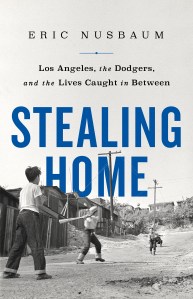
Dodger Stadium is an American icon. But the story of how it came to be goes far beyond baseball. The hills that cradle the stadium were once home to three vibrant Mexican American communities. In the early 1950s, those communities were condemned to make way for a utopian public housing project. Then, in a remarkable turn, public housing in the city was defeated amidst a Red Scare conspiracy.

Von der Ahe picked up the team for one reason — to sell more beer. Then he helped gather a group of ragtag professional clubs together to create a maverick new league that would fight the haughty National League, reinventing big-league baseball to attract Americans of all classes. Sneered at as “The Beer and Whiskey Circuit” because it was backed by brewers, distillers, and saloon owners, their American Association brought Americans back to enjoying baseball by offering Sunday games, beer at the ballpark, and a dirt-cheap ticket price of 25 cents.
The womanizing, egocentric, wildly generous Von der Ahe and his fellow owners filled their teams’ rosters with drunks and renegades, and drew huge crowds of rowdy spectators who screamed at umpires and cheered like mad as the Philadelphia Athletics and St. Louis Browns fought to the bitter end for the 1883 pennant.
In The Summer of Beer and Whiskey, Edward Achorn re-creates this wondrous and hilarious world of cunning, competition, and boozing, set amidst a rapidly transforming America. It is a classic American story of people with big dreams, no shortage of chutzpah, and love for a brilliant game that they refused to let die.

The year 1934 marked the lowest point of the Great Depression, when the U.S. went off the gold standard, banks collapsed by the score, and millions of Americans were out of work. Epic baseball feats offered welcome relief from the hardships of daily life. The Gashouse Gang, the brilliant culmination of a dream by its general manager, Branch Rickey, the first to envision a farm system that would acquire and “educate” young players in the art of baseball, was adored by the nation, who saw itself — scruffy, proud, and unbeatable — in the Gang.
Based on original research and told in entertaining narrative style, The Gashouse Gang brings a bygone era and a cast full of vivid personalities to life and unearths a treasure trove of baseball lore that will delight any fan of the great American pastime.

The inside story of how the Dodgers won their first championship in more than thirty years—but helped cripple the sport of baseball in the process
After years of frustrating playoff runs, the Los Angeles Dodgers finally reclaimed the World Series trophy after more than thirty years, led by star pitcher Clayton Kershaw, electric outfielder Mookie Betts, and a bevy of impressive young players assembled by team president Andrew Friedman. No team is better positioned to win now and in the future.
Yet winning at modern baseball is nothing like it was even twenty years ago. In the years since the famous Moneyball revolution, baseball has grown to look less like a sport than a Wall Street firm that traded its boiler room for a field. Teams relentlessly chase every tiny advantage to win games and make money, even as it hurts fans, TV ratings, and players, courting bigger problems in the long run.
This dramatic and insightful book takes you into the clubhouse with the championship players, as well as into the offices where teams constantly seek new ways to win—even when it hurts the game. How to Beat a Broken Game shows not only what it takes to win, but what it will take to save the sport.