
PublicAffairs & Bold Type Books – Ebook Deals – December 2023
MONTHLY DEALS
December 1, 2023 to December 31, 2023
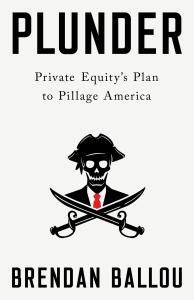
Private equity surrounds us. Firms like Blackstone, Carlyle, and KKR are among the largest employers in America and hold assets that rival those of small countries. Yet few understand what these firms are or how they work.
In Plunder, Brendan Ballou explains how private equity has reshaped American business by raising prices, reducing quality, cutting jobs, and shifting resources from productive to unproductive parts of the economy. Ballou vividly illustrates how many private equity firms buy up retailers, medical practices, prison services, nursing-home chains, and mobile-home parks, among other businesses, using little of their own money to do it and avoiding debt and liability for their actions. Forced to take on huge debts and pay extractive fees, companies purchased by private equity firms are often left bankrupt, or shells of their former selves, with consequences to communities that long depended on them.
Perhaps most startling is Ballou’s insight into how this is happening with the active support of various arms of the government. But, as Ballou reveals in an agenda for reining in the industry, private equity can be stopped from wreaking further havoc.
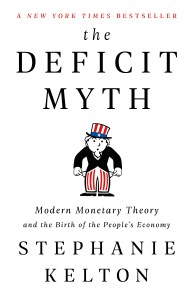
A “clear and vigorously written book” (Foreign Affairs), from the leading thinker of modern monetary theory, that delivers a bold new understanding for how to build a prosperous society
Stephanie Kelton's brilliant exploration of modern monetary theory (MMT) dramatically changes our understanding of how we can best deal with crucial issues ranging from poverty and inequality to creating jobs, expanding health care coverage, climate change, and building resilient infrastructure. Any ambitious proposal, however, inevitably runs into the buzz saw of how to find the money to pay for it, rooted in myths about deficits that are hobbling us as a country.
Kelton busts through the myths that prevent us from taking action: that the federal government should budget like a household, that deficits will harm the next generation, crowd out private investment, and undermine long-term growth, and that entitlements are propelling us toward a grave fiscal crisis.
MMT, as Kelton shows, shifts the terrain from narrow budgetary questions to one of broader economic and social benefits. With its important new ways of understanding money, taxes, and the critical role of deficit spending, MMT redefines how to responsibly use our resources so that we can maximize our potential as a society. MMT gives us the power to imagine a new politics and a new economy and move from a narrative of scarcity to one of opportunity.
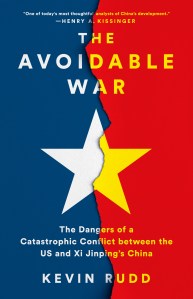
A war between China and the US would be catastrophic, deadly, and destructive. Unfortunately, it is no longer unthinkable.
The relationship between the US and China, the world’s two superpowers, is peculiarly volatile. It rests on a seismic fault—of cultural misunderstanding, historical grievance, and ideological incompatibility. No other nations are so quick to offend and be offended. Their militaries play a dangerous game of chicken, corporations steal intellectual property, intelligence satellites peer, and AI technicians plot. The capacity for either country to cross a fatal line grows daily.
Kevin Rudd, a former Australian prime minister who has studied, lived in, and worked with China for more than forty years, is one of the very few people who can offer real insight into the mindsets of the leadership whose judgment will determine if a war will be fought. The Avoidable War demystifies the actions of both sides, explaining and translating them for the benefit of the other. Geopolitical disaster is still avoidable, but only if these two giants can find a way to coexist without betraying their core interests through what Rudd calls “managed strategic competition.” Should they fail, down that path lies the possibility of a war that could rewrite the future of both countries, and the world.
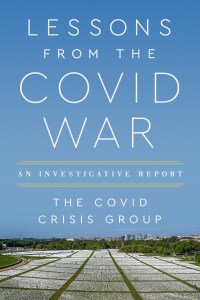
Our national leaders have drifted into treating the pandemic as though it were an unavoidable natural catastrophe, repeating a depressing cycle of panic followed by neglect. So a remarkable group of practitioners and scholars from many backgrounds came together determined to discover and learn lessons from this latest world war.
Lessons from the Covid War is plain-spoken and clear sighted. It cuts through the enormous jumble of information to make some sense of it all and answer: What just happened to us, and why? And crucially, how, next time, could we do better? Because there will be a next time.
The Covid war showed Americans that their wondrous scientific knowledge had run far ahead of their organized ability to apply it in practice. Improvising to fight this war, many Americans displayed ingenuity and dedication. But they struggled with systems that made success difficult and failure easy.
This book shows how Americans can come together, learn hard truths, build on what worked, and prepare for global emergencies to come.
A joint effort from:
Danielle Allen • John M. Barry • John Bridgeland • Michael Callahan • Nicholas A. Christakis • Doug Criscitello • Charity Dean • Victor Dzau • Gary Edson • Ezekiel Emanuel • Ruth Faden • Baruch Fischhoff • Margaret “Peggy” Hamburg • Melissa Harvey • Richard Hatchett • David Heymann • Kendall Hoyt • Andrew Kilianski • James Lawler • Alexander J. Lazar • James Le Duc • Marc Lipsitch • Anup Malani • Monique K. Mansoura • Mark McClellan • Carter Mecher • Michael Osterholm • David A. Relman • Robert Rodriguez • Carl Schramm • Emily Silverman • Kristin Urquiza • Rajeev Venkayya • Philip Zelikow
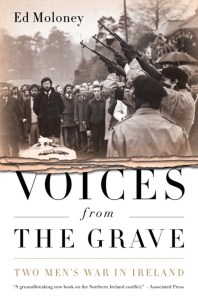
After ‘the long war’ in Ireland came to an end, very few paramilitary leaders on either side spoke openly about their role in that bloody conflict, but in Voices from the Grave, two leading figures from opposing sides reveal their involvement in bombings, shootings and killings on one condition: that their stories were kept secret until after their deaths. In extensive interviews given to researchers from Boston College, Brendan Hughes and David Ervine spoke with astonishing openness about their turbulent, violent lives.
Hughes was a legend in the Republican movement. An ‘operator’, a gun-runner and mastermind of some of the most savage IRA violence of the Troubles, he was a friend and close ally of Gerry Adams and was by his side during the most brutal years of the conflict.
David Ervine was the most substantial political figure to emerge from the world of Loyalist paramilitaries. A former Ulster Volunteer Force bomber and confidante of its long-time leader Gusty Spence, Ervine helped steer Loyalism’s gunmen towards peace, persuading the UVF’s leaders to target IRA and Sinn Fein activists and push them down the road to a ceasefire.
Now their stories have been woven into a vivid narrative which provides compelling insight into a secret world and events long hidden from history.
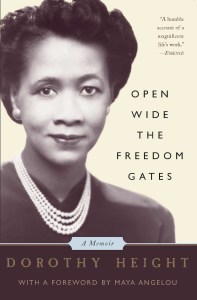
After the fierce battles of the 1960s, Dr. Height concentrates on troubled black communities, on issues like rural poverty, teen pregnancy and black family values. In 1994, her efforts are officially recognized. Along with Rosa Parks, she receives the Presidential Medal of Freedom, the nation’s highest civilian honor.
WEEKLY DEALS
December 18, 2023 – December 24, 2023
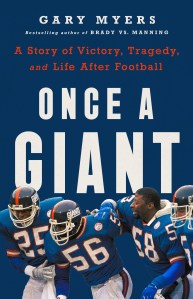
The 1986 New York Giants are legendary. A championship team coached by Bill Parcells and his wunderkind assistant Bill Belichick, featuring future Hall of Famers and All-Pros like Phil Simms, Lawrence Taylor, Mark Bavaro, and Harry Carson. They were dominant on the field and formed a unique and lasting bond off of it. More than thirty years later, it's the friendships that have proved more important–a matter of life and death.
In Once a Giant, bestselling football writer Gary Myers tells the story of that team and what became of it. Gridiron glory eventually faded; chronic pain, addiction, and in some cases crimes have followed. Many football players face these harsh realities, but the Giants have confronted and survived them together.
With unprecedented access, Myers dives into such issues as Mark Bavaro's battle with injuries, the breakup and reconciliation of Parcells and Belichick, and Lawrence Taylor's struggles with sobriety. He creates a never-before-seen portrait of the team's run to the title, and their even more challenging fight to live after it ended.

“A radical new history of the United States abroad” (Wall Street Journal) which uncovers U.S. complicity in the mass-killings of left-wing activists in Indonesia, Latin America and around the world
In 1965, the US government helped the Indonesian military kill approximately one million innocent civilians—eliminating the largest Communist Party outside China and the Soviet Union and inspiring other copycat terror programs.
In this bold and comprehensive new history, Vincent Bevins draws from recently declassified documents, archival research, and eyewitness testimony to reveal a shocking legacy that spans the globe. For decades, it’s been believed that the developing world passed peacefully into the US-led capitalist system. The Jakarta Method demonstrates that the brutal extermination of unarmed leftists was a fundamental part of Washington’s final triumph in the Cold War.
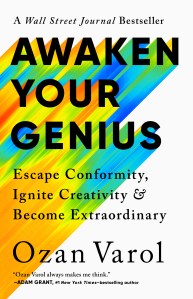
Unlock your originality and unleash your unique talents with this simple guide from the acclaimed author of Think Like a Rocket Scientist.
We say some people march to the beat of a different drummer. But implicit in this cliché is that the rest of us march to the same beat. We sleepwalk through life, find ourselves on well-worn paths that were never ours to walk, and become a silent extra in someone else’s story.
Extraordinary people carve their own paths as leaders and creators. They think and act with genuine independence. They stand out from the crowd because they embody their own shape and color.
We call these people geniuses—as if they’re another breed. But genius isn’t for a special few. It can be cultivated.
This book will show you how. You’ll learn how to discard what no longer serves you and discover your first principles—the qualities that make up your genius. You’ll be equipped to escape your intellectual prisons and generate original insights from your own depths. You’ll discover how to look where others don’t look and see what others don’t see. You’ll give birth to your genius, the universe-denter you were meant to be.
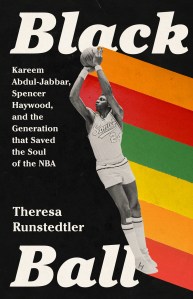
A vital narrative history of 1970s pro basketball, and the Black players who shaped the NBA
Against a backdrop of ongoing resistance to racial desegregation and strident calls for Black Power, the NBA in the 1970s embodied the nation’s imagined descent into disorder. A new generation of Black players entered the league, among them Kareem Abdul-Jabbar and Spencer Haywood, and the press and public were quick to blame this cohort for the supposed decline of pro-basketball, citing drugs, violence, and greed. Basketball became a symbol for post–civil rights America: the rules had changed, allowing more Black people onto the playing field, and now they were ruining everything.
Enter Black Ball, a gripping corrective in which scholar Theresa Runstedtler expertly rewrites basketball’s “Dark Ages.” Weaving together a deep knowledge of the game with incisive social analysis, Runstedtler argues that this much-maligned period was pivotal to the rise of the modern-day NBA.
DAILY DEALS
December 2, 2023
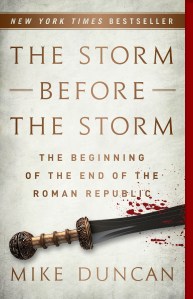
The Roman Republic was one of the most remarkable achievements in the history of civilization. Beginning as a small city-state in central Italy, Rome gradually expanded into a wider world filled with petty tyrants, barbarian chieftains, and despotic kings. Through the centuries, Rome's model of cooperative and participatory government remained remarkably durable and unmatched in the history of the ancient world.
In 146 BC, Rome finally emerged as the strongest power in the Mediterranean. But the very success of the Republic proved to be its undoing. The republican system was unable to cope with the vast empire Rome now ruled: rising economic inequality disrupted traditional ways of life, endemic social and ethnic prejudice led to clashes over citizenship and voting rights, and rampant corruption and ruthless ambition sparked violent political clashes that cracked the once indestructible foundations of the Republic.
Chronicling the years 146-78 BC, The Storm Before the Storm dives headlong into the first generation to face this treacherous new political environment. Abandoning the ancient principles of their forbearers, men like Marius, Sulla, and the Gracchi brothers set dangerous new precedents that would start the Republic on the road to destruction and provide a stark warning about what can happen to a civilization that has lost its way.
December 5, 2023
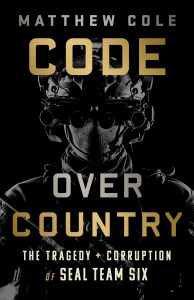
The Navy SEALs are, in the eyes of many Americans, the ultimate heroes. When they killed Osama Bin Laden in 2011, it was celebrated as a massive victory. Former SEALs rake in cash as leadership consultants for corporations, and young military-bound men dream of serving in their ranks.
But the SEALs have lost their bearings. Investigative journalist Matthew Cole tells the story of the most lauded unit, SEAL Team 6, revealing a troubling pattern of war crimes and the deep moral rot beneath authorized narratives. From their origins in World War II, the SEALs have trained to be specialized killers with short missions. As the wars in Iraq and Afghanistan became the endless War on Terror, their violence spiraled out of control.
Code Over Country details the high-level decisions that unleashed the SEALs’ carnage and the coverups that prevented their crimes from coming to light. It is a necessary and rigorous investigation of the unchecked power of the military—and the harms enacted by and upon soldiers in America’s name.
December 7, 2023

In 1979, the gruesome slaying of a thirteen-year-old boy riveted the suburbs of Suffolk County, New York. As the county hustled to bring the case to a dubious resolution, a wayward local teenager emerged with a convenient story to tell. For his cooperation, James Burke was rewarded with a job as a cop.
Thus began Burke’s unlikely ascent to the top of one of the country’s largest law enforcement jurisdictions. He and a crew of likeminded allies utilized vengeance, gangster tactics, and political leverage to become the most powerful and feared figures in their suburban empire. In his quest to maintain that power, Burke botched — intentionally or not — dire investigations like that of the famed Gilgo Beach serial killings and the county's MS-13 gang scourge.
Until a pilfered bag of sex toys brought it all crashing down.
Jimmy the King is the story of the rise, reign, and paranoiac fall of a corrupt cop and his regime—a crime family with badges and guaranteed pensions. Novelistic in detail and piercing in its political insight, this book will leave you questioning who modern policing serves, who it protects, and who it preys upon and abandons.
December 14, 2023
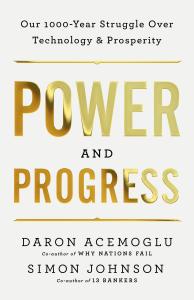
Throughout history, technological change — whether it takes the form of agricultural improvements in the Middle Ages, the Industrial Revolution, or today’s artificial intelligence — has been viewed as a main driver of prosperity, working in the public interest. The reality, though, is that technology is shaped by what powerful people want and believe, generating riches, social respect, cultural prominence, and further political voice for those already powerful. For most of the rest of us, there is the illusion of progress.
Daron Acemoglu and Simon Johnson debunk modern techno-optimism through a dazzling, original account of how technological choices have changed the course of history. From vivid stories of how the economic surplus of the Middle Ages was appropriated by an ecclesiastical elite to build cathedrals while the peasants starved, to the making of vast fortunes from digital technologies today as millions are pushed towards poverty, we see how the path of technology is determined and who influences its trajectory.
To achieve the true potential of innovation, we need to ensure technology is creating new jobs and opportunities rather than marginalizing most people, through automated work and political passivity. We need to use the tremendous digital advances of the last half century to create useful and empowering tools, and seize back control from a small elite of hubristic, messianic tech leaders pursuing
their own interests.
With their breakthrough economic theory and manifesto for building a better society, Acemoglu and Johnson provide the understanding and vision to reimagine and reshape the path of technology and create true shared prosperity.