
News in Context
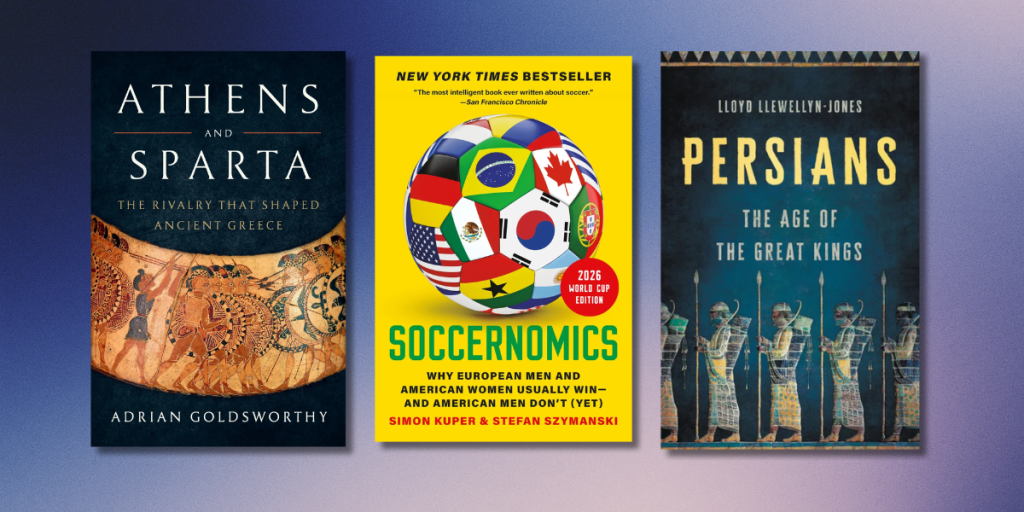
Learn the ‘why’ behind the headlines. While the news tells you what happened today, these books provide the essential context, history, and expert analysis to help you understand what it all actually means. Dive into our curated collection to go beyond the breaking news.
History for World Events
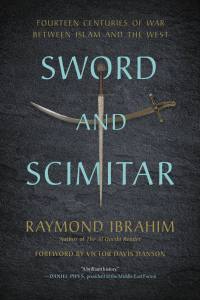
A sweeping history of the often-violent conflict between Islam and the West, shedding a revealing light on current hostilities.
“With passion, Raymond Ibrahim offers an edgy and eye-opening introduction to a millennium of warfare between the Muslim and Christian worlds before the modern age.” —Thomas Madden, award-winning author of Istanbul, Venice, and Concise History of the Crusades
The West and Islam—the sword and scimitar—have clashed since the mid-seventh century, when, according to Muslim tradition, the Roman emperor rejected Prophet Muhammad’s order to abandon Christianity and convert to Islam, unleashing a centuries-long jihad on Christendom.
Sword and Scimitar chronicles the decisive battles that arose from this ages-old Islamic jihad, beginning with the first major Islamic attack on Christian territory in 636, through the Muslim occupation of nearly three-quarters of Christendom (prompting the Crusades), followed by renewed Muslim conquests by Turks and Tatars, and the European colonization of the Muslim world in the 1800s, when Islam largely went on the retreat—until its reemergence in recent times.
Using original sources in Arabic and Greek, preeminent historian Raymond Ibrahim describes each battle in vivid detail and explains how these wars and the larger historical currents of the age reflect the cultural fault lines between Islam and the West.
The majority of these landmark encounters—including the battles of Yarmuk, Tours, Manzikert, the sieges at Constantinople and Vienna, and the crusades in Syria and Spain—are now forgotten or considered inconsequential. Yet today, as the West faces a resurgence of this enduring Islamic jihad, Sword and Scimitar provides the needed historical context to understand the current relationship between the West and the Islamic world, and why the Islamic State is merely the latest chapter of an old history.
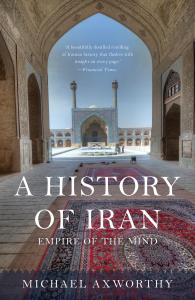
The definitive history of Iran, from the ancient Persian empires to today.
“Michael Axworthy’s deft untangling of the country’s history, from the advent of Zoroastrianism to the 1979 revolution, is a stunning achievement.” –Guardian
Iran is a land of contradictions. It is an Islamic republic, but one in which only 1.4 percent of the population attend Friday prayers. Iran’s religious culture encompasses the most censorious and dogmatic Shi’a Muslim clerics in the world, yet its poetry insistently dwells on the joys of life: wine, beauty, sex. Iranian women are subject to one of the most restrictive dress codes in the Islamic world but make up nearly 60 percent of the student population of the nation’s universities.
In A History of Iran, acclaimed historian Michael Axworthy chronicles the rich history of this complex nation from the Achaemenid Empire of sixth century BC to the revolution of 1979 to today, including a close look at Iran’s ongoing attempts to become a nuclear power.
This comprehensive volume offers general readers an essential guide to understanding this volatile nation, which is once again at the center of the world’s attention.
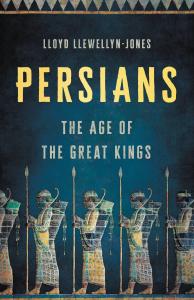
A stunning portrait of the magnificent splendor of ancient Persia and its enduring legacies for today’s Iran.
“A brilliant feat of resurrection.” -Tom Holland, author of Dominion
The Achaemenid Persian kings ruled over the largest empire of antiquity, stretching from Libya to the steppes of Asia and from Ethiopia to Pakistan. From the palace-city of Persepolis, Cyrus the Great, Darius, Xerxes, and their heirs reigned supreme for centuries until the conquests of Alexander of Macedon brought the empire to a swift and unexpected end in the late 330s BCE.
In Persians, historian Lloyd Llewellyn-Jones tells the epic story of this dynasty and the world it ruled. Drawing on Iranian inscriptions, cuneiform tablets, art, and archaeology, he shows how the Achaemenid Persian Empire was the world’s first superpower—one built, despite its imperial ambition, on cooperation and tolerance.
This is the definitive history of the Achaemenid dynasty and its legacies in modern-day Iran, a book that completely reshapes our understanding of the ancient world.
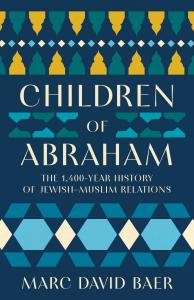
“A revelatory picture of both coexistence and conflict.” —Simon Sebag Montefiore, author of Jerusalem: The Biography
Today, the dominant narrative of the relationship between Jewish and Muslim peoples assumes a long history of violent hostility. In Children of Abraham, historian Marc David Baer lays this myth to rest, showing how Jews and Muslims lived together in the Middle East and Europe, more often in cooperation than in conflict, for more than a millennium. When Islam emerged in the seventh century, Muslims and Jews were bound by shared religious tenets and common cultural practices, and for centuries afterward, they were often allies.
Baer introduces readers to Muslim warriors fighting for a medieval Turkish Jewish kingdom on the Caspian Sea, Jewish viziers leading the Muslim sultan’s troops in Spain, and Jewish literary lights and political party leaders in modern Egypt and Iraq. But Baer resists the alluring fable that Jews and Muslims ever lived in interfaith utopia, and he shows how European colonization and nationalism fed the emergence of modern antisemitism and Islamophobia and helped to drive these two peoples further and further apart.
Traversing the full spectrum of Jewish–Muslim relations, this is an urgent, essential history for understanding today’s unending conflicts in the Middle East and beyond.
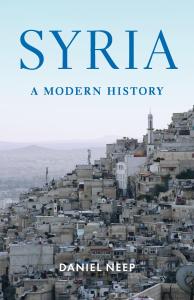
“A masterful history of Syria that is both sweeping in scope and brimming with vivid detail…a riveting and insightful book.” —Wendy Pearlman, author of We Crossed A Bridge and It Trembled
Modern Syria has seen violence, repression, and autocracy, suffering through tragedy after tragedy over the past century. Yet the history of Syria is not just a tale of dictators and generals. From the 1800s to the 2020s, the Syrian people have engaged in a passionate struggle for justice, equality, and a better future.
Whether fighting for national independence from French colonial rule, battling local landowning elites to share the country’s wealth, or rising up against the Assad regime, the Syrian people have fiercely clung to their right to live with respect and dignity. Theirs is a story of protest and perseverance in the long fight to reshape the political destiny of their nation.
Daniel Neep’s Syria: A Modern History offers a gripping narrative of how Syrians have navigated these events. Never losing sight of the fates of ordinary people, it provides a comprehensive account of how a nation born in conflict nevertheless sustained a rich, complex, and diverse society that will now chart its own path into the uncertain future.
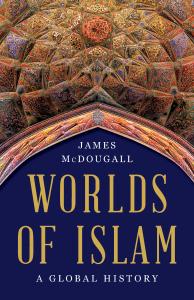
“Anyone who wants to understand not just the past of Islam but its present and future should read Worlds of Islam.”—Reza Aslan, author of No god but God
From its birth in seventh-century Arabia, Islam has been a faith on the move. Over the span of a thousand years, armies, missionaries, and merchants carried it to the edges of Europe, the coasts of Southeast Asia, and the remote interior of China. By the nineteenth century, Islam encompassed a world of great diversity, from Muslim-ruled empires to new nations where Muslims lived out their faith among many others. As empires fell and new superpowers rose, Muslims proved to be as adaptable and dynamic as modernity itself.
In Worlds of Islam, historian James McDougall explores Islam’s origins and transformations as Muslims adapted to changing times and conditions, from Late Antiquity to the digital age. In the twentieth century, while monarchs in the Gulf asserted dynastic privilege and fundamentalists in Egypt and Pakistan preached social morality, revolutionaries from Algeria to Indonesia fought for national self-determination, and activists in North America and Europe campaigned for civil liberties and social justice.
Sweeping and authoritative, Worlds of Islam narrates the epic story of how Muslims emerged as a community, built empires, traversed the globe, came to number in the billions, and became modern.
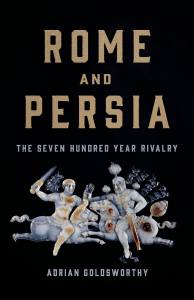
“Magnificent.” —Spectator
The Roman Empire was like no other. Stretching from the north of Britain to the Sahara, and from the Atlantic coast to the Euphrates, it imposed peace and prosperity on an unprecedented scale. Its only true rival lay in the east, where the Parthian and then Persian empires ruled over great cities and the trade routes to mysterious lands beyond. This was the region Alexander the Great had swept through, creating a dream of glory and conquest that tantalized Greeks and Romans alike.
Tracing seven centuries of conflict between Rome and Persia, historian Adrian Goldsworthy shows how these two great powers evolved together. Despite their endless clashes, trade between the empires enriched them both, and a mutual respect prevented both Rome and Persia from permanently destroying the other.
Epic in scope, Rome and Persia completely reshapes our understanding of one of the greatest rivalries of world history.
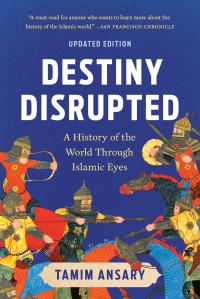
We in the West share a common narrative of world history. But our story largely omits a whole civilization whose citizens shared an entirely different narrative for a thousand years as the Islamic world saw it, from the time of Mohammed through the fall of the Ottoman Empire to the events of 9/11 and beyond.
In Destiny Disrupted, Tamim Ansary tells the rich story of world history as the Islamic world saw it. He clarifies why our civilizations grew up oblivious to each other, what happened when they intersected, and how the Islamic world was affected by its slow recognition that Europe—a place it long perceived as primitive and disorganized—had somehow hijacked destiny.
With sympathy to Muslim and Western perspectives alike, Destiny Disrupted offers a fresh and vital perspective on world conflicts we thought we understood.

From Pulitzer Prize finalist Annie Jacobsen, the untold USA Today bestselling story of the CIA’s secret paramilitary units.
Surprise … your target. Kill … your enemy. Vanish … without a trace.
When diplomacy fails, and war is unwise, the president calls on the CIA’s Special Activities Division, a highly-classified branch of the CIA and the most effective, black operations force in the world.
Originally known as the president’s guerrilla warfare corps, SAD conducts risky and ruthless operations that have evolved over time to defend America from its enemies. Almost every American president since World War II has asked the CIA to conduct sabotage, subversion and, yes, assassination.
With unprecedented access to forty-two men and women who proudly and secretly worked on CIA covert operations from the dawn of the Cold War to the present day, along with declassified documents and deep historical research, Pulitzer Prize finalist Annie Jacobsen unveils—like never before—a complex world of individuals working in treacherous environments populated with killers, connivers, and saboteurs.
Despite Hollywood notions of off-book operations and external secret hires, covert action is actually one piece in a colossal foreign policy machine.
Written with the pacing of a thriller, Surprise, Kill, Vanish brings to vivid life the sheer pandemonium and chaos, as well as the unforgettable human will to survive and the intellectual challenge of not giving up hope that define paramilitary and intelligence work. Jacobsen’s exclusive interviews—with members of the CIA’s Senior Intelligence Service (equivalent to the Pentagon’s generals), its counterterrorism chiefs, targeting officers, and Special Activities Division’s Ground Branch operators who conduct today’s close-quarters killing operations around the world—reveal, for the first time, the enormity of this shocking, controversial, and morally complex terrain. Is the CIA’s paramilitary army America’s weaponized strength, or a liability to its principled standing in the world? Every operation reported in this book, however unsettling, is legal.
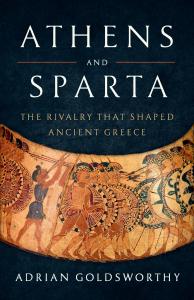
“Packed with intrigue and the politics of empire, revolution, and war, this accessible history of a tangled relationship between nations might strike some readers, the author warns, as ‘uncomfortably relevant.’” —New York Times
No period has more profoundly influenced the Western world than classical Greece, and at its center stood two cities: Athens and Sparta. Side by side, they beat the Persians, the only superpower of that age. Yet later, they spread conflict and destruction throughout the eastern Mediterranean, culminating in the horrors of the Peloponnesian War.
Athens and Sparta tells the definitive history of the relationship between brutal, militaristic Sparta and brash, radically democratic Athens. Eminent historian Adrian Goldsworthy narrates their incredible rise to prominence and how they became allies, rivals, and enemies. Ultimately, Goldsworthy shows that Athens and Sparta were more than competitors vying for power. They were polar opposites in ideology and culture, both driven by the Greek longing to excel, who led radically different experiments in how to run a state.
A remarkable account of ancient Greece at its height, this is the tale of the two cities that helped build it—before almost tearing it apart.
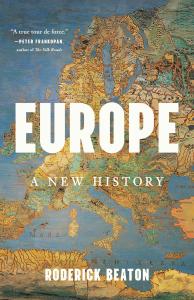
“A true tour de force.” —Peter Frankopan, author of The Silk Roads
What do we talk about when we talk about Europe? Is it defined by geography? Or is it politics, or shared culture? In Europe, award-winning historian Roderick Beaton tells the story of Europe as never before—as the history of an idea, and a collective identity.
Since its dramatic birth in ancient Greece, “Europe” has been defined, and redefined, by its people. Through this powerful lens, and with the narrative drive and scope of a novelist, Beaton deftly surveys Europe’s major historical developments: the rise and fall of Rome; the explosion of Christianity; the intellectual ferment of the Renaissance and the Enlightenment; the arrival of Europeans in the Americas; the violent upheavals of the nineteenth and twentieth centuries; and the uncertainties of the present. Throughout, original sources allow the voices of the past, from Tacitus to Thatcher, to speak for themselves.
Grappling with the multilayered identities that have always come with being European, Europe places the Europe of today in a long arc of history stretching back more than 2,500 years.
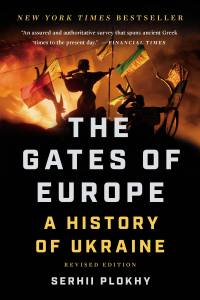
A New York Times Bestseller
The definitive history of Ukraine from antiquity to today.
“An admirable new history…. In his elegant and careful exposition of Ukraine’s past, Mr. Plokhy has also provided some signposts to the future.” ―Economist
As Ukraine is embroiled in an ongoing struggle with Russia to preserve its territorial integrity and political independence, celebrated historian Serhii Plokhy explains that today’s crisis is a case of history repeating itself: the Ukrainian conflict is only the latest in a long history of turmoil over Ukraine’s sovereignty. Situated between Central Europe, Russia, and the Middle East, Ukraine has been shaped by empires that exploited the nation as a strategic gateway between East and West—from the Romans and Ottomans to the Third Reich and the Soviet Union.
In The Gates of Europe, Plokhy examines Ukraine’s search for its identity through the lives of major Ukrainian historical figures, from its heroes to its conquerors. As Ukraine once again finds itself at the center of global attention, Plokhy brings its history to vivid life as he connects the nation’s past with its present and future.

A journey into the glittering, surreal heart of twenty-first-century Russia, where even dictatorship is a reality show.
“A gripping and unsettling account.” —Washington Post
Professional killers with the souls of artists, would-be theater directors turned Kremlin puppet masters, Hells Angels who hallucinate themselves as holy warriors: welcome to twenty-first-century Russia. It is a world erupting with new money and new power, changing so fast it breaks all sense of reality.
When British producer Peter Pomerantsev plunges into the booming Russian TV industry, he gains access to every nook and corrupt cranny of the country. He meets with propaganda gurus running the nerve center of the Russian media machine, explores Siberian mafia towns, and visits the salons of the international, super-rich oligarchs. As his experience takes him ever deeper into the maze of Putin’s Russia, Pomerantsev begins to see the country with new eyes.
Nothing Is True and Everything Is Possible is a piercingly insightful voyage into a country spinning from decadence into madness.
Shaping Our Media
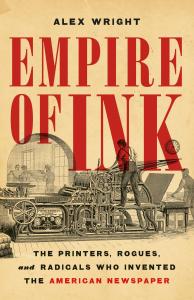
A sweeping history of America’s first media revolution: the rise of the newspaper, and the transformation of a fledgling republic into the world’s first information superpower.
“Captivating … a rip-roaring, richly entertaining feast.” —Wall Street Journal
No society had ever generated so much ink and paper in so little time. Between the Revolutionary War and the dawn of the twentieth century, the number of American newspapers increased five hundredfold. In Empire of Ink, Alex Wright tells the story of how an unruly young democracy found its voice—shaped by the interplay of new technologies, bold public policies, and a distinctly American zeal for free expression that unleashed the greatest outpouring of print the world had ever seen.
It was a wild, boisterous time—populated by gunslinging editors, tramp printers, zealous reformers, brilliant inventors, and literal snake-oil salesmen. Together, they transformed journalism, built a new industry, and helped forge the nation’s character. By century’s end, this freewheeling press had begun to give way to news syndicates, wire services, and corporate interests. Wealthy media barons seized on new technologies and economies of scale to consolidate power—shaping the mass media that would define the twentieth century.
Vividly bringing a pivotal chapter in American history to life, Empire of Ink reveals how the nation’s age-old struggles over truth, technology, and power continue to echo into today’s digital age.
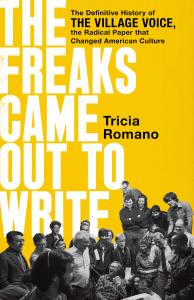
“The Freaks Came Out to Write may be the best history of a journalistic enterprise I’ve ever read”—Dwight Garner, The New York Times
You either were there or you wanted to be. A defining New York City institution co-founded by Norman Mailer, The Village Voice was the first newspaper to cover hip-hop, the avant-garde art scene, and Off-Broadway with gravitas. It reported on the AIDS crisis with urgency and seriousness when other papers dismissed it as a gay disease. In 1979, the Voice’s Wayne Barrett uncovered Donald Trump as a corrupt con artist before anyone else was paying attention. It invented new forms of criticism and storytelling and revolutionized journalism, spawning hundreds of copycats.
With more than 200 interviews, including two-time Pulitzer Prize winner, Colson Whitehead, cultural critic Greg Tate, gossip columnist Michael Musto, and feminist writers Vivian Gornick and Susan Brownmiller, former Voice writer Tricia Romano pays homage to the paper that saved NYC landmarks from destruction and exposed corrupt landlords and judges. With interviews featuring post-punk band, Blondie, sportscaster Bob Costas, and drummer Max Weinberg, of Bruce Springsteen’s E Street Band, in this definitive oral history, Romano tells the story of journalism, New York City and American culture—and the most famous alt-weekly of all time.
FINALIST FOR 2024 NATIONAL BOOK CRITICS CIRCLE AWARD
FINALIST FOR 2025 GOTHAM BOOK PRIZE
LISTED IN BEST BOOKS OF 2024 BY NEW YORK MAGAZINE (VULTURE), THE NEW YORKER, LITHUB, AND CHICAGO PUBLIC LIBRARY
Cultural Phenomena

In this modern classic, a leading sportswriter and an acclaimed sports economist apply high-powered analytical tools to everyday soccer topics
“Soccernomics is the most intelligent book ever written about soccer.” ―San Francisco Chronicle
Why do clubs almost always lose money—and does it mean some will disappear? Why doesn’t America dominate the sport internationally? Do coaches actually even matter? These are the questions that most consume soccer fans—and Soccernomics holds the answers.
Soccernomics is a revolutionary way of looking at soccer that has helped to change how some of the world’s biggest clubs are run. Using insights and analogies from economics, statistics, psychology, and business to cast a new and entertaining light on how the game works, experts Simon Kuper and Stefan Szymanski reveal the often surprisingly counterintuitive truths about soccer.
This 2026 World Cup edition is updated throughout, including a brand-new chapter discussing MLS, Messi joining Inter Miami, and the rise of soccer in the United States. Soccernomics remains essential reading for anyone in search of a strategic, systematic perspective on the game.

The fascinating history of a decade aflame—and what we can learn from its embers.
“Disturbing and exhilarating.” —New Yorker
From 2010 to 2020, more people participated in protests than at any other point in human history. Yet we are not living in more just and democratic societies as a result. Acclaimed journalist Vincent Bevins carried out hundreds of interviews around the world, guided by a single, puzzling question: How did so many mass protests lead to the opposite of what they asked for?
The result is a stirring work of history that connects events in a dozen countries and reveals that conventional wisdom on revolutionary change is gravely misguided. From the so-called Arab Spring to Gezi Park in Turkey, from Ukraine’s Euromaidan to student rebellions in Chile and Hong Kong, Bevins provides a blow-by-blow account of street movements and their consequences, recounted in gripping detail.
In this groundbreaking study of an extraordinary chain of events, protesters and major actors look back on successes and defeats, offering urgent lessons for the future.
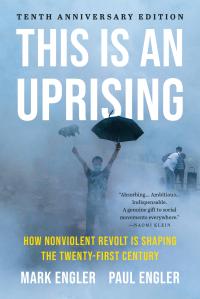
In a book that has become a modern classic of social movement organizing, Mark and Paul Engler explain that there is a craft to uprising—and that this craft can change the world.
From protests around climate change and immigrant rights, to #BlackLivesMatter and movements to defend democracy, a new generation is unleashing strategic nonviolent action to shape public debate and force political change. While mass movements are often portrayed as spontaneous and unpredictable, Mark and Paul Engler explore the hidden art behind such outbursts of protest, examining core principles that have been used to spark and guide moments of transformative unrest.
Now updated with new material discussing the major mobilizations of the past decade—including #MeToo, protests for racial and climate justice, and anti-Trump resistance—This Is an Uprising shows how new protest movements can be essential in fighting authoritarianism and advancing social and economic justice today.
Technology and Its Discontents
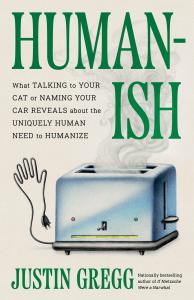
Bestselling science writer Justin Gregg explores the science behind our instinct to see ourselves in the creatures and objects around us. Ours is a world filled with emotional support alligators, a woman who married her briefcase, and Soviet super babies that drink dolphin milk. Delivered with a delightful mix of scientific insight and humor, Humanish is a groundbreaking exploration of one of the most powerful—but rarely talked about—cognitive biases influencing our behavior.
Through quirky stories and fascinating research, Gregg unravels the reasons behind why we treat our pets like babies, fall in love with chatbots, and talk to our cars. Discover how anthropomorphism drives both consumerism and the coming AI revolution, and how the inverse process, dehumanization, allows us to treat our fellow humans so inhumanely. Explore the brighter side of anthropomorphism’s biological benefits—it helps us connect with other humans and make sense of our unpredictable world. Humanish is filled with captivating stories and invaluable ideas of how we can harness our understanding of anthropomorphism to build healthier relationships and enrich our lives.

This “smart and wonderfully readable” (New York Times) exposé shows why Silicon Valley’s heartless, baseless, and foolish obsessions—with escaping death, building AI tyrants, and creating limitless growth—are about oligarchic power, not preparing for the future
Named a Best Book of the Year by Science News• Conversation • Scientific American
Tech billionaires have decided that they should determine our futures for us. According to Elon Musk, Jeff Bezos, Sam Altman, and more, the only good future for humanity is one powered by technology: trillions of humans living in space, functionally immortal, served by superintelligent AIs.
In More Everything Forever, science journalist Adam Becker investigates these wildly implausible and often profoundly immoral visions of tomorrow—and shows why, in reality, there is no good evidence that they will, or should, come to pass. Nevertheless, these obsessions fuel fears that overwhelm reason—for example, that a rogue AI will exterminate humanity—at the expense of essential work on solving crucial problems like climate change. What’s more, these futuristic visions cloak a hunger for power under dreams of space colonies and digital immortality. The giants of Silicon Valley claim that their ideas are based on science, but the reality is darker: they come from a jumbled mix of shallow futurism and racist pseudoscience.
More Everything Forever exposes the powerful and sinister ideas that dominate Silicon Valley, challenging us to see how foolish, and dangerous, these visions of the future are.
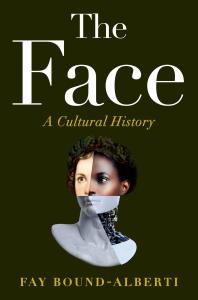
“An ambitious, entertaining survey of human perception.”—The New York Times
“Exuberant… Its historical morsels will stay with you long after you finish.”—The Economist
Award-winning historian Fay Bound-Alberti synthesizes over twenty years of research to offer a sweeping cultural history of our most decisive—and sometimes divisive—body part.
What’s in a face? And how much power does it hold?
The Face begins in the historical West, where we learn how humans have interpreted faces and connected specific features with ideas of morality, social hierarchy, psychology, and so much more, setting the stage for the cultural biases that now inform our everyday interactions across the globe. We then watch how new technologies that reflect or alter our face’s appearance have transformed our idea of the Self over time—from the growth of portraiture in the Renaissance and the mass production of mirrors and photography in the nineteenth century, to twenty-first century innovations like digital avatars and face transplants. And throughout, we explore the face as the cultural artifact that it is: a surface that grows, is adorned, and then displayed, influencing who we are and might become as both individuals and members of society.
Readers will walk away with a new understanding of the history, power, and future of the face, alongside its role in modern identity, genetics, technology, and beyond.