
PublicAffairs & Bold Type Books – Ebook Deals – September 2023
MONTHLY DEALS
September 1, 2023 – September 30, 2023
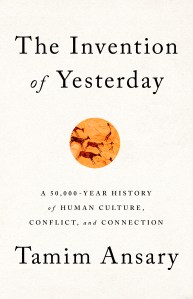
Fifty thousand years ago, we roamed the world as countless autonomous bands of hunter-gatherers, each one telling itself a story of the world with itself at the center. We used narratives to organize for survival and explain the unfathomable, and these stories evolved into the bases for cultures, empires, and civilizations. When disparate narratives collided, the encounters produced everything from confusion, chaos, and war to cultural efflorescence, religious awakenings, and intellectual breakthroughs.
Traveling across millennia and cultures, The Invention of Yesterday illuminates our propensity to invent a shared symbolic universe, and argues that world history is a narrative we’re constantly inventing.
“A well-written and valuable take on the diverse narratives that have shaped human history.” ―Kirkus Reviews
“Chatty, breezy, and capacious.” ―Publishers Weekly
“Terrific.” ―San Francisco Chronicle

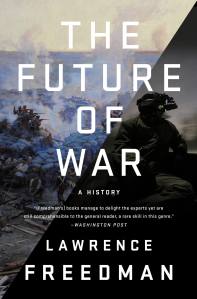
Questions about the future of war are a regular feature of political debate, strategic analysis, and popular fiction. Where should we look for new dangers? What cunning plans might an aggressor have in mind? What are the best forms of defense? How might peace be preserved or conflict resolved?
From the French rout at Sedan in 1870 to the relentless contemporary insurgencies in Iraq and Afghanistan, Lawrence Freedman, a world-renowned military thinker, reveals how most claims from the military futurists are wrong. But they remain influential nonetheless.
Freedman shows how those who have imagined future war have often had an idealized notion of it as confined, brief, and decisive, and have regularly taken insufficient account of the possibility of long wars-hence the stubborn persistence of the idea of a knockout blow, whether through a dashing land offensive, nuclear first strike, or cyberattack. He also notes the lack of attention paid to civil wars until the West began to intervene in them during the 1990s, and how the boundaries between peace and war, between the military, the civilian, and the criminal are becoming increasingly blurred.
Freedman’s account of a century and a half of warfare and the (often misconceived) thinking that precedes war is a challenge to hawks and doves alike, and puts current strategic thinking into a bracing historical perspective.

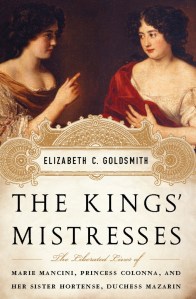
Marie and Hortense, however, had other ambitions in mind altogether. Miserable in their marriages and determined to live independently, they abandoned their husbands in secret and began lives of extraordinary daring on the run and in the public eye. The beguiling sisters quickly won the affections of noblemen and kings alike. Their flight became popular fodder for salon conversation and tabloids, and was closely followed by seventeenth-century European society. The Countess of Grignan remarked that they were traveling “like two heroines out of a novel.” Others gossiped that they “were roaming the countryside in pursuit of wandering lovers. “Their scandalous behavior — disguising themselves as men, gambling, and publicly disputing with their husbands — served as more than just entertainment. It sparked discussions across Europe concerning the legal rights of husbands over their wives. Elizabeth Goldsmith’s vibrant biography of the Mancini sisters — drawn from personal papers of the players involved and the tabloids of the time — illuminates the lives of two pioneering free spirits who were feminists long before the word existed.
Deal of the Day
September 3, 2023
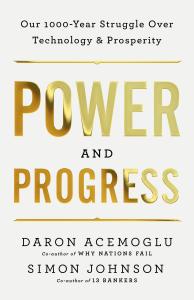
Throughout history, technological change — whether it takes the form of agricultural improvements in the Middle Ages, the Industrial Revolution, or today’s artificial intelligence — has been viewed as a main driver of prosperity, working in the public interest. The reality, though, is that technology is shaped by what powerful people want and believe, generating riches, social respect, cultural prominence, and further political voice for those already powerful. For most of the rest of us, there is the illusion of progress.
Daron Acemoglu and Simon Johnson debunk modern techno-optimism through a dazzling, original account of how technological choices have changed the course of history. From vivid stories of how the economic surplus of the Middle Ages was appropriated by an ecclesiastical elite to build cathedrals while the peasants starved, to the making of vast fortunes from digital technologies today as millions are pushed towards poverty, we see how the path of technology is determined and who influences its trajectory.
To achieve the true potential of innovation, we need to ensure technology is creating new jobs and opportunities rather than marginalizing most people, through automated work and political passivity. We need to use the tremendous digital advances of the last half century to create useful and empowering tools, and seize back control from a small elite of hubristic, messianic tech leaders pursuing
their own interests.
With their breakthrough economic theory and manifesto for building a better society, Acemoglu and Johnson provide the understanding and vision to reimagine and reshape the path of technology and create true shared prosperity.
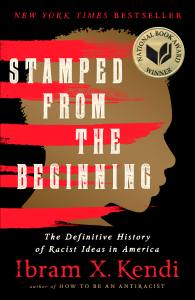
Some Americans insist that we're living in a post-racial society. But racist thought is not just alive and well in America — it is more sophisticated and more insidious than ever. And as award-winning historian Ibram X. Kendi argues, racist ideas have a long and lingering history, one in which nearly every great American thinker is complicit.
In this deeply researched and fast-moving narrative, Kendi chronicles the entire story of anti-black racist ideas and their staggering power over the course of American history. He uses the life stories of five major American intellectuals to drive this history: Puritan minister Cotton Mather, Thomas Jefferson, abolitionist William Lloyd Garrison, W.E.B. Du Bois, and legendary activist Angela Davis.
As Kendi shows, racist ideas did not arise from ignorance or hatred. They were created to justify and rationalize deeply entrenched discriminatory policies and the nation's racial inequities.
In shedding light on this history, Stamped from the Beginning offers us the tools we need to expose racist thinking. In the process, he gives us reason to hope.
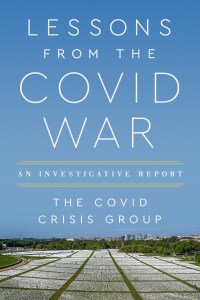
Our national leaders have drifted into treating the pandemic as though it were an unavoidable natural catastrophe, repeating a depressing cycle of panic followed by neglect. So a remarkable group of practitioners and scholars from many backgrounds came together determined to discover and learn lessons from this latest world war.
Lessons from the Covid War is plain-spoken and clear sighted. It cuts through the enormous jumble of information to make some sense of it all and answer: What just happened to us, and why? And crucially, how, next time, could we do better? Because there will be a next time.
The Covid war showed Americans that their wondrous scientific knowledge had run far ahead of their organized ability to apply it in practice. Improvising to fight this war, many Americans displayed ingenuity and dedication. But they struggled with systems that made success difficult and failure easy.
This book shows how Americans can come together, learn hard truths, build on what worked, and prepare for global emergencies to come.
A joint effort from:
Danielle Allen • John M. Barry • John Bridgeland • Michael Callahan • Nicholas A. Christakis • Doug Criscitello • Charity Dean • Victor Dzau • Gary Edson • Ezekiel Emanuel • Ruth Faden • Baruch Fischhoff • Margaret “Peggy” Hamburg • Melissa Harvey • Richard Hatchett • David Heymann • Kendall Hoyt • Andrew Kilianski • James Lawler • Alexander J. Lazar • James Le Duc • Marc Lipsitch • Anup Malani • Monique K. Mansoura • Mark McClellan • Carter Mecher • Michael Osterholm • David A. Relman • Robert Rodriguez • Carl Schramm • Emily Silverman • Kristin Urquiza • Rajeev Venkayya • Philip Zelikow
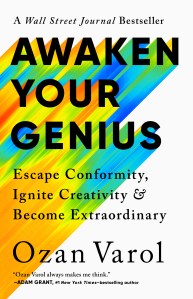
Unlock your originality and unleash your unique talents with this simple guide from the acclaimed author of Think Like a Rocket Scientist.
We say some people march to the beat of a different drummer. But implicit in this cliché is that the rest of us march to the same beat. We sleepwalk through life, find ourselves on well-worn paths that were never ours to walk, and become a silent extra in someone else’s story.
Extraordinary people carve their own paths as leaders and creators. They think and act with genuine independence. They stand out from the crowd because they embody their own shape and color.
We call these people geniuses—as if they’re another breed. But genius isn’t for a special few. It can be cultivated.
This book will show you how. You’ll learn how to discard what no longer serves you and discover your first principles—the qualities that make up your genius. You’ll be equipped to escape your intellectual prisons and generate original insights from your own depths. You’ll discover how to look where others don’t look and see what others don’t see. You’ll give birth to your genius, the universe-denter you were meant to be.
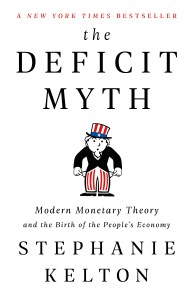
A “clear and vigorously written book” (Foreign Affairs), from the leading thinker of modern monetary theory, that delivers a bold new understanding for how to build a prosperous society
Stephanie Kelton's brilliant exploration of modern monetary theory (MMT) dramatically changes our understanding of how we can best deal with crucial issues ranging from poverty and inequality to creating jobs, expanding health care coverage, climate change, and building resilient infrastructure. Any ambitious proposal, however, inevitably runs into the buzz saw of how to find the money to pay for it, rooted in myths about deficits that are hobbling us as a country.
Kelton busts through the myths that prevent us from taking action: that the federal government should budget like a household, that deficits will harm the next generation, crowd out private investment, and undermine long-term growth, and that entitlements are propelling us toward a grave fiscal crisis.
MMT, as Kelton shows, shifts the terrain from narrow budgetary questions to one of broader economic and social benefits. With its important new ways of understanding money, taxes, and the critical role of deficit spending, MMT redefines how to responsibly use our resources so that we can maximize our potential as a society. MMT gives us the power to imagine a new politics and a new economy and move from a narrative of scarcity to one of opportunity.

A war between China and the US would be catastrophic, deadly, and destructive. Unfortunately, it is no longer unthinkable.
The relationship between the US and China, the world’s two superpowers, is peculiarly volatile. It rests on a seismic fault—of cultural misunderstanding, historical grievance, and ideological incompatibility. No other nations are so quick to offend and be offended. Their militaries play a dangerous game of chicken, corporations steal intellectual property, intelligence satellites peer, and AI technicians plot. The capacity for either country to cross a fatal line grows daily.
Kevin Rudd, a former Australian prime minister who has studied, lived in, and worked with China for more than forty years, is one of the very few people who can offer real insight into the mindsets of the leadership whose judgment will determine if a war will be fought. The Avoidable War demystifies the actions of both sides, explaining and translating them for the benefit of the other. Geopolitical disaster is still avoidable, but only if these two giants can find a way to coexist without betraying their core interests through what Rudd calls “managed strategic competition.” Should they fail, down that path lies the possibility of a war that could rewrite the future of both countries, and the world.

From a star theoretical physicist, “a love letter to the wonderous universe we call home, and an urge to think critically about how we explore its depths” (Smithsonian Magazine)
In The Disordered Cosmos, Dr. Chanda Prescod-Weinstein shares her love for physics, from the Standard Model of Particle Physics and what lies beyond it, to the physics of melanin in skin, to the latest theories of dark matter—all with a new spin informed by history, politics, and the wisdom of Star Trek.
One of the leading physicists of her generation, Prescod-Weinstein is also one of the first one hundred Black American women to earn a PhD from a department of physics. Her vision of the cosmos is vibrant, buoyantly nontraditional, and grounded in Black feminist traditions.
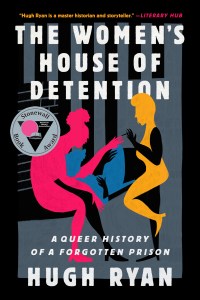
This "crucial" (The Advocate) and "compelling" (BuzzFeed) history of a prison, and the queer women and trans people held there, is a window into the policing of queerness and radical politics in the twentieth century.
The Women’s House of Detention, a landmark that ushered in the modern era of women’s imprisonment, is now largely forgotten. But when it stood in New York City’s Greenwich Village, from 1929 to 1974, it was a nexus for the tens of thousands of individuals who inhabited its crowded cells.
Historian Hugh Ryan reconstructs the little-known lives of these incarcerated New Yorkers, making a uniquely queer case for prison abolition—and demonstrating that by queering the Village, the House of Detention helped define queerness for the rest of America. From the lesbian communities forged through the Women’s House of D to the turbulent prison riots that presaged Stonewall, this is the story of one building and much more: the people it caged, the neighborhood it changed, and the resistance it inspired.