
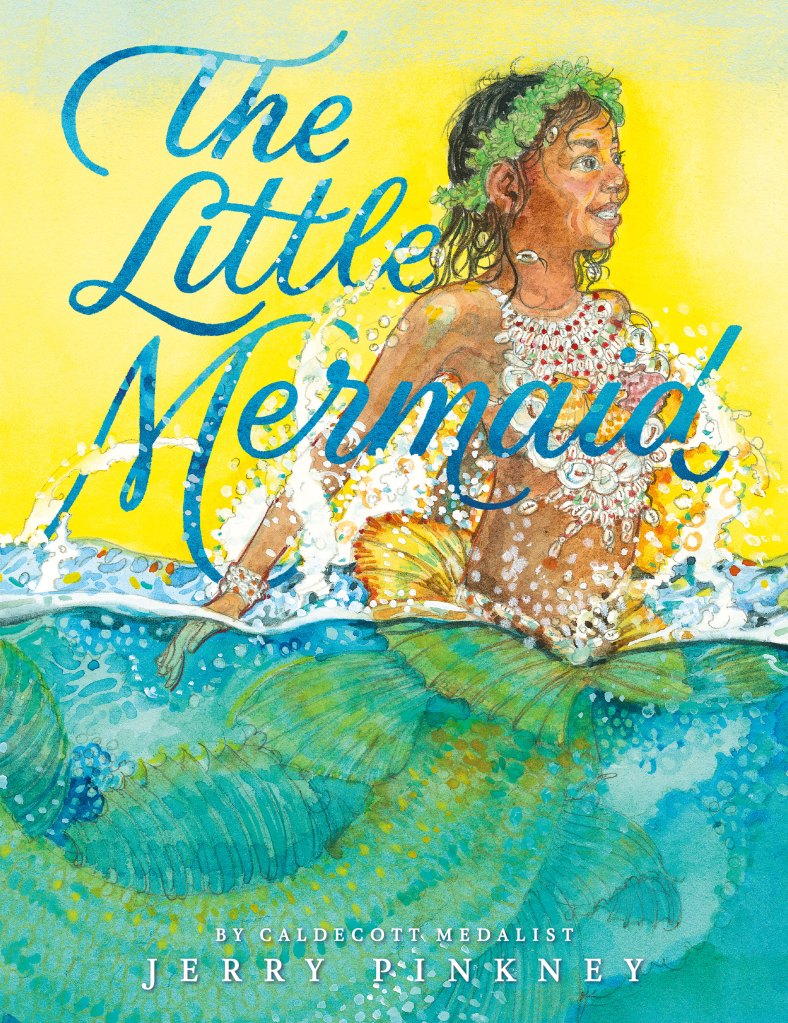
It was half buried in the sand, a bright seashell. Who could help retrieving this lovely gift of nature? I pressed the shell to my ear and listened. Instantly a haunting song from the sea brought to mind Hans Christian Andersen’s “The Little Mermaid”. I held it there for awhile, recalling how the mermaid’s story, since its first publication, had taken a space on my list of classic fairytales to adapt. Yet, time and again I had placed it on a back burner in order to work on other projects.
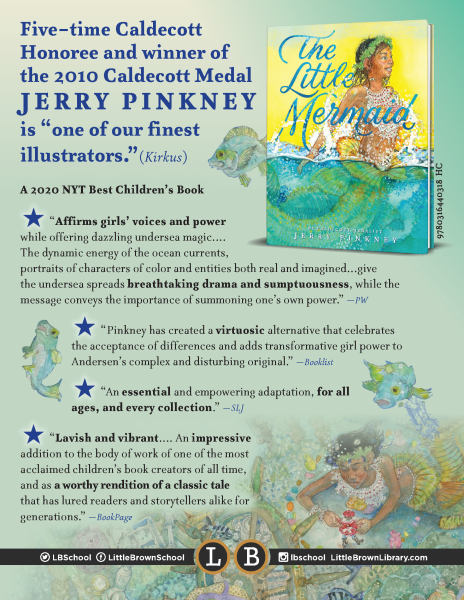
“The Little Mermaid” has been to me an intriguing yet a daunting story because the original text was far too long, and I found the plot to be out of step with the times; today’s readers are seeking their own true paths, blazing new trails. So I began reimagining the tale around Melody’s need to explore.
The heroine in my adaptation of “The Little Mermaid”, Melody, has a curious nature, and an overwhelming desire to dream about other places beyond the sea. She is often found alone, creating intricate, imaginary worlds with an abundance of objects from the wreckage of sunken ships. Everything changes one day when Melody finds a doll which looks much like her—except the doll doesn’t have a tail. (You and I know that it has legs.) This discovery sets in motion the little mermaid’s quest for a soulmate, which in my version is a friend, and not a romantic interest. And yes, like in the Andersen text there is her father (the king of Merfolk), and the devious sea witch which makes a bargain with Melody to give up her beautiful voice in exchange for legs and a life on land with a true friend. Lastly there is a fierce battle in which a heroic and triumphant Melody regains her voice, and resolves never to give it up again for anyone or anything.