
August 2026 BBG eBook Deals
August 2026 eBook Deals from Basic Books Group
We’re excited to share that eleven of our bestselling titles are on sale this month in digital formats! Select your preferred third-party eBook retailer using the buttons below to purchase these titles for only $1.99!
* $1.99 promo price only available from Aug. 1, 2026–Aug. 31, 2026 on US orders only from non-HBG third party ebook retailers.
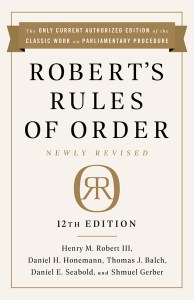
Robert's Rules of Order is as indispensable now as the original edition was more than a century ago. This book is the acknowledged "gold standard" for meeting rules.
- New and enhanced features of this edition include:
- Section-based paragraph numbering to facilitate cross-references and e-book compatibility
- Expanded appendix of charts, tables, and lists
- Sample rules for electronic meetings
- Helpful summary explanations about postponing a motion, reconsidering a vote, making and enforcing points of order and appeals, and newly expanded procedures for filling blanks
- New provisions regarding debate on nominations, reopening nominations, and completing an election after its scheduled time
- Dozens more clarifications, additions, and refinements to improve the presentation of existing rules, incorporate new interpretations, and address common inquiries
Coinciding with publication of the 12th edition, the authors of this manual have once again published an updated (3rd) edition of Robert's Rules of Order Newly Revised In Brief, a simple and concise introductory guide cross-referenced to it.
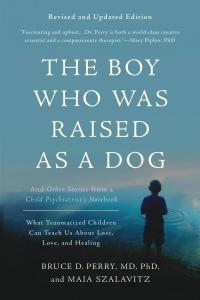
In this classic work of developmental psychology, renowned psychiatrist and the coauthor of the #1 New York Times bestseller What Happened to You? reveals how trauma affects children—and outlines the path to recovery
"Fascinating and upbeat…Dr. Perry is both a world-class creative scientist and a compassionate therapist."—Mary Pipher, PhD, author of Reviving Ophelia
How does trauma affect a child's mind—and how can that mind recover?
Child psychiatrist Dr. Bruce D. Perry has helped children faced with unimaginable horror: genocide survivors, murder witnesses, kidnapped teenagers, and victims of family violence. In the classic The Boy Who Was Raised as a Dog, Dr. Perry tells their stories of trauma and transformation and shares their lessons of courage, humanity, and hope. Deftly combining unforgettable case histories with his own compassionate, insightful strategies for rehabilitation, Perry explains what happens to children’s brains when they are exposed to extreme stress—and reveals the unexpected measures that can be taken to ease such pain and help them grow into healthy adults. Only when we understand the science of the mind and the power of love and nurturing can we hope to heal the spirit of even the most wounded child.
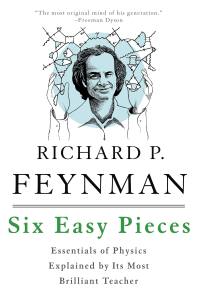
Learn how to think like a physicist from a Nobel laureate with these six classic and beloved lessons
“If one book was all that could be passed on to the next generation of scientists it would undoubtedly have to be Six Easy Pieces.” ―John Gribbin, New Scientist
It was Richard Feynman’s outrageous and scintillating method of teaching that earned him legendary status among students and professors of physics. From 1961 to 1963, Feynman delivered a series of lectures at the California Institute of Technology that revolutionized the teaching of physics around the world. Six Easy Pieces, taken from these famous Lectures on Physics, represent the most accessible material from the series.
In these classic lessons, Feynman introduces the general reader to the following topics: atoms, basic physics, energy, gravitation, quantum mechanics, and the relationship of physics to other topics. With his dazzling and inimitable wit, Feynman presents each discussion with a minimum of jargon. Filled with wonderful examples and clever illustrations, Six Easy Pieces is the ideal introduction to the fundamentals of physics by one of the most admired and accessible physicists of modern times.
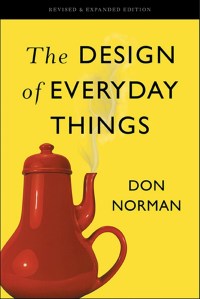
“Even more relevant today than it was when first published.”—Tim Brown, CEO, IDEO
Even the smartest among us can feel inept as we fail to figure out which light switch or oven burner to turn on, or whether to push, pull, or slide a door.
The fault, argues this ingenious—even liberating—book, lies not in ourselves, but in product design that ignores the needs of users and the principles of cognitive psychology. The problems range from ambiguous and hidden controls to arbitrary relationships between controls and functions, coupled with a lack of feedback or other assistance and unreasonable demands on memorization.
The Design of Everyday Things shows that good, usable design is possible. The rules are simple: make things visible, exploit natural relationships that couple function and control, and make intelligent use of constraints. The goal: guide the user effortlessly to the right action on the right control at the right time.
The Design of Everyday Things is a powerful primer on how—and why—some products satisfy customers while others only frustrate them.
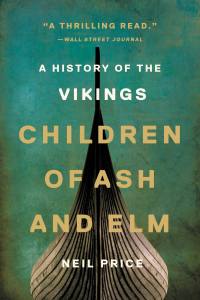
From a distinguished archaeologist, the definitive history of the Vikings—from arts and culture to politics and cosmology.
“A thrilling read.” —Wall Street Journal
The Viking Age saw an unprecedented expansion of the Scandinavian peoples into the world. As traders and raiders, explorers and colonists, they ranged from eastern North America to the Asian steppe. But for centuries, the Vikings have been seen through the eyes of others, distorted to suit the tastes of medieval writers, Victorian imperialists, Nazis, and more.
Based on the latest archaeological and textual evidence, Children of Ash and Elm tells the story of the Vikings on their own terms: their politics, their cosmology and religion, their material world. Known today for a stereotype of maritime violence, the Vikings exported new ideas, technologies, and beliefs to the lands and peoples they encountered. From Eirík Bloodaxe, who fought his way to a kingdom, to Gudríd Thorbjarnardóttir, the most traveled woman in the world, Children of Ash and Elm is a remarkable history of the Vikings and their time.
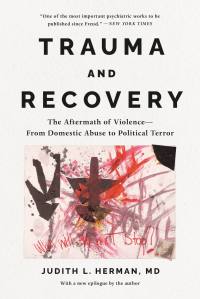
“One of the most important psychiatric works to be published since Freud.” ―New York Times
Trauma and Recovery is the foundational text on understanding trauma survivors. By placing individual experience in a political frame, psychiatrist Judith L. Herman argues that psychological trauma is inseparable from its social and political context. Drawing on her own research on incest, as well as a vast literature on combat veterans and victims of political terror, she shows surprising parallels between private horrors like child abuse and public horrors like war.
A landmark work in the psychiatric field, Trauma and Recovery is essential reading for anyone seeking to understand how we heal.
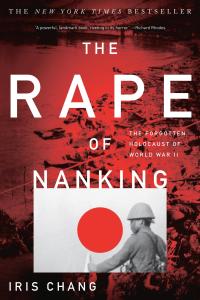
The New York Times bestselling account of one of history’s most brutal—and forgotten—massacres, when the Japanese army destroyed China’s capital city on the eve of World War II.
“A powerful, landmark book, riveting in its horror.” —Richard Rhodes, Pulitzer-Prize winning author of The Making of the Atomic Bomb
In December 1937, the Japanese army swept into the ancient city of Nanking. Within weeks, more than 300,000 Chinese civilians and soldiers were systematically raped, tortured, and murdered—a death toll exceeding that of the atomic blasts of Hiroshima and Nagasaki combined.
Historian Iris Chang tells the story from three perspectives: that of the Japanese soldiers, that of the Chinese, and that of a group of Westerners who refused to abandon the city and created a safety zone that saved almost 300,000 Chinese.
More than just narrating the details of an orgy of violence, in The Rape of Nanking Chang analyzes the militaristic culture that fostered in the Japanese soldiers a total disregard for human life. It also tells of the concerted effort during the Cold War on the part of the West and even China to stifle open discussion of this atrocity.
Drawing on extensive interviews with survivors and documents brought to light for the first time, Iris Chang’s classic is the definitive history of this horrifying episode.
“[In The Poppy War] I also drew heavily from Iris Chang’s work… [The Rape of Nanking] touches on many themes—outrage, intergenerational memory and trauma, nationalism and erasure—that are defining features of the study of the Rape of Nanjing today.” —R.F. Kuang, BookPage

The definitive history of Hitler and Stalin’s politics of mass killing, explaining why Ukraine has been at the center of Western history for the last century, from the author of the international bestseller, On Tyranny.
Americans call the Second World War “the Good War.” But before it even began, America’s ally Stalin had killed millions of his own citizens, and kept killing them during and after the war. Before Hitler was defeated, he had murdered six million Jews and nearly as many other Europeans. At war’s end, German and Soviet killing sites fell behind the Iron Curtain, leaving the history of mass killing in darkness.
Assiduously researched, deeply humane, and utterly definitive, Bloodlands is a new kind of European history, presenting the mass murders committed by the Nazi and Stalinist regimes as two aspects of a single story. Bloodlands is a required reading for anyone seeking to understand the central tragedy of modern history and its meaning today.
“Groundbreaking, magisterial, alarming.” – Financial Times
The heady optimism of the Internet’s early days has turned dark. Surveillance capitalism has deepened inequality, sown societal chaos, and undermined democracy.
The fight for a human future has never been more urgent. Shoshana Zuboff argues that we still have the power to decide what kind of world we want to live in: Will we allow surveillance capitalism to wrap us in its iron cage as it enriches the few and subjugates the many? Or will we demand the rights and laws that place this rogue power under the democratic rule of law? Only democracy can ensure that the vast new capabilities of the digital era are harnessed to the advancement of humanity. The Age of Surveillance Capitalism is a deeply original, exquisitely reasoned, and spell binding examination of our emerging information civilization and the life and death choices we face.
A witty history of the surprisingly ridiculous and ramshackle Soviet space program.
“A brisk, rip-roaring account.” —The Wall Street Journal
The Space Race should have been over before it started. The USSR was battered from World War II and up against an ascendant United States. Nevertheless, the Soviets scored a series of victories―starting with the 1957 launch of Sputnik―that seemed to accomplish the impossible.
Yet as John Strausbaugh shows, these were PR victories as much as scientific ones. The reality was less impressive and much more farcical. The Soviet supply chain was a disaster, and many machines barely worked. The cosmonauts aboard the iconic Vostok 1 rocket had to remove their space suits just to fit inside. Soviet scientists, under intense government pressure, had essentially made their rockets out of spit and Band-Aids.
The Wrong Stuff is a vivid and entertaining journey beyond the Iron Curtain, revealing the dysfunctional reality behind the Soviet Union’s seemingly ingenious space program.