
Algonquin Best of 2023
Best of the Year Books
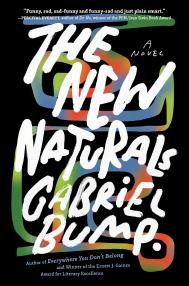
The New Naturals

Silver Alert
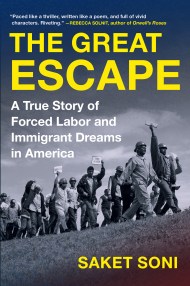
The Great Escape

The Adult

Pockets
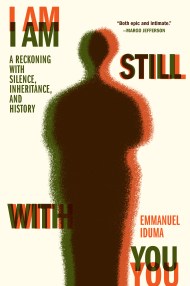
I Am Still With You

Love Across Borders
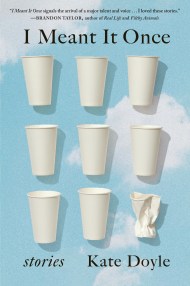
I Meant It Once
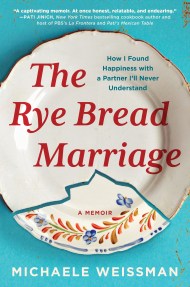
The Rye Bread Marriage
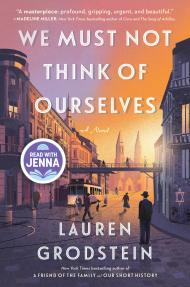
We Must Not Think of Ourselves
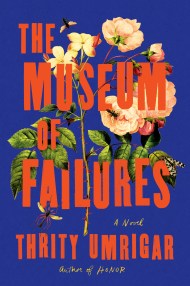
The Museum of Failures
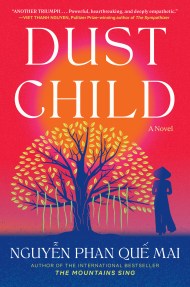
Dust Child
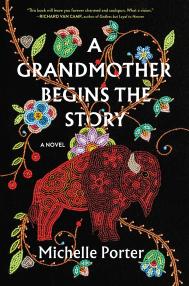
A Grandmother Begins the Story
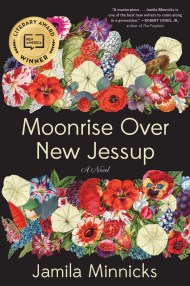
Moonrise Over New Jessup

It’s Not You, It’s Capitalism

This Isn’t Going to End Well
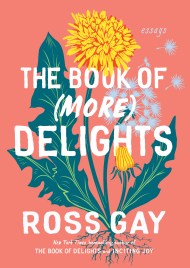
The Book of (More) Delights
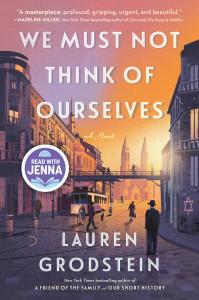
On a November day in 1940, Adam Paskow becomes a prisoner in the Warsaw Ghetto, where the Jews of the city are cut off from their former lives and held captive by Nazi guards to await an uncertain fate. Weeks later, he is approached by a mysterious figure with a surprising request: Would he join a secret group of archivists working to preserve the truth of what is happening inside these walls?
Adam agrees and begins taking testimonies from his students, friends, and neighbors. One of the people Adam interviews is his flatmate Sala Wiskoff, who is stoic, determined, and funny—and married with two children. Over the months of their confinement, in the presence of her family, they fall in love. But when Adam discovers a possible escape from the Ghetto, he is faced with an unbearable choice: whom can he save, and at what cost ?
Inspired by the testimony-gathering project with the code name Oneg Shabbat, and told with immediacy and heart, We Must Not Think of Ourselves is a piercing story of love, determination, and sacrifice.
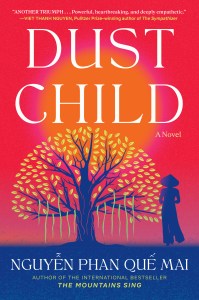
“Powerful and deeply empathetic. A heartbreaking tale of lost ideals, human devotion, and hard-won redemption. Dust Child establishes Nguyễn Phan Quế Mai as one of our finest observers of the devastating consequences of war, and proves, once more, her ability to captivate readers and lure them into Viet Nam’s rich and poignant history.”―Viet Thanh Nguyen, Pulitzer Prize-winning author of The Sympathizer and The Committed
In 1969, sisters Trang and Quỳnh, desperate to help their parents pay off debts, leave their rural village to work at a bar in Sài Gòn. Once in the big city, the young girls are thrown headfirst into a world they were not expecting. They learn how to speak English, how to dress seductively, and how to drink and flirt (and more) with American GIs in return for money. As the war moves closer to the city, the once-innocent Trang gets swept up in an irresistible romance with a handsome and kind American helicopter pilot she meets at the bar.
Decades later, an American veteran, Dan, returns to Việt Nam with his wife, Linda, in search of a way to heal from his PTSD; instead, secrets he thought he had buried surface and threaten his marriage. At the same time, Phong—the adult son of a Black American soldier and a Vietnamese woman—embarks on a mission to find both his parents and a way out of Việt Nam. Abandoned in front of an orphanage, Phong grew up being called “the dust of life,” “Black American imperialist,” and “child of the enemy,” and he dreams of a better life in the United States for himself, his wife Bình, and his children.
Past and present converge as these characters come together to confront decisions made during a time of war—decisions that reverberate throughout one another’s lives and ultimately allow them to find common ground across race, generation, culture, and language. Immersive, moving, and lyrical, Dust Child tells an unforgettable story of how those who inherited tragedy can redefine their destinies with hard-won wisdom, compassion, courage, and joy.
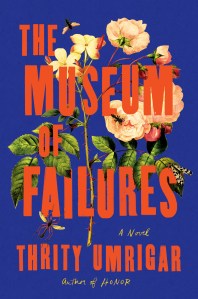
When Remy Wadia left India for the United States, he carried his resentment of his cold and inscrutable mother with him and has kept his distance from her. Years later, he returns to Bombay, planning to adopt a baby from a young pregnant girl—and to see his elderly mother again before it is too late. She is in the hospital, has stopped talking, and seems to have given up on life.
Struck with guilt for not realizing just how ill she had become, Remy devotes himself to helping her recover and return home. But one day in her apartment he comes upon an old photograph that demands explanation. As shocking family secrets surface, Remy finds himself reevaluating his entire childhood and his relationship to his parents, just as he is on the cusp of becoming a parent himself. Can Remy learn to forgive others for their human frailties, or is he too wedded to his sorrow and anger over his parents’ long-ago decisions?
Surprising, devastating, and ultimately a story of redemption and healing still possible between a mother and son, The Museum of Failures is a tour de force from one of our most elegant storytellers about the mixed bag of love and regret. It is also, above all, a much-needed reminder that forgiveness comes from empathy for others.

It’s 1957, and after leaving the only home she has ever known, Alice Young steps off the bus into all-Black New Jessup, where residents have largely rejected integration as the means for Black social advancement. Instead, they seek to maintain, and fortify, the community they cherish on their “side of the woods.” In this place, Alice falls in love with Raymond Campbell, whose clandestine organizing activities challenge New Jessup’s longstanding status quo and could lead to the young couple’s expulsion—or worse—from the home they each hold dear. As they marry and raise children together, Alice must find a way to balance her undying support for Raymond’s underground work with her desire to protect New Jessup from the rising pressure of upheaval from inside, and outside, their side of town.
Based on the history of the many Black towns and settlements established across the country, Jamila Minnicks’s heartfelt and riveting debut is both a timely examination of the opposing viewpoints that attended desegregation in America and a celebration of Black joy.
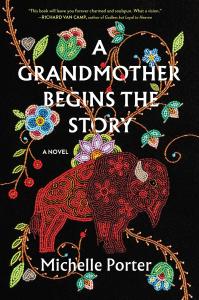
Carter is a young mother on a quest to find the true meaning of her heritage, which she only learned of in her teens. Allie is trying to make up for the lost years with her first born and to protect Carter from the hurt she herself suffered from her own mother. Lucie wants the granddaughter she’s never met to help her get to her ancestors in the afterlife. And Geneviève is determined to conquer her demons—before the fire inside burns her up—with the help of the sister she lost but has never been without. Meanwhile, Mamé, in the afterlife, knows that all their stories began with her; she must find a way to cut herself from the last threads that keep her tethered to the living, just as they must find their own paths forward. And a young bison wants to understand why he keeps being moved and whether he should make a break for it and run for his life.
This extraordinary novel, told by a chorus of vividly realized, wise, confused, struggling characters attempting to make sense of this life and the next, heralds the arrival of a stunning new voice in literary fiction.
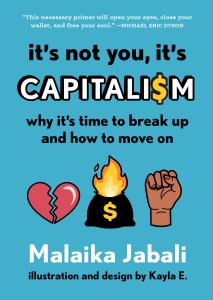
This biting, brilliant, often hilarious guide to socialism by journalist Malaika Jabali debunks myths, centers forgotten socialists of color who have shaped our world, and shows socialism is not all Marx and Bernie Bros—it’s time for all of us to ditch capitalism and try something finer.
We’ve all dated someone who took control of the relationship—you know, someone who makes you feel like you’re unhappy because you’re just not putting in the work, or it’s all in your head. But when you think about trying to meet new people, it feels terrifying. Like, have you looked at Tinder recently? It’s rough out there!
Your tough-love new best friend, award-winning journalist, policy attorney, and life-long socialist Malaika Jabali is here to say: we are all in a generations-long toxic relationship with Capitalism, and it is time to get the h*ll out of there and move ALONG.
She gives you everything you need to know about what a healthy relationship could actually look like, issue by issue—from healthcare and housing to the whole concept of American democracy—with our new boo: Socialism. And no, Socialism isn’t the boring, grey, authoritarian, Cold-War-era monster that you’ve heard about.
With accessible explanations and illustrations, often surprising graphs and stats, and some Drake memes, this book will show you that we NEED to build a world that’s safer, kinder, cleaner, healthier, and more equal. And that this isn’t a utopian dream – it’s within our grasp, if we collectively decide to call out Capitalism for what it really is and wake up to a better future.
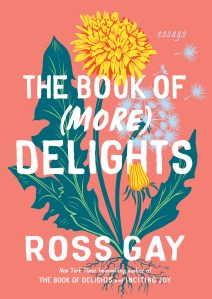
From bestselling author of The Book of Delights and award-winning poet, a book of lyrical mini-essays celebrating the everyday that will inspire readers to rediscover the joys in the world around us.
In Ross Gay’s new collection of small, daily wonders, again written over the course of a year, one of America’s most original voices continues his ongoing investigation of delight.
For Gay, what delights us is what connects us, what gives us meaning, from the joy of hearing a nostalgic song blasting from a passing car to the pleasure of refusing the “nefarious” scannable QR code menus, from the tiny dog he fell hard for to his mother baking a dozen kinds of cookies for her grandchildren. As always, Gay revels in the natural world—sweet potatoes being harvested, a hummingbird carousing in the beebalm, a sunflower growing out of a wall around the cemetery, the shared bounty from a neighbor’s fig tree—and the trillion mysterious ways this glorious earth delights us.
The Book of (More) Delights is a volume to savor and share.
Great Picks for Book Clubs
Detailed Title List

Water for Elephants
Detailed Title List

Honor
Detailed Title List

An American Marriage (Oprah’s Book Club)
Detailed Title List

Gap Creek (Oprah’s Book Club)
Detailed Title List

Ellen Foster (Oprah’s Book Club)
Detailed Title List
Lark Ascending
Detailed Title List

His Only Wife
Detailed Title List
We Must Not Think of Ourselves