A Reading List for Understanding the U.S. Prison System

Prison reform, abolition, and mass incarceration are some of the most critical issues of our time. These books provide incredible insight into these important issues and how we can help in addressing them.
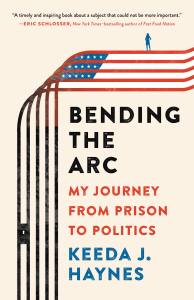
Keeda Haynes was a Girl Scout and a churchgoer, but after college graduation, she was imprisoned for a crime she didn’t commit. Her boyfriend had asked her to sign for some packages—packages she did not know were filled with marijuana. As a young Black woman falsely accused, prosecuted, and ultimately imprisoned, Haynes suffered the abuses of our racist and sexist justice system. But rather than give in to despair, she decided to fight for change. After her release, she attended law school at night, became a public defender, and ultimately staged a highly publicized campaign for Congress. At every turn of her unlikely story, she gives unique insights into the inequities built into our institutions. In the end, despite the injustice she endured, she emerges convinced that ours can become a true second-chance culture.
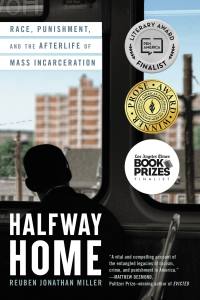
A "persuasive and essential" (Matthew Desmond) work that will forever change how we look at life after prison in America through Miller's "stunning, and deeply painful reckoning with our nation's carceral system" (Heather Ann Thompson).
Each year, more than half a million Americans are released from prison and join a population of twenty million people who live with a felony record.
Reuben Miller, a chaplain at the Cook County Jail in Chicago and now a sociologist studying mass incarceration, spent years alongside prisoners, ex-prisoners, their friends, and their families to understand the lifelong burden that even a single arrest can entail. What his work revealed is a simple, if overlooked truth: life after incarceration is its own form of prison. The idea that one can serve their debt and return to life as a full-fledge member of society is one of America's most nefarious myths. Recently released individuals are faced with jobs that are off-limits, apartments that cannot be occupied and votes that cannot be cast.
As The Color of Law exposed about our understanding of housing segregation, Halfway Home shows that the American justice system was not created to rehabilitate. Parole is structured to keep classes of Americans impoverished, unstable, and disenfranchised long after they've paid their debt to society.
Informed by Miller's experience as the son and brother of incarcerated men, captures the stories of the men, women, and communities fighting against a system that is designed for them to fail. It is a poignant and eye-opening call to arms that reveals how laws, rules, and regulations extract a tangible cost not only from those working to rebuild their lives, but also our democracy. As Miller searchingly explores, America must acknowledge and value the lives of its formerly imprisoned citizens.
PEN America 2022 John Kenneth Galbraith Award for Nonfiction Finalist
Winner of the 2022 PROSE Award for Excellence in Social Sciences
2022 PROSE Awards Finalist
2022 PROSE Awards Category Winner for Cultural Anthropology and Sociology
An NPR Selected 2021 Books We Love
As heard on NPR’s Fresh Air
“Fascinating and at times wrenching.” ―The New Yorker
The last days of colonialism taught America’s revolutionaries that soldiers in the streets bring conflict and tyranny. As a result, our country has generally worked to keep the military out of law enforcement.
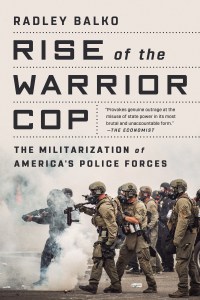
But over the last two centuries, America’s cops have increasingly come to resemble ground troops. The consequences have been dire: the home is no longer a place of sanctuary, the Fourth Amendment has been gutted, and police today have been conditioned to see the citizens they serve as enemies.
In Rise of the Warrior Cop, journalist and author Radley Balko shows how politicians’ ill-considered policies and relentless declarations of war against vague enemies like crime, drugs, and terror have blurred the distinction between cop and soldier.
This fascinating, frightening narrative that spans from America’s earliest days through to recent events shows how a creeping battlefield mentality has isolated and alienated American police officers and put them on a collision course with the values of a free society.
“Provokes genuine outrage at the misuse of state power in its most brutal and unaccountable form: heavily armed police raiding the homes of unarmed, non violent suspects on the flimsiest of pretexts, and behaving more like an occupying army in hostile territory than guardians of public safety.” —The Economist
“A must-read for anyone who dreams of an America that is not the world’s most imprisoned nation.” —Chris Hayes, host of MSNBC’s All In
In Locked In, John Pfaff argues that the factors most commonly cited to explain mass incarceration -- the failed War on Drugs, draconian sentencing laws, an increasing reliance on private prisons -- tell us much less than we think. Instead, Pfaff urges us to look at other factors, especially a major shift in prosecutor behavior that occurred in the mid-1990s, when prosecutors began bringing felony charges against arrestees about twice as often as they had before.
An authoritative, clear-eyed account of a national catastrophe, Locked In transforms our understanding of what ails the American system of punishment and ultimately forces us to reconsider how we can build a more equitable and humane society.
By clicking ‘Sign Up,’ I acknowledge that I have read and agree to Hachette Book Group’s Privacy Policy and Terms of Use