
2023 Holiday Gift Guide: Science, History, and Current Events
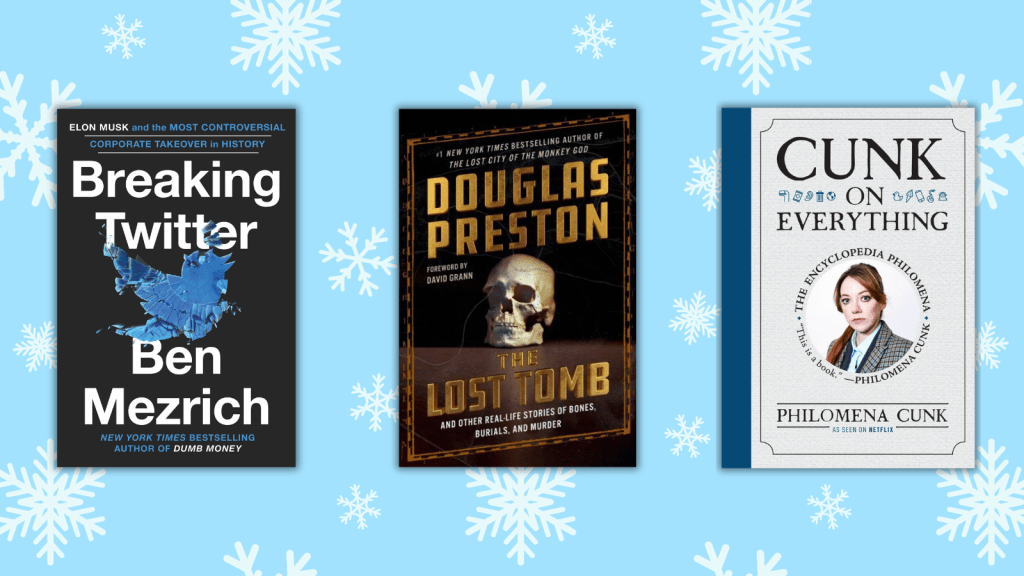
If you have a life-long-learner on your gift list, someone who’s always recounting the last podcast they listened to or article they read, these inventive and fascinating nonfiction picks including hidden histories, mind-blowing science, and incisive social commentary are sure to keep them turning pages, even during the holiday party.
From the #1 bestselling author of The Lost City of the Monkey God, a jaw-dropping discovery of an Egyptian tomb opens up a slew of archaeological mysteries and deadly tales.
What’s it like to be the first to enter an Egyptian burial chamber that’s been sealed for thousands of years? What horrifying secret was found among the prehistoric ruins of the American Southwest? Who really was the infamous the Monster of Florence?
From the jungles of Honduras to macabre archaeological sites in the American Southwest, Douglas Preston’s explorations have taken him across the globe. The Lost Tomb brings together a compelling collection of true stories about buried treasure, enigmatic murders, lost tombs, bizarre crimes, and other fascinating tales of the past and present.
From the star of the “deeply funny, unexpectedly informative” (The Daily Beast) Netflix mockumentary Cunk on Earth, a helpful guide covering every single topic in the known universe, from Adam and Eve to Top Gun.
Once in a blue moon, a book comes along that changes the world. The Origin of Species. War and Peace. 1984. And now, Cunk on Everything: The Encyclopedia Philomena, by Philomena Cunk.
Philomena Cunk is one of the greatest thinkers of the 21st century, and in Cunk on Everything she turns her attention to our biggest issue: why are there so many books? Wouldn’t it be better if there was just one? This is that book — an encyclopedia of all human knowledge, delving into not only life’s greatest mysteries but our most important political figures and cultural touchstones.
Read it, and you’ll never have to read another book again.
Breaking Twitter takes readers inside the darkly comic battle between one of the most intriguing, polarizing, influential men of our time—Elon Musk—and the company that represents our culture’s dearest hope for a shared global conversation. From employee accounts within Twitter headquarters to the mission-driven team Musk surrounded himself with, this is the full story from all sides. Can Musk miraculously succeed or will he spectacularly fail? What will that mean to the global town hall that is Twitter? What, really, is Elon’s end goal? The whole world is watching.
Breaking Twitter will provide ringside seats. Elon Musk didn’t break Twitter. Twitter broke Elon Musk.
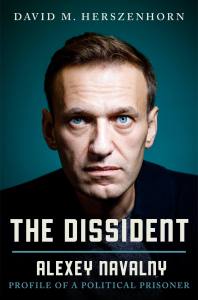
A news-driven biography of Vladimir Putin’s nemesis Alexey Navalny— lawyer, blogger, anti-corruption crusader, protest organizer, political opposition leader, mayoral and presidential candidate, campaign strategist, provocateur, poisoning victim, dissident, and now, prisoner of conscience and anti-war crusader.
THE DISSIDENT is the story of how one fearless man, offended by the dishonesty and criminality of the Russian political system, mounted a relentless opposition movement and became President Vladimir Putin’s most formidable rival—so despised that the Russian leader makes a point of never uttering Navalny’s name.
There’s an old saying that Russia without corruption isn’t Russia. Alexey Navalny refuses to accept this proposition. His stubborn insistence that Russians can defy the stereotype and create an entirely different country made him such a threat to Putin that the Kremlin wanted him exiled—or dead—and now seems intent on keeping him locked in a prison colony for decades.
International correspondent David M. Herszenhorn, weaves together the threads of Navalny’s remarkable life and work:
- The assassination attempt with a military-grade nerve agent by an FSB hit squad in Siberia, his recovery, and the vigilante-style investigation with news outlet Bellingcat to identify and confront his own would-be killers;
- Navalny’s personal biography as part of the generation that straddled the end of the Soviet Union and birth of the Russian Federation, including childhood summers with his Ukrainian grandparents near Chernobyl, and his fellowship at Yale University, which spurred conspiracy theories about his ties to the U.S.;
- His anti-corruption investigations that exposed billions in graft at Russia’s biggest state-owned companies and vast bribe-taking by top Russian officials, including his blockbuster revelations about Putin’s Black Sea Palace;
- His political activism, including huge street protests, his bid for Moscow mayor in 2013, renegade run for president in 2017, his controversial views on nationalism, gun rights and Crimea, his transformation into a prisoner of conscience bravely denouncing Putin’s war of aggression in Ukraine, and more.
Riveting and complex, THE DISSIDENT introduces readers to modern Russia’s greatest agitator, a man willing to sacrifice his freedom—and even his own life—to build the decent, democratic country he wants to live in and hopes to pass on to his children.
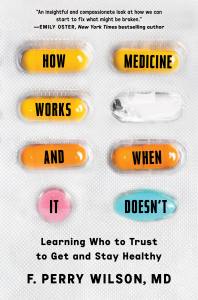
We live in an age of medical miracles. Never in the history of humankind has so much talent and energy been harnessed to cure disease. So why does it feel like it’s getting harder to live our healthiest lives? Why does it seem like “experts” can’t agree on anything, and why do our interactions with medical professionals feel less personal, less honest, and less impactful than ever?
Through stories from his own practice and historical case studies, Dr. F. Perry Wilson, a physician and researcher from the Yale School of Medicine, explains how and why the doctor-patient relationship has eroded in recent years and illuminates how profit-driven companies—from big Pharma to healthcare corporations—have corrupted what should have been medicine’s golden age. By clarifying the realities of the medical field today, Dr. Wilson gives readers the tools they need to make informed decisions, from evaluating the validity of medical information online to helping caregivers advocate for their loved ones, in the doctor’s office and with the insurance company.
Dr. Wilson wants readers to understand medicine and medical science the way he does: as an imperfect and often frustrating field, but still the best option for getting well. To restore trust between patients, doctors, medicine, and science, we need to be honest, we need to know how to spot misinformation, and we need to avoid letting skepticism ferment into cynicism. For it is only by redefining what “good medicine” is—science that is well-researched, rational, safe, effective, and delivered with compassion, empathy, and trust—that the doctor-patient relationship can be truly healed.
2024 PEN America E.O. Wilson Literary Science Writing Award Finalist
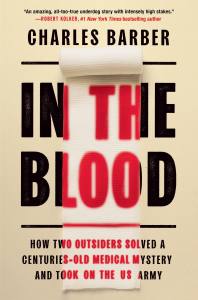
The “high-stakes” true story of how an absent-minded inventor and a down-on-his-luck salesman joined forces to create a once‑in‑a‑generation lifesaving product: “Suspenseful storytelling helps us see and feel the struggle and frustration, the sweat and tears . . . Inspiring” (Robert Kolker, #1 New York Times bestselling author of Hidden Valley Road).
At the 1993 Battle of Mogadishu, dramatized by the popular film Black Hawk Down, the majority of soldiers who died were killed instantly or bled to death before they could reach an operating table. This tragedy reinforced the need for a revolutionary treatment that could transform trauma medicine. So, when Frank Hursey and Bart Gullong—who had no medical or military experience—discovered that a cheap, crushed rock called zeolite had blood‑clotting properties, they brought it to the military’s attention. The Marines and the Navy adopted the resulting product, QuikClot, immediately. The Army, however, resisted. It had two products of its own being developed to prevent excessive bleeds, one of which had already cost tens of millions of dollars. The other, “Factor Seven,” had a more dangerous complication: its side effects could be deadly. Unwilling to let its efforts end in failure—and led by the highly influential surgeon Colonel John Holcomb—the Army set out to smear QuikClot’s reputation.
Over the course of six years, Hursey and Gullong engaged in an epic struggle with Holcomb for recognition. Ultimately, a whistle‑blower inside the Army challenged the Army’s embrace of Factor Seven, which resulted in a massive lawsuit led by the U.S. Department of Justice. The lawsuit focused further attention on the financial ties between the pharmaceutical company that produced Factor Seven and Holcomb’s research institute.
By withholding QuikClot—which later became the medical miracle of the Iraq War—and in the use of Factor Seven with its known, life-threatening risks of heart attacks and strokes, the lives of countless soldiers were imperiled. Using deep reportage and riveting prose, In the Blood recounts this little‑known David‑and‑Goliath story of corruption, greed, and power within the military—and the devastating consequences of unchecked institutional arrogance.