PABTB Pride Month

PRIDE MONTH
PublicAffairs / Bold Type Books
Featured Post

Recommended Reads for Pride
Lists



Pride Ebook Deals

In the 1970s, queer people were openly despised, and drag queens scared the public. Yet this was the era when Doris Fish (born Philip Mills in 1952) painted and padded his way to stardom. He was a leader of the generation that prepared the world not just for drag queens on TV but for a society that is more tolerant and accepting of LGBTQ+ people. How did we get from there to here? In Who Does That Bitch Think She Is? Craig Seligman looks at Doris’ life to provide some answers.
After moving to San Francisco in the mid-’70s, Doris became the driving force behind years of sidesplitting drag shows that were loved as much as you can love throwaway trash—which is what everybody thought they were. No one, Doris included, perceived them as political theater, when in fact they were accomplishing satire’s deepest dream: not just to rail against society, but to change it.
From the rise of drag shows to the obsession with camp to the conservative backlash and the onset of AIDS, Seligman adds needed color and insight to this era in LGBTQ+ history, revealing the origins and evolution of drag.

From a star theoretical physicist, a journey into the world of particle physics and the cosmos—and a call for a more liberatory practice of science.
Winner of the 2021 Los Angeles Times Book Prize in Science & Technology
Winner of the 2022 Phi Beta Kappa Book Award in Science
Winner of the 2022 PEN Oakland Josephine Miles Award
A Finalist for the 2022 PEN/E.O. Wilson Literary Science Writing Award
A Smithsonian Magazine Best Science Book of 2021
A Symmetry Magazine Top 10 Physics Book of 2021
An Entropy Magazine Best Nonfiction Book of 2020-2021
A Publishers Weekly Best Nonfiction Book of the Year
A Kirkus Reviews Best Nonfiction Book of 2021
A Booklist Top 10 Sci-Tech Book of the Year
In The Disordered Cosmos, Dr. Chanda Prescod-Weinstein shares her love for physics, from the Standard Model of Particle Physics and what lies beyond it, to the physics of melanin in skin, to the latest theories of dark matter—along with a perspective informed by history, politics, and the wisdom of Star Trek.
One of the leading physicists of her generation, Dr. Chanda Prescod-Weinstein is also one of fewer than one hundred Black American women to earn a PhD from a department of physics. Her vision of the cosmos is vibrant, buoyantly nontraditional, and grounded in Black and queer feminist lineages.
Dr. Prescod-Weinstein urges us to recognize how science, like most fields, is rife with racism, misogyny, and other forms of oppression. She lays out a bold new approach to science and society, beginning with the belief that we all have a fundamental right to know and love the night sky. The Disordered Cosmos dreams into existence a world that allows everyone to experience and understand the wonders of the universe.

This singular history of a prison, and the queer women and trans people held there, is a window into the policing of queerness and radical politics in the twentieth century.
The Women’s House of Detention, a landmark that ushered in the modern era of women’s imprisonment, is now largely forgotten. But when it stood in New York City’s Greenwich Village, from 1929 to 1974, it was a nexus for the tens of thousands of women, transgender men, and gender-nonconforming people who inhabited its crowded cells. Some of these inmates—Angela Davis, Andrea Dworkin, Afeni Shakur—were famous, but the vast majority were incarcerated for the crimes of being poor and improperly feminine. Today, approximately 40 percent of the people in women’s prisons identify as queer; in earlier decades, that percentage was almost certainly higher.
Historian Hugh Ryan explores the roots of this crisis and reconstructs the little-known lives of incarcerated New Yorkers, making a uniquely queer case for prison abolition—and demonstrating that by queering the Village, the House of D helped defined queerness for the rest of America. From the lesbian communities forged through the Women’s House of Detention to the turbulent prison riots that presaged Stonewall, this is the story of one building and much more: the people it caged, the neighborhood it changed, and the resistance it inspired.
Winner, 2023 Stonewall Book Award—Israel Fishman Non-Fiction Book Award
CrimeReads, Best True Crime Books of the Year

The groundbreaking story of the National Women’s Football League, and the players whose spirit, rivalries, and tenacity changed the legacy of women’s sports forever.
In 1967, a Cleveland promoter recruited a group of women to compete as a traveling football troupe. It was conceived as a gimmick—in the vein of the Harlem Globetrotters—but the women who signed up really wanted to play. And they were determined to win.
Hail Mary chronicles the highs and lows of the National Women’s Football League, which took root in nineteen cities across the US over the course of two decades. Drawing on new interviews with former players from the Detroit Demons, the Toledo Troopers, the LA Dandelions, and more, Hail Mary brings us into the stadiums where they broke records, the small-town lesbian bars where they were recruited, and the backrooms where the league was formed, championed, and eventually shuttered. In an era of vibrant second wave feminism and Title IX activism, the athletes of the National Women’s Football League were boisterous pioneers on and off the field: you’ll be rooting for them from start to finish.

Shortlisted for the J. Anthony Lukas Prize
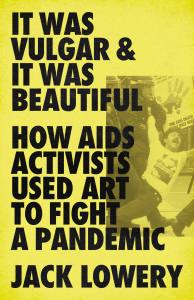
The story of art collective Gran Fury—which fought back during the AIDS crisis through direct action and community-made propaganda—offers lessons in love and grief.
In the late 1980s, the AIDS pandemic was annihilating queer people, intravenous drug users, and communities of color in America, and disinformation about the disease ran rampant. Out of the activist group ACT UP (AIDS Coalition to Unleash Power), an art collective that called itself Gran Fury formed to campaign against corporate greed, government inaction, stigma, and public indifference to the epidemic.
Writer Jack Lowery examines Gran Fury’s art and activism from iconic images like the “Kissing Doesn’t Kill” poster to the act of dropping piles of fake bills onto the trading floor of the New York Stock Exchange. Lowery offers a complex, moving portrait of a collective and its members, who built essential solidarities with each other and whose lives evidenced the profound trauma of enduring the AIDS crisis.
Gran Fury and ACT UP’s strategies are still used frequently by the activists leading contemporary movements. In an era when structural violence and the devastation of COVID-19 continue to target the most vulnerable, this belief in the power of public art and action persists.