Classical Greek Summer
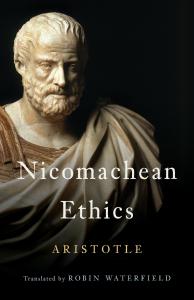
From a preeminent scholar and translator, the definitive translation of Aristotle’s essential work.
“Waterfield has produced a reliable, fresh, and wonderfully readable translation of the Ethics that makes Aristotle’s often elliptical style accessible to those approaching him for the first time.”―Brad Inwood, Yale University
The Nicomachean Ethics is widely considered Aristotle’s most significant work of ethical philosophy, and has had an unquestionably profound impact on all subsequent Western philosophy, law, and theology—from the works of Dante Alighieri to modern “virtue ethics.”
In this new translation, preeminent scholar Robin Waterfield masterfully renders Aristotle’s indispensable work into readable English. Nicomachean Ethics argues that human happiness can be achieved through virtuous action, as typified by a “golden mean” of behavior between extremes. As well as analyzing the virtues, the work masterfully covers topics such as pleasure and self-control, friendship, and everything that makes up the good life and allows us to fulfill our godlike rational capacity. The Nicomachean Ethics is as instructive today for how a good life should be lived as it was over two thousand years ago.
With John Sellars’s illuminating and eminently practical introduction, this beautifully rendered new translation is required reading for anyone seeking insights into Aristotelian philosophy.
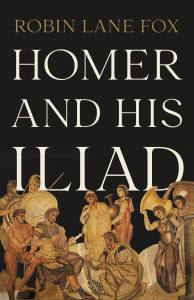
The Iliad is the world’s greatest epic poem—heroic battle and divine fate set against the Trojan War. Its beauty and profound bleakness are intensely moving, but great questions remain: Where, how, and when was it composed and why does it endure?
Robin Lane Fox addresses these questions, drawing on a lifelong love and engagement with the poem. He argues for a place, a date, and a method for its composition—subjects of ongoing controversy—combining the detailed expertise of a historian with a poetic reader’s sensitivity. Lane Fox considers hallmarks of the poem; its values, implicit and explicit; its characters; its women; its gods; and even its horses.
Thousands of readers turn to the Iliad every year. Drawing on fifty years of reading and research, Lane Fox offers us a breathtaking tour of this magnificent text, revealing why the poem has endured for ages.
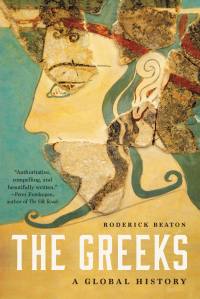
A sweeping history of the Greeks, from the Bronze Age to today.
“With suave latitude and dependable detail, Beaton takes his readers from a bright prehistoric ‘dawn’ in the Aegean to the heavy skies of contemporary geo-politics.” —The New Criterion
More than two thousand years ago, the Greek city-states, led by Athens and Sparta, laid the foundation for much of modern science, the arts, politics, and law. But the influence of the Greeks did not end with the rise and fall of this classical civilization. As historian Roderick Beaton illustrates, over three millennia Greek speakers produced a series of civilizations that were rooted in southeastern Europe but again and again ranged widely across the globe.
In The Greeks, Beaton traces this history from the Bronze Age Mycenaeans who built powerful fortresses at home and strong trade routes abroad, to the dramatic Eurasian conquests of Alexander the Great, to the pious Byzantines who sought to export Christianity worldwide, to today’s Greek diaspora, which flourishes on five continents. The product of decades of research, this is the story of the Greeks and their global impact told as never before.
“In this magisterial yet readable introduction to Greek history—one of the best of its kind, whether for academic or popular audiences—Beaton reveals the far more complicated reality.” —Foreign Affairs
“Packed with intrigue and the politics of empire, revolution, and war, this accessible history of a tangled relationship between nations might strike some readers, the author warns, as ‘uncomfortably relevant.’” —New York Times
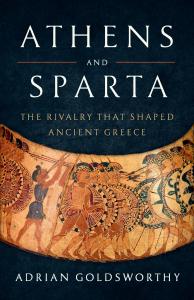
No period has more profoundly influenced the Western world than classical Greece, and at its center stood two cities: Athens and Sparta. Side by side, they beat the Persians, the only superpower of that age. Yet later, they spread conflict and destruction throughout the eastern Mediterranean, culminating in the horrors of the Peloponnesian War.
Athens and Sparta tells the definitive history of the relationship between brutal, militaristic Sparta and brash, radically democratic Athens. Eminent historian Adrian Goldsworthy narrates their incredible rise to prominence and how they became allies, rivals, and enemies. Ultimately, Goldsworthy shows that Athens and Sparta were more than competitors vying for power. They were polar opposites in ideology and culture, both driven by the Greek longing to excel, who led radically different experiments in how to run a state.
A remarkable account of ancient Greece at its height, this is the tale of the two cities that helped build it—before almost tearing it apart.
Thucydides called his work a “possession for all time,” and his History of the Peloponnesian War has been essential reading for generals and politicians for centuries.
Robin Waterfield’s translation of Thucydides’s sweeping narrative vividly depicts the events of the war between Athens and Sparta that began in 431 BCE and would continue until 404, a conflict that embroiled not only mainland Greece but Greek states from the eastern Mediterranean and as far west as Italy and Sicily. The only extant contemporary narrative of this conflict, Thucydides’s History brims with military, moral, and political reflections, offering critical commentary on challenges that still dominate our world today, from the strife of civil war to the devastation of widespread plague to the nature of political power.
Thucydides died before completing the account—it ends in 410—but his legacy is timeless. One of the great masterpieces of classical Greece, The History of the Peloponnesian War offers an incisive and timely window into the conflicts of the past.
The definitive translation of Plato’s Republic, the most influential text in the history of Western philosophy.
“To read The Republic as Bloom means it to be read is to question everything we think we know about government, politics, the best human life, and the nature of truth.” —Adam Kirsch, from the introduction
A cornerstone of Western thought, The Republic remains an unmatched exploration of justice in which lofty ideals collide with the practicalities of human existence. Just as the ancient city-states grappled with the notion of virtue and the proper role of the citizen, so too do we today face profound questions about our own society and its values.
In this masterful translation by Allan Bloom, readers encounter Plato’s timeless insights with clarity and vigor. And whether you’re approaching this seminal text for the first time or the fiftieth, Bloom’s insightful commentary provides a deeper understanding of Plato’s philosophical arguments.
The Republic of Plato invites you to engage with the eternal struggle to define justice and the nature of human flourishing.
“No one else has even come close to balancing Bloom’s fidelity to Greek with intelligible English prose. Add a lengthy, provocative interpretive essay and extensive textual notes, and one could almost be forgiven for playfully referring to the book as Bloom’s Republic.” –National Review
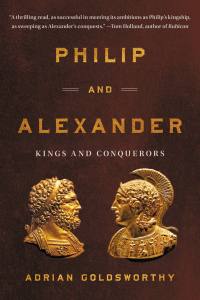
“Brings to life the full drama of ancient history.” —Wall Street Journal
Alexander the Great’s conquests staggered the world. He led his army across thousands of miles, overthrowing the greatest empires of his time and building a new one in their place. He claimed to be the son of a god, but he was actually the son of Philip II of Macedon.
Philip inherited a minor kingdom that was on the verge of dismemberment, but despite his youth and inexperience, he made Macedonia dominant throughout Greece. It was Philip who created the armies that Alexander led into war against Persia.
In Philip and Alexander, classical historian Adrian Goldsworthy shows that without the work and influence of his father, Alexander could not have achieved so much. This is the groundbreaking biography of two men who together conquered the world.