
Books to Read if History was Your Favorite School Subject
History you might not have learned in school: gripping true stories and new perspectives, all with captivating writing! Find your next history hyperfixation: the possible first novel written by a Black female slave, a hilarious retelling of history’s greatest blunders, a deep dive into a character from The Gilded Age, or any of the other varied topics these books cover.

When her master is betrothed to a woman who conceals a tragic secret, Hannah Crafts, a young slave on a wealthy North Carolina plantation, runs away in a bid for her freedom up North. Pursued by slave hunters, imprisoned by a mysterious and cruel captor, held by sympathetic strangers, and forced to serve a demanding new mistress, she finally makes her way to freedom in New Jersey. Her compelling story provides a fascinating view of American life in the mid-1800s and the literary conventions of the time.
Written in the 1850’s by a runaway slave,The Bondswoman’s Narrative is a provocative literary landmark and a significant historical event that will captivate audiences.
Includes an updated preface adding additional context about the author’s incredible life.
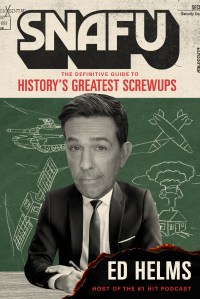
From actor, comedian, writer, and host of the hit history podcast SNAFU, Ed Helms brings you an absurdly entertaining look at history’s biggest blunders, complete with lively illustrations.
History contains a plethora of insane screwups—otherwise known as SNAFUs. Coined during World War I, SNAFU is an acronym that stands for Situation Normal: All F*cked Up. In other words, “things are pretty screwed up, but aren’t they always?”
Spanning from the 1950’s to the present day, SNAFU features Ed Helms as unofficial history teacher with a loving tribute to humanity’s finest face-plants, diving into each decade’s craziest SNAFUs. From planting nukes on the moon to training felines as CIA spies to weaponizing the weather, this book unpacks the incredibly ironic decision-making and hilariously terrifying aftermath of America’s biggest mishaps.
Filled with sharp humor and lively illustrations, SNAFU is a wild ride through time that covers the head-scratching and occasionally inspiring blunders that have shaped our world and made historians spit-take. They’re the kinds of stories that not only entertain but offers fresh insights that just might prevent history from repeating itself again and again.
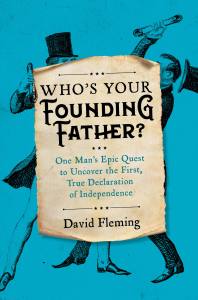
A centuries-old secret document unravels the origin story of America and reveals the intellectual crime of the millennia in this “hugely entertaining” dive into our country’s history to discover the first, true Declaration of Independence (Andrew Roberts, author of Napoleon and Churchill.
In 1819, John Adams came across a stunning story in his hometown Essex Register that he described to his political frenemy Thomas Jefferson as “one of the greatest curiosities and one of the deepest mysteries that ever occurred to me…entitled the Mecklenburg Declaration of Independence. The genuine sense of America at that moment was never so well expressed before, nor since.” The story claimed that a full 14 months before Jefferson crafted his own Declaration of Independence, a misfit band of zealous Scots-Irish patriots, whiskey-loving Princeton scholars and a fanatical frontier preacher in a remote corner of North Carolina had become the first Americans to formally declare themselves “free and independent” from England.
Composed during a clandestine all-night session inside the Charlotte courthouse, the Mecklenburg Declaration, aka the MecDec, was signed on May 20, 1775—a date that’s still featured on the state flag of North Carolina. About a year later, in 1776, Jefferson is believed to have plagiarized the MecDec while composing his own, slightly more famous Declaration, and then covered the whole thing up. Which is why Adams always insisted the MecDec needed to be “thoroughly investigated” and “more universally made known to the present and future generation.”
With Who’s Your Founding Father?, David Fleming picks up where Adams left off, leaving no archive, no cemetery, no bizarre clue or wild character (and definitely no Dunkin’ Donuts) unexplored while traveling the globe to bring to life one of the most fantastic, important—and controversial—stories in American history.

NATIONAL BESTSELLER • NPR BOOKS WE LOVE 2025 PICK
From the author of Madame Restell and Get Well Soon, a biography of Mamie Fish that explores how women used parties and social gatherings to gain power and prestige.
Marion Graves Anthon Fish, known by the nicknames “Mamie” and “The Fun-Maker,” threw the most epic parties in American history. This Gilded Age icon brought it all: lavish decor; A-list invitees; booze; pranks; and large animal guest stars. If you were a member of New York high society in the Peak Age of Innocence Era, you simply had to be on Mamie Fish’s guest list. Mamie Fish understood that people didn’t just need the formality of prior generations — they needed wit and whimsy.
Make no mistake, however: Mamie Fish’s story is about so much more than partying. In Glitz, Glam, and a Damn Good Time, readers will learn all about how Fish and her friends shaped the line of history, exerting their influence on business, politics, family relationships, and social change through elaborate social gatherings. In a time when women couldn’t even own property, let alone run for office, if women wanted any of the things men got outside the home—glory, money, attention, social networking, leadership roles—they had to do it by throwing a decadent soiree or chairing a cotillion.
To ensure people would hear and remember what she had to say, Mamie Fish lived her whole life at Volume 10, becoming famous not by playing the part of a saintly helpmeet, but by letting her demanding, bitchy, hilarious, dramatic freak flag fly. It’s time to let modern readers in on the fun, the fabulousness, and the absolute ferocity that is Ms. Stuyvesant Fish—and her inimitable legacy.
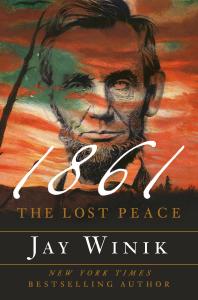
1861: The Lost Peace is the story of President Lincoln’s difficult and courageous decision at a time when the country wrestled with deep moral questions of epic proportions.
Through Jay Winik’s singular reporting and storytelling, readers will learn about the extraordinary Washington Peace Conference at the Willard Hotel to avert cataclysmic war. They will observe the irascible and farsighted Senator JJ Crittenden, the tireless moderate seeking a middle way to peace. Lincoln himself called Crittenden “a great man” even as Lincoln jousted with him. Readers will glimpse inside Lincoln’s cabinet—the finest in history—which rivaled the executive in its authority, a fact too often forgotten, and witness a parade of statesmen frenetically grasping for peace rather than the spectacle of a young nation slowly choking itself to death. A perfect read for history buffs, with timely overtones to our current political climate.