Timber Press – Books -Narrative Nonfiction

narrative nonfiction
Scorchingly good.
Cheryl Strayed

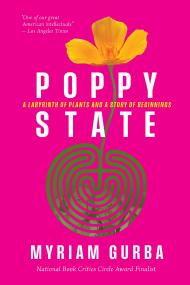
From the award-winning author of Creep comes a powerful book by a writer at the peak of her powers—at once a love letter to California and a literary tour de force that tells the story of resilience and reclamation through a relationship with plants, memory, myth, and indigenous knowledge.
Myriam Gurba has lived in California her entire life, with its plants and soils, forests and ecology, immersing herself in the language of the landscape as refracted through the languages and memories of her ancestors. In Poppy State, California plants serve as structural anchors in a wildly inventive work of narrative nonfiction that is part botanical criticism, part personal storytelling, and part study of place. The reader is invited to commune with California with Gurba as their guide, ushered through a compendium of anecdotes, reminiscences, utterances, lists, incantations, newspaper articles, and other ephemera.
Through the stories of these plants she comes to a new understanding of what occurs in the cultivation of a soul. Gurba learns if she can care for her body as she does her plants, her soul can thrive—like the California poppy on her kitchen windowsill. And through walks in the Angeles National Forest, she visits oaks, crows, elderberries, and sycamores, while foraging for acorns, flowers, and berries to adorn her altar at home. Poppy State is a riveting tour de force.
“The mother of intersectional Latinx identity.” —Cosmopolitan
“Scorchingly good.”—Cheryl Strayed
“The most fearless writer in America.” —Luis Alberto Urrea, Pulitzer Prize finalist
“A truly distinctive, authentic, and dynamic literary voice. . . Myriam Gurba is one of our great American intellectuals.” —Los Angeles Times
Stipp’s curiosity is contagious. He makes the mundane magical and encourages us to do the same.
Daily Kos

For fans of accessible and fun popular science comes an exploration of evolution’s quirkiest puzzles and most enduring mysteries.
Why do cats live longer than dogs? Why do bees have yellow stripes? Why can we smell a skunk from a mile away? Such questions can be seen as puzzles about creatures’ evolved traits. Besides triggering our curiosity, they focus our attention on beguiling designs that have been millions of years in the making. Indeed, looking at the living world through a Darwinian lens reveals its colossal depth in a way that’s all too easy to miss in the age of endless distractions. You need only summon up your inner inquisitive 7-year-old to notice such puzzles, and to find yourself looking deeper while considering possible solutions.
In this lively book, science writer David Stipp ponders Darwinian puzzles about nine familiar creatures and things—bumblebees, dogs, sparrows, caffeine, earthworms, and sleep, among others—to show how rewarding it can be to look at nature in a deeper way. By revealing hidden depths of the ordinary, Why Rats Laugh and Jellyfish Sleep shows not only that fascinating intricacies lie just beneath the natural world’s familiar surfaces, but that noticing them lets us make connections we didn’t realize existed.
This is backyard biophilia at its most entertaining and enlightening.
Trees are medicine, Jarod Anderson tells us in this vivid memoir, and so are great blue herons, lightning bugs, racoons, mice, bats, and all of the twenty or so wild creatures he celebrates in these pages.
Scott Russell Sanders, author of The Way of Imagination

An inspiring memoir that explores nature’s crucial role in our emotional and mental health, and a “poignant meditation on surviving the darkest recesses of human nature” (The Marginalian).
Bats can hear shapes, plants can eat light, and bees can dance maps. When his life took him to a painfully dark place, the poet behind The CryptoNaturalist, Jarod K. Anderson, found comfort and redemption in these facts and the shift in perspective that comes from paying a new kind of attention to nature.
Something in the Woods Loves You tells the story of the darkest stretch of a young person’s life, and how deliberate and meditative encounters with plants and animals helped him see the light at every turn. Ranging from optimistic contemplations of mortality to appreciations of a single mushroom, Anderson has written a lyrical love letter to the natural world and given us the tools to see it all anew.
How can someone who knows nothing about ecological restoration successfully rehab 200 acres of retired farmland? In Bad Naturalist, her self-deprecating, humorous, and thoroughly engaging book, Paula Whyman tells us exactly how.
Douglas W. Tallamy, author of Nature’s Best Hope
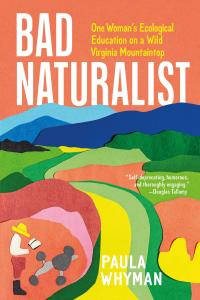
With humor, humility, and awe, one woman attempts to restore 200 acres of farmland long gone-to-seed in the Blue Ridge Mountains, facing her own limitations while getting to know a breathtaking corner of the natural world.
When Paula Whyman first climbs a peak in the foothills of the Blue Ridge Mountains in search of a home in the country, she has no idea how quickly her tidy backyard ecology project will become a massive endeavor. Just as quickly, she discovers how little she knows about hands-on conservation work. In Bad Naturalist, readers meander with her through orchards and meadows, forests and frog ponds, as she is beset by an influx of invasive species, rattlesnake encounters, conflicting advice from experts, and delayed plans—but none of it dampens her irrepressible passion for protecting this place. With delightful, lyrically deft storytelling, she shares her attempts to coax this beautiful piece of land back into shape. It turns out that amid the seeming chaos of nature, the mountaintop is teeming with life and hope.
A vivid, many-faceted, and
Booklist
provocative ecological inquiry.
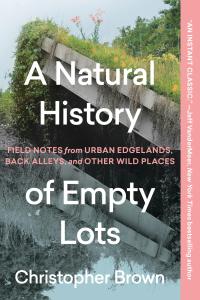
An “instant classic”, this genre-bending blend of naturalism, memoir, and social manifesto is a fascinating study for rewilding the city, the self, and society (Jeff VanderMeer, New York Times bestselling author).
During the real estate crash of the late 2000s, Christopher Brown purchased an empty lot in an industrial section of Austin, Texas. The property—abandoned and full of litter and debris—was an unlikely site for a home. Brown had become fascinated with these empty lots around Austin, so-called “ruined” spaces once used for agriculture and industry awaiting their redevelopment. He discovered them to be teeming with natural activity, and embarked on a twenty-year project to live in and document such spaces. There, in our most damaged landscapes, he witnessed the remarkable resilience of wild nature, and how we can heal ourselves by healing the Earth. Beautifully written and philosophically hard-hitting, A Natural History of Empty Lots offers a new lens on human disruption and nature, offering a sense of hope among the edgelands.
“Brown lives far from any conventional battlefield, but he is surrounded by the wreckage of a different war, and he, too, finds hope in cultivating the ruins of nature…A Natural History of Empty Lots is less a departure from the nature writing tradition than a welcome addition to its edgelands.” —New York Review of Books
“The nature writing we need now.” —Michelle Nijhuis, author of Beloved Beasts
“Incredible” —Kelly Link, Pulitzer Prize finalist
There is no one better to help us understand and prepare for the fast-approaching technological revolutions. Superconvergence is brilliant. I can’t recommend it more strongly.
Sanjay Gupta

The story of AI is not just ChatGPT. It is how we can use the revolutionary suite of interconnected new technologies to improve our health, feed billions of people, supercharge our economies, store essential information for millions of years, and save our planet. But if we’re not careful, these same Promethean abilities to engineer novel intelligence and reengineer life can also do immeasurable harm, warns leading futurist Jamie Metzl in this bold and inspiring exploration of transformative human knowledge. Revised and updated to include the most cutting edge innovations in healthcare, food, material science, and more, Superconvergence is the essential guide to building our best possible future.
At once a short story, an essay, and a prose poem, ‘The Island’ reads both like a sketch for The Summer Book and a vignette of Klovharun … the text seems to change following mysterious tides from a timeless present to an urgent past.
Hernan Diaz, finalist for the Pulitzer Prize
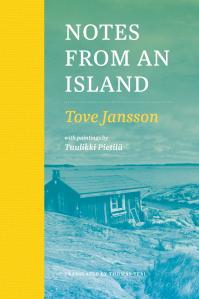
“Tove Jansson was a genius, a woman of profound wisdom and great artistry.” —Philip Pullman, author of His Dark Materials
In the bitter winds of autumn 1963, Tove Jansson—author of the iconic novel The Summer Book and the beloved Moomin series—built a cabin on a treeless island in the Gulf of Finland. For thirty years, Tove and her beloved partner, Tuulikki “Tooti” Pietilä, lived, painted, and wrote, energized by flora, fauna, the shifting seascapes, and solitude and shifting seascapes. Jansson’s spare, quirky prose, and Tooti’s subtle artwork combine to form a work of meditative beauty. Notes from an Island is both a beautiful chronicle of a rugged ecology and an intimate collaboration between to artists in love with each other—and the island itself. This edition also includes Jansson’s essay The Island, described by Pulitzer Prize finalist Hernan Diaz as “…a short story, an essay, and a prose poem … the text seems to change following mysterious tides from a timeless present to an urgent past.”
Praise for Tove Jansson’s Work
“It could be said that everything she wrote is, in one way or another, about the creative interactions between art and reality or art and nature.” —The Guardian
“It’s hard to describe the astonishing achievement of Jansson’s artistry.”—Ali Smith, author of Gliff and How to Be Both
“Her style is not at all ‘poetic’—quite the contrary. It is prose of the very highest order; it is pure prose. Through its quiet clarity we see unreachable depths, threatening darkness, promised treasures.”—Ursula K. LeGuin, The Guardian
personal journeys
Poppy State

Bicycling with Butterflies
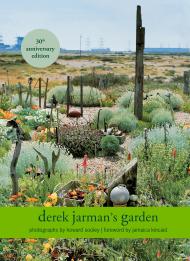
Derek Jarman’s Garden
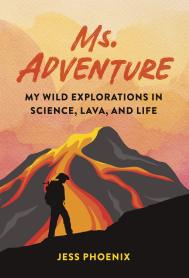
Ms. Adventure
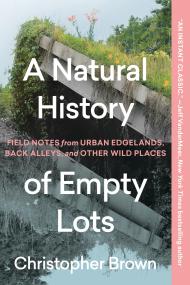
A Natural History of Empty Lots

Psilocybin Therapy

The Return of Wolves
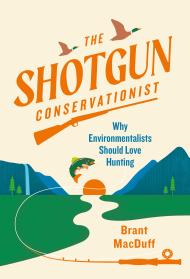
The Shotgun Conservationist
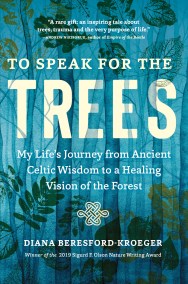
To Speak for the Trees

Something in the Woods Loves You
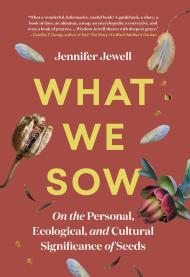
What We Sow
literary landscapes

Beatrix Potter’s Gardening Life
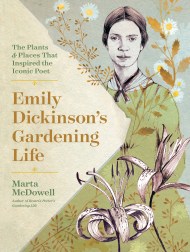
Emily Dickinson’s Gardening Life

The Natural World of Winnie-the-Pooh
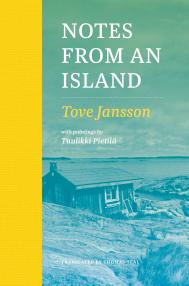
Notes from an Island

A Place Like Mississippi
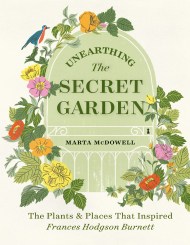
Unearthing The Secret Garden

Writing Wild

The World of Laura Ingalls Wilder
discover the world around you
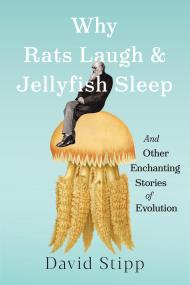
Why Rats Laugh and Jellyfish Sleep
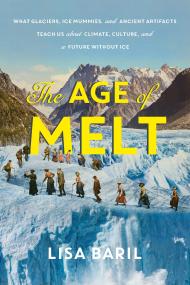
The Age of Melt

All the Presidents’ Gardens
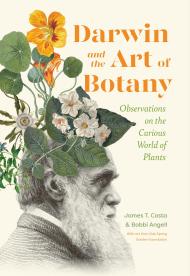
Darwin and the Art of Botany

Experiencing Olmsted

Iwigara
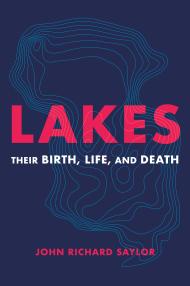
Lakes
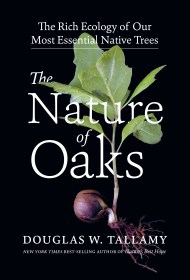
The Nature of Oaks
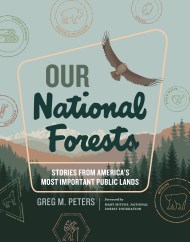
Our National Forests

Superconvergence
all about animals
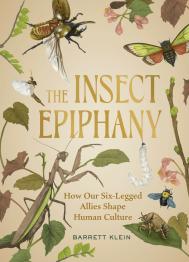
The Insect Epiphany

Octopus

Our Native Bees
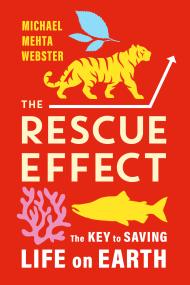
The Rescue Effect
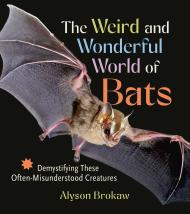
The Weird and Wonderful World of Bats
Newsletter Signup
By clicking ‘Sign Up,’ I acknowledge that I have read and agree to Hachette Book Group’s Privacy Policy and Terms of Use