Promotion
Sign up for our newsletter to get 20% off sitewide!

By clicking “Accept,” you agree to the use of cookies and similar technologies on your device as set forth in our Cookie Policy and our Privacy Policy. Please note that certain cookies are essential for this website to function properly and do not require user consent to be deployed.
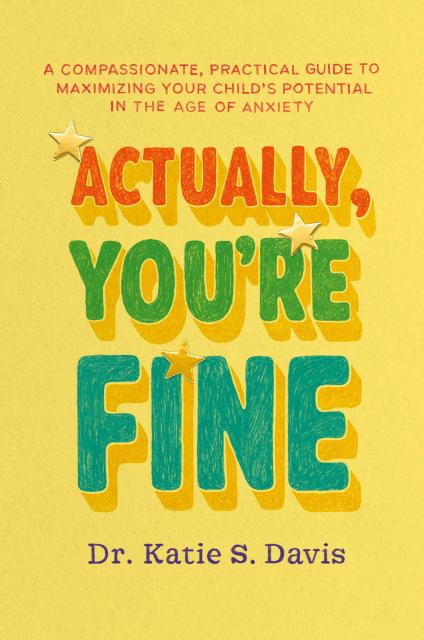
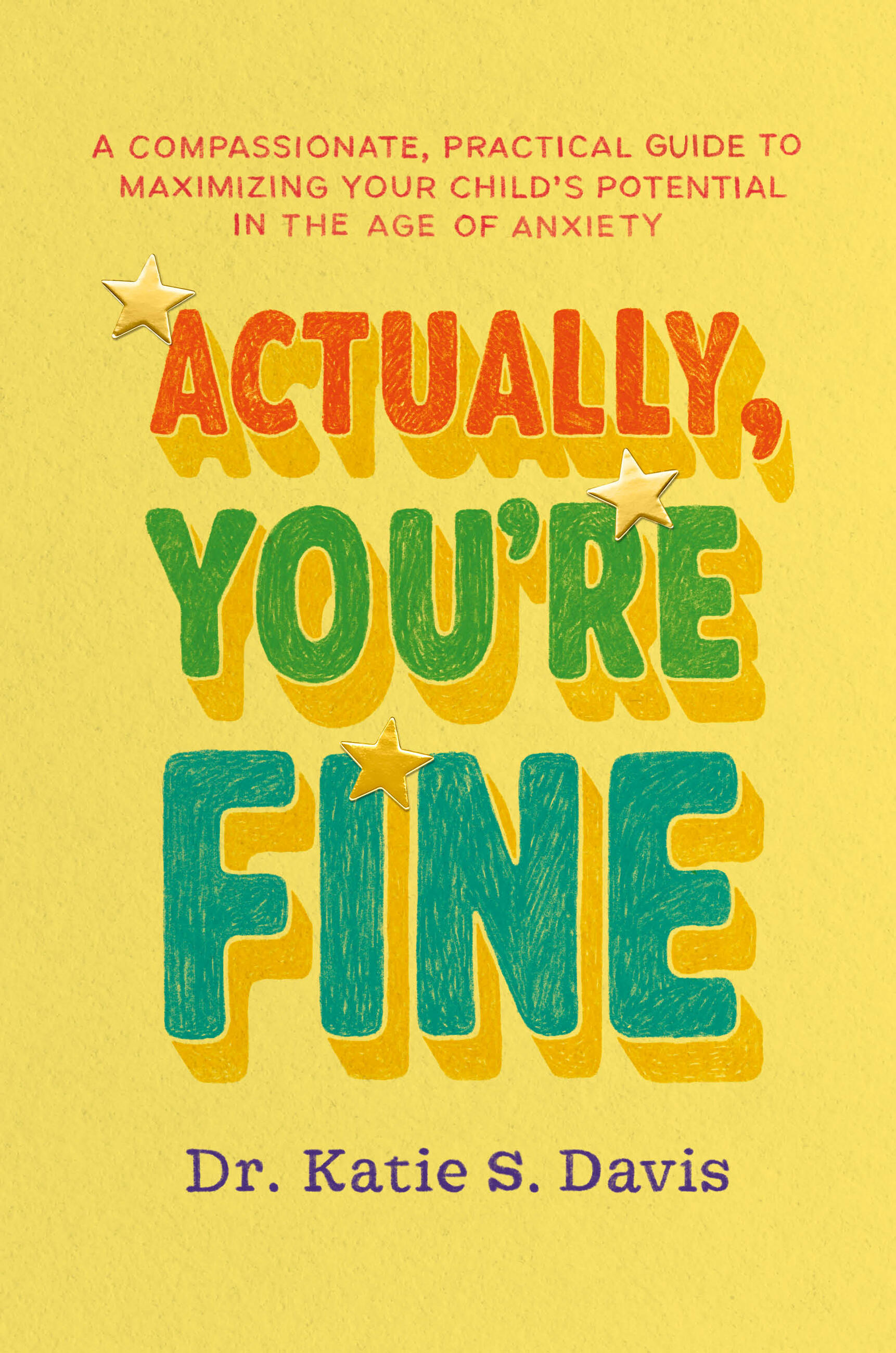
Actually, You’re Fine
A Compassionate, Practical Guide to Maximizing Your Child’s Potential in the Age of Anxiety
Contributors
Formats and Prices
- On Sale
- Oct 13, 2026
- Page Count
- 288 pages
- Publisher
- Balance
- ISBN-13
- 9781538775622
Price
$30.00Price
$40.00 CADFormat
Format:
- Hardcover $30.00 $40.00 CAD
- ebook $15.99 $20.99 CAD
- Audiobook Download (Unabridged) $24.99
Preorder from Retailers:
Clinical neuropsychologist and learning disorder expert Dr. Katie Davis offers a new, illuminating approach to child development, helping you to support your child through their challenges—without leaping to a diagnosis.
As parents, we want nothing more than our child to thrive in each stage of development. Seeing them struggle in that process can be difficult, but sometimes, it’s normal. After years of research, Dr. Davis suggests that a diagnosis isn’t always the answer helping our kids keep up with the curve.
Actually, You’re Fine is a compassionate guide to childhood development that reveals anxiety is natural when it comes to tracking your child’s development. Our instinct, when we notice a child struggling, is often to search for a label—to assume that difficulty must signal a disorder. But the rush to pathologize can be harmful for both parents and kids for a range of reasons, from unnecessary medication to misallocation of resources. Rather than feeling capable and ready to take on life’s challenges, children can feel that their challenges are unacceptable and taboo. Overdiagnosis can also stigmatize kids who are genuinely struggling.
With actionable insights, Dr. Davis empowers you to advocate for your children at school, and foster their development at home. You’ll learn:
- How diagnoses are achieved—and what they actually mean
- Critical information about emergent diagnoses that aren’t actually codified—and why this trend can do more harm than good
- The difference between symptoms and diagnoses
- Reasons why your child might be struggling in school, and interventions to help improve their functioning
- How to accurately identify when more support is necessary and navigate the institutions that can provide it
- The various interconnected challenges children can have—cognitive, social, and emotional
- An accessible, realistic approach to maximizing your child’s potential in a world of overachievement
Actually, You’re Fine offers clear-eyed and empathetic guidance to help parents, caregivers, and educators watch your kids succeed without pathologizing them—while still being able to recognize if a child does need an intervention.
Genre:
-
“Dr. Davis puts into words what I've been saying in clinics and coaching sessions for years. Actually, You're Fine is a necessary correction to a culture that's too quick to label kids who are simply still developing. Every parent and educator needs this perspective.”Michael McLeod, MA, founder of GrowNOW ADHD, author of The Executive Function Playbook
-
“Actually, You're Fine is Dr. Davis’ case for slowing down. She helps readers take a breath and pause before assuming the worst, understanding what's actually normal in child development before reaching for a label that might follow a kid for life. Drawing on real patient stories and the kind of hard-won clinical perspective that only comes from years in the room with families, Davis gives parents something rarer than a diagnosis: context. This book is extremely practical, grounded and a breath of fresh air in a world full of labels and diagnoses.”Shelby Harris, PsyD, DBSM, Clinical Associate Professor of Neurology and Psychiatry, Albert Einstein College of Medicine, author, The Women’s Guide to Overcoming Insomnia and The Essential Guide to Children’s Sleep
-
“This book is outstanding. Dr. Katie blends research, wisdom, and real-life insight into a resource that is both comforting and actionable. You'll walk away feeling more informed, more grounded, and a little kinder to yourself.”Eli Weistein, LCSW, host of The Dude Therapist podcast, and author of From I Do to We Do
-
“In a culture that pathologizes everything from shyness to Saturday-morning meltdowns, caregivers deserve better than a label. Actually, You’re Fine cuts through the rush to diagnose and equips parents and caregivers with the science and the skepticism to tell real disorder from ordinary childhood struggle, and to advocate effectively for their kids either way. An essential read for anyone raising a young person today.”Yael Schonbrun, Brown University psychologist and author of Work, Parent, Thrive and Why Don’t You Understand Me?