Take it with you! 10 audiobooks for gardeners and nature lovers.
Don’t assume a gardening book won’t translate well to audio. Anyone involved in gardening will find this an immensely enjoyable and highly applicable listen.
AudioFile Magazine
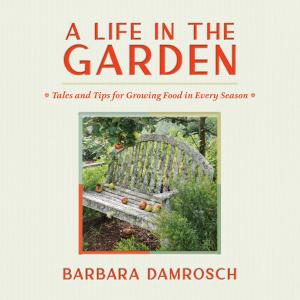
One of America’s most well-known and bestselling gardening writers shares her reflections and advice on finding joy in the garden
In A Life in the Garden, horticultural icon Barbara Damrosch imparts a lifetime of wisdom on growing food for herself and her family. In writing that’s accessible, engaging, and elegant, she welcomes us to garden alongside her. Personal, thoughtful, and often humorous, this book offers practical DIY insights that will delight gardeners, cooks, and small-scale farmers. With a personal and sometimes irreverent tone, Barbara expresses the pleasure she takes in gardening, the sense of empowerment she finds in it, and the importance of a partnership with the real expert: nature.
A poignant meditation on surviving the darkest recesses of human nature.
The Marginalian

An inspiring blend of nature writing and memoir that explores nature’s crucial role in our emotional and mental health
Bats can hear shapes, plants can eat light, and bees can dance maps. When his life took him to a painfully dark place, the poet behind The CryptoNaturalist, Jarod K. Anderson, found comfort and redemption in these facts and the shift in perspective that comes from paying a new kind of attention to nature.
Something in the Woods Loves You tells the story of the darkest stretch of a young person’s life, and how deliberate and meditative encounters with plants and animals helped him see the light at every turn. Ranging from optimistic contemplations of mortality to appreciations of a single mushroom, Anderson has written a lyrical love letter to the natural world and given us the tools to see it all anew.
Cover image copyright the Artist (Tuesday Riddell), reproduced with grateful thanks to MESSUMS ORG. Photo: Steve Russell.
When their children are grown, some people take up golf. Author Paula Whyman bought 200 acres of Blue Ridge mountaintop to rewild.
AudioFile Magazine
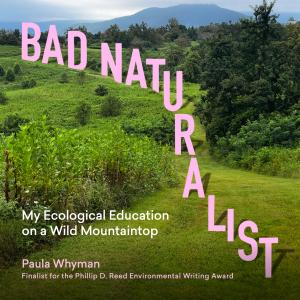
When empty nester Paula Whyman climbs to a peak in the foothills of the Blue Ridge Mountains, her plans for a backyard ecology project quickly morph into a massive endeavor. In Bad Naturalist, Whyman struggles with conflicting advice from experts, an influx of invasive species, delayed plans, and the occasional rattlesnake—but none of it dampens her irrepressible passion for protecting the land.
Bad Naturalist is woven with Whyman’s delightful storytelling as she attempts to coax a beautiful piece of land back into shape. Putting her preconceived notions aside, she forms a deep connection with the earth, reminding us that the quest to tame it is a fool’s errand.
This book is dangerous. A veritable cornucopia of crime fiction and gardening lore, it faces the reader with multiple temptations—books to seek out, plants to obtain, garden tours to book.
Vicki Lane

This fun, engrossing book takes a look at the surprising influence that gardens and gardening have had on mystery novels and their authors.
With their deadly plants, razor-sharp shears, shady corners, and ready-made burial sites, gardens make an ideal scene for the perfect murder. But the outsize influence that gardens and gardening have had on the mystery genre has been underappreciated. Now, Marta McDowell, a writer and gardener with a near-encyclopedic knowledge of the genre, illuminates the many ways in which our greatest mystery writers, from Edgar Allen Poe to authors on today’s bestseller lists, have found inspiration in the sinister side of gardens.
From the cozy to the hardboiled, the literary to the pulp, and the classic to the contemporary, Gardening Can Be Murder is the first book to explore the mystery genre’s many surprising horticultural connections. Meet plant-obsessed detectives and spooky groundskeeper suspects, witness toxic teas served in foul play, and tour the gardens—both real and imagined—that have been the settings for fiction’s ghastliest misdeeds. A New York Times bestselling author herself, McDowell also introduces us to some of today’s top writers who consider gardening integral to their craft, assuring that horticultural themes will remain a staple of the genre for countless twisting plots to come.
“This book is dangerous. A veritable cornucopia of crime fiction and gardening lore, it faces the reader with multiple temptations—books to seek out, plants to obtain, garden tours to book.” —Vicki Lane, author of the Elizabeth Goodweather Appalachian Mysteries
If you never see me again in life after this book is published, it is because I left to find an island of my own at last.
Alexander Chee

In the bitter winds of autumn 1963, Tove Jansson, helped by Brunström, a maverick fisherman, raced to build a cabin on a treeless island in the Gulf of Finland. The island was Klovharun, where for thirty summers Tove and her beloved partner, the visual artist, Tuulikki “Tooti” Pietilä, lived, painted, and wrote, energized by the solitude and shifting seascapes. The island’s flora, fauna, and weather patterns provided deep inspiration which can be seen reflected in all of Jansson’s work, most famously in her bestselling novel The Summer Book and her longstanding comic strip and novels for children, Moomin. Tove’s signature spare, quirky prose, and Tooti’s subtle ink washes and aquatints combine to form a work of meditative beauty, a chronicle of living peacefully in nature and observing the island’s ecology and character. Notes from an Island is both a work of artistic collaboration and an homage to the deep love the two women shared. One feels as if Jansson’s journal, with Tooti’s sketches tucked inside, has been unearthed like a treasure from under a pile of old quilts in the back of their rustic cabin.
Includes a companion PDF of images from the print edition.
With actionable advice on everything from invasive species control to promoting ecological balance, this inspiring guide empowers readers to become active participants in backyard conservation and ecological restoration.
Sunset

In How Can I Help?, Tallamy tackles the questions commonly asked at his popular lectures and shares compelling and actionable answers that will help gardeners and homeowners take the next step in their ecological journey. Topics range from ecology, evolution, biodiversity and conservation to restoration, native plants, invasive species, pest control, and supporting wildlife at home. Tallamy keenly understands that most people want to take part in conservation efforts but often feel powerless to do so as individuals. But one person can make a difference, and How Can I Help? details how.
Whether by reducing your lawn, planting a handful of native species, or allowing leaves to sit untouched, you will be inspired and empowered to join millions of other like-minded people to become the future of backyard conservation.
For other folks who have spent their careers studying insects, every patch of green on Earth is a kind of secret garden filled with entomological wonders. Klein shares this garden with the world.
Science Magazine

From entomologist Barrett Klein comes a buzz-worthy exploration of the many ways insects have affected human society, history, and culture
Insects surround us. They fuel life on Earth through their roles as pollinators, predators, and prey, but rarely do we consider the outsize influence they have had on our culture and civilization. Their anatomy and habits inform how we live, work, create art, and innovate. Featuring nearly 250 color images—from ancient etchings to avant-garde art, from bug-based meals to haute couture—The Insect Epiphany proves that our world would look very different without insects, not just because they are crucial to our ecosystems, but because they have shaped and inspired so many aspects of what makes us human.
A meditation on the wildness found in the most overlooked parts of our urban landscape. Brown translates what he sees into evocative field notes that point toward a future rewilding.
Landscape Architecture Magazine
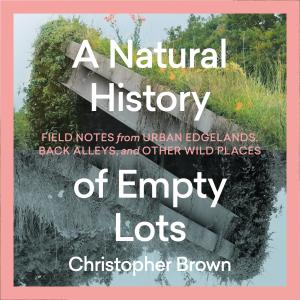
An “instant classic”, this genre-bending blend of naturalism, memoir, and social manifesto is a fascinating study for rewilding the city, the self, and society (Jeff VanderMeer, New York Times bestselling author).
During the real estate crash of the late 2000s, Christopher Brown purchased an empty lot in an industrial section of Austin, Texas. The property—abandoned and full of litter and debris—was an unlikely site for a home. Brown had become fascinated with these empty lots around Austin, so-called “ruined” spaces once used for agriculture and industry awaiting their redevelopment. He discovered them to be teeming with natural activity, and embarked on a twenty-year project to live in and document such spaces. There, in our most damaged landscapes, he witnessed the remarkable resilience of wild nature, and how we can heal ourselves by healing the Earth. Beautifully written and philosophically hard-hitting, A Natural History of Empty Lots offers a new lens on human disruption and nature, offering a sense of hope among the edgelands.
“Brown lives far from any conventional battlefield, but he is surrounded by the wreckage of a different war, and he, too, finds hope in cultivating the ruins of nature…A Natural History of Empty Lots is less a departure from the nature writing tradition than a welcome addition to its edgelands.” —New York Review of Books
“The nature writing we need now.” —Michelle Nijhuis, author of Beloved Beasts
“Incredible” —Kelly Link, Pulitzer Prize finalist
MacDuff’s conversational writing will keep readers hooked, and his well-considered reflections offer plenty of food for thought. Nature-minded readers will find this full of insight.
Publishers Weekly
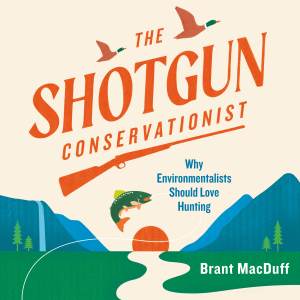
The Shotgun Conservationist doesn’t teach us how to hunt, it explores why we should hunt. As public lands remain imperiled, factory farms pollute the earth and subject animals to inhumane conditions, and global uncertainty presses us all to be more self-sufficient, there has never been a better time to take up hunting. Writer, natural historian, and public speaker Brant MacDuff has done just that. An avid animal lover and raised as a non-hunter, MacDuff started his journey intending to investigate the claim that “hunting is conservation.” So convinced, he now holds a hunting license in four states and gives lectures on the positive impact it has on conservation efforts nationwide.
Armed with years of experience in the field and a deep love for the natural world, MacDuff tells the provocative, humorous, and insightful story of how he became a hunter. Along the way, readers meet a cast of colorful characters and learn the firsthand research that helped change Brant’s mind. You may not book a hunting trip after reading The Shotgun Conservationist, but you’ll have a new perspective on and appreciation for those that do.
A must read for anyone fascinated by the connection between nature, consciousness, and personal growth.
Darren Le Baron

Discover a new path to self-discovery and healing with this timely exploration of the therapeutic benefits of psilocybin mushrooms.
InPsilocybin Therapy, Dr. JJ Pursell explores the next frontier in mental health: the therapeutic use of psilocybin mushrooms and related psychedelics. Readers will learn about the chemical makeup of mushrooms and what makes them powerful, the history of the fungi, the thought leaders in the movement, and the impact of psilocybin on the brain. Additional chapters explore how to use psilocybin with a facilitator, how psychedelics can help users work through deep psychological issues, what microdosing means, and how to assess potential risks. Pursell weaves her personal experience with psilocybin as both a user and a facilitator throughout the text. The result is a relatable, accessible, and helpful guide for those seeking a new form of self-discovery and healing.