
Hello, Higher Self
Excerpted from Hello, Higher Self by Bunny Michael. Copyright 2024.
Social Media
Me: Why am I so anxious about what other people think about me?
Higher Self: The validation you have been seeking outside yourself is creating anxiety because you are looking where you can’t find it. In truth, it’s been inside you the whole time.
Chasing Likes
One beautiful Sunday morning, my first thought upon waking was I need to check Instagram. I felt around for my phone, tapped on the app, and got that familiar feeling in the pit of my stomach: the dread of finding out how many likes yesterday’s post got. Was it a success? I checked the stats. Nope. It didn’t perform well. The number of likes was below my average. A couple of nice comments but nothing extraordinary.
The anxiety in my stomach turned to a sinking feeling. I felt hurt and rejected. What am I doing wrong? I reexamined my post. It was my most recent self-portrait: a digital collage in a high-definition virtual paradise with palm trees and pastels—like Frida Kahlo meets Disneyland. It took me hours to make it in Photoshop. The night before, I really liked it. I had fun making it. I felt like it was a moment of growth as an artist. But the following morning, all I felt was embarrassment. Why was I so stupid to think this was good?
Then I scrolled through my profile and analyzed the few posts that had received a lot of likes. What did I do here that I didn’t do last night? Is it the colors? Is it the way my body looks? Is it my hair? Is it the stupid look on my face? I was a detective holding a magnifying glass to every detail of my post, hoping to catch the flaw that perpetuated my failure. When I didn’t get an answer, I scrolled to look at other people’s posts, still investigating. I took note of whose posts were getting more likes than me and why.
They are better-looking.
They are more talented.
They have a larger following.
My work is so much better than theirs. I don’t get why people like them so much.
They are famous. I wonder if I’ll ever be famous.
If only I had what they had my life would be so much better.
I spent the better part of 2016 in this perpetual state of social media hell. I wanted so badly to win the war of personal achievement, and Instagram had become my battleground. Unlike Facebook, where only people who were already successful outside the platform had huge Facebook followings, people were actually becoming successful through Instagram. From the moment I moved to the city, my attempt at becoming a professional artist in New York was a roller coaster of successes and failures. I believed that Instagram could be the answer to all my prayers—if I was good enough to make it happen.
My desire to be successful on social media was all about attainment of status. But wanting the approval of as many people as possible didn’t begin with the invention of Instagram or Facebook or any other app. That message was received many years earlier.

Learning to Fit In
At a young age we were taught self-worth is determined by how well we win the approval of caregivers, educators, and our peers. Standardized grade systems trained us to quantify our intelligence by how high or low we score compared to other students. Random adults commented on and compared our appearance—from body size to texture of hair. We compared our looks to the characters from movies and tv shows that perpetuated mostly Euro-centric and fatphobic beauty ideals.
For most of us, our behavior growing up was put into two categories: that of a “good girl” or “good boy,” which meant following the rules, listening to authority without question, and being able to sit still and pay attention. Being a “bad girl” or “bad boy,” on the other hand, meant not listening, not following directions, and acting out in school. It didn’t matter what your home life was like or how confusing and arbitrary the rules were. It didn’t matter if the educational system was terribly outdated and only valued certain types of learners and test-takers. The pressure was on us to fit into the mold, to be “good,” and the more approval we gained in socialized environments, we were led to believe, the more we could value ourselves.
We were kids who were made to feel we had to please the adults around us, perform better than our peers and raise our social status to be accepted. So we did our best to do just that. But our self-worth was never dependent on how we looked, behaved or performed in school. We have always been inherently worthy.
I wanted to be popular.
In the fourth grade my teacher, Ms. Turner, organized a school fundraiser. She told our class to divide into groups of our choosing and come up with something to make and sell at the fundraiser. My friend Lauren waved to me from her seat on the other side of the room and flashed me a huge smile indicating she wanted to be in a group with me. I smiled back and gave a thumbs-up. Lauren was a little shy like me and always wore pastel dresses with her strawberry-blond hair tightly pulled back by a thick plastic headband accentuating her big rosy cheeks. At recess, we asked another girl to be in our group, and decided we’d make lanyard bracelets.
Then after school, Kelsey approached me. She and her two best friends (Jennifer and Jennifer) were the most popular girls at school. Kelsey had mousy brown hair and bright green eyes and always talked about soccer practice and Indian Princesses (the appropriative wilderness program where mostly white men and their daughters wear headdresses and go camping). Her mom drove a shiny new minivan, was never late picking her up, and packed Kelsey the best snacks, like Fruit by the Foot or Ritz mini crackers with cheese. In shock, I quickly let go of my little sister’s hand and took one back-pack strap off my shoulder because only losers wore straps on both shoulders.
“Hi, me and Jennifer and Jennifer wanted to know if you want to join our group for the fundraiser. We are making friendship bracelets!” Kelsey asked.
Is this really happening?
“Yes!” I said.
“Oh cool, we can plan more with the group tomorrow in class.” And in a flash, Kelsey disappeared behind the sliding maroon door of her mom’s Chrysler Town and Country.
The next day at school I avoided Lauren. I didn’t know how to tell her we weren’t going to make lanyard bracelets together. When Ms. Turner told us to get up and join our groups after lunch, I just went over and sat next to Kelsey. The look on Lauren’s face was of total confusion and disbelief. I was only ten years old, but I knew being in a group with Kelsey Bishop and the two Jennifers was a step up for me. I didn’t particularly like them — in fact, one of the Jennifers was really annoying. But being their friend meant popularity, it meant status, it meant there was something good about me. It meant I was better than Lauren.
From that day on, being popular became a priority. If I had to ditch less “desirable” friends, even if they were nice and accepting of me, so be it. I didn’t want the bad feelings that came with not being good enough for the popular girls. I wanted to be cool, admired, and envied. It was proof that I belonged. If the popular kids liked me, that meant everyone else did too. I was already chasing likes.
Comparing Yourself to the Entire Internet
Social hierarchies have always existed, but like so many other aspects of our lives, technology transformed those hierarchies from analog to digital, expanding not only the amount of time we spend in a day thinking about our social standing in relation to others, but also exponentially multiplying the pool of people we now compare ourselves to in just a matter of a few minutes of scrolling.
It’s…a lot.
The genius of social media is that it gives us the ability to quantify social hierarchies. Like the number in our bank accounts, our social worth is tallied in a currency of followers and likes. And just as many people believe the more money you have, the happier you are—in the digital world, the more social clout you have, the more you “matter.” So why wouldn’t you strive to build up your followers and likes? Why wouldn’t you feel like something was wrong with you if you have less?
A lot of people tell me they often feel ashamed of themselves for being jealous or always comparing themselves to others on social media. But isn’t that what you were trained to do—to judge how well you are doing based on your spot on the hierarchical ladder? You can’t be a winner if there aren’t any losers.
Trying to be good enough is exhausting.
Not long after my disappointing Disneyland-meets-Kahlo IG post, I clocked out of an excruciating brunch shift, during which a customer let their three-year-old pour an entire bottle of ketchup all over the table without helping to clean it up, and walked to my local bodega to grab a bag of Utz chips, a grape kombucha, and a pack of Little Debbie powdered donuts. When I got to my apartment, I headed straight to my room to avoid running into my roommate (I used the last of his coffee that morning), and got into my bed — an Ikea mattress on the floor. Then I began my daily ritual of scrolling on Instagram. Everywhere I looked it seemed like everyone was doing so well: becoming successful with their art, in a loving relationship, having fun with a huge group of friends. Fear and anxiety started building up inside me.
I’m so pathetic, I thought. Here I am in my thirties with no partner, still waiting tables, and no foreseeable success. I’m failing at everything. Memories flashed before me: the time I thought I was getting a record deal but it fell through, the time I got kicked out of my college’s fine arts program, the way my mom looked at me when she asked how my career was going, my ex’s face when she said she wanted me to move out.
Instagram was bringing all of it to the surface.
Everyone could see how poorly my posts were doing, and my ex was seeing someone new. On social media it felt like my life was on stage, my flaws were under the spotlight, and the audience was my family, my peers, people I was both inspired by and jealous of, and strangers that might visit my page but not find me interesting enough to follow. I had hoped social media would make people see me the way I wanted to see myself — successful, cool, popular, and talented. But I was failing at that, too. I hate myself, I thought. I started to cry.
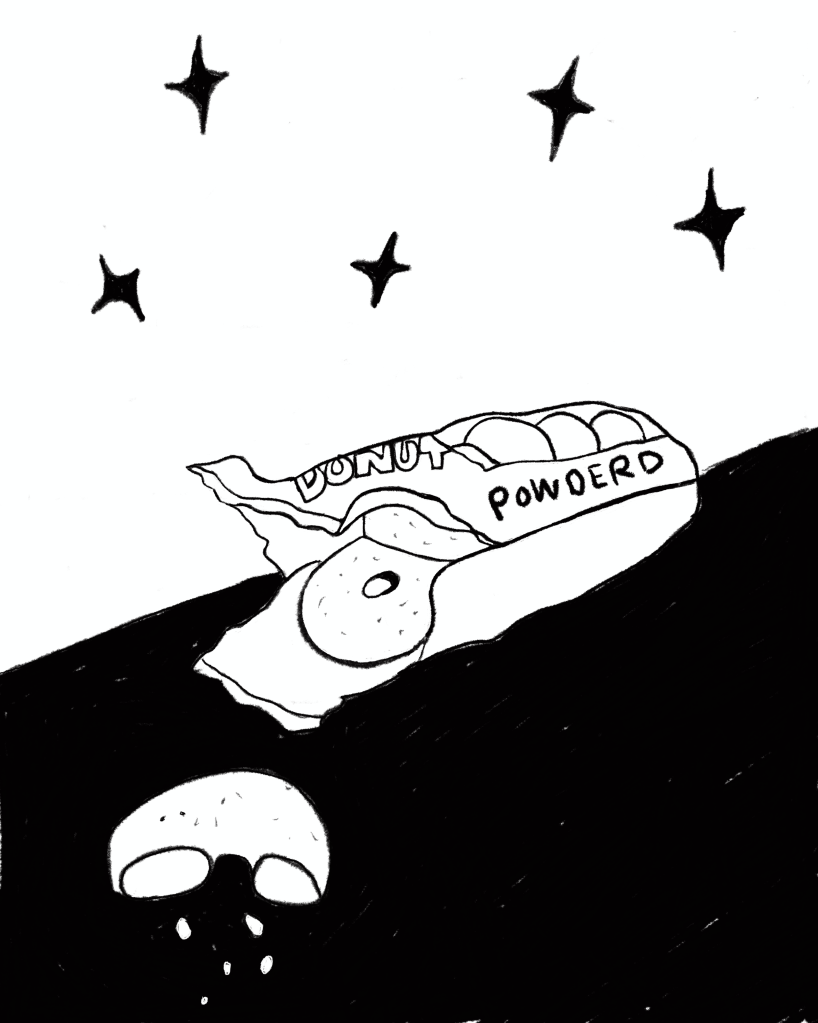
My tears made my liquid eyeliner drip into my eyes, and they started to sting. Dammit. I went to the mirror in the bathroom to wipe my face, and gazed at my reflection. “I’m such a mess,” I said out loud. Then to my surprise, I laughed a little. It was pretty comical: the makeup on my cheeks, the white powder from the donuts I ate earlier at the corner of my mouth, me standing there talking to myself in the mirror. I started to calm down, started to breathe deeper and slower. You’re okay. As I lay back down in my bed, I thought about what I’d just said. You’re okay. Who’s okay? If I’m okay, then who is telling me that I’m okay? Is that me, too?
“I’m tired of trying to be good enough,” I said out loud. And then my own voice answered me back internally: So stop trying. You already are enough and you always have been.
Hearing that voice was disorienting, yet somehow it felt totally familiar, like in a dream when you know you are in your house but it looks nothing like your house. “Stop trying” to be good enough? I had never thought about it that way.
Up to that point in my life it seemed like self-loathing was going to break me, but when I heard that voice, a light began to shine through the cracks from somewhere deep within my consciousness. You are already enough, it said. You always have been.
Why is it so hard for me to believe that about myself? I thought. Then I remembered the trauma I’ve been through: how my parents didn’t accept me being gay at a young age, the racism I experienced growing up, the abusive relationship I had survived. For the first time, I was looking at myself with a deep sense of compassion. You deserve better than the way you have been treating yourself.
I was terrified that there was something fundamentally wrong with me, and my relationship to social media — this place where it is so easy to compare myself to others and put myself down — exacerbated the problem, I realized. The likes are there for a reason. To rate myself. To accumulate validation. To show that some people are better than others. How could I have felt like I was enough when I was putting my worth in the hands of a piece of technology I couldn’t control?
The deepest level of my being sensed that this inner voice was telling me the truth. I didn’t need to change. My perspective did. I didn’t have a name for the voice, the feeling, the kind of love that spoke to me from my heart with total compassion and acceptance. But as I lay in my bed — on mascara-stained sheets sprinkled with donut crumbs — I experienced a profound shift. I couldn’t see my worth because I was looking for it in the wrong place. My worth lay within me, not outside of me. I needed to learn to love and accept myself. I kept crying, no longer with tears of sadness, but with a profound sense of letting go.
No Amount of Likes Will Make You Like Yourself
The reach of social media has both enforced social hierarchy and highlighted its empty promise of personal fulfillment. Take a look around online and you will see people with all the supposed social “status” struggling to find that unapologetic self-love they were born with. Celebrities and influencers are becoming more candid about the pressures of fame and its impact on their mental health. People with political power and influence are behaving like insecure teenagers and picking petty fights on X (formerly known as Twitter). Internet trolls, fearing their own inadequacy, spend countless lonely hours at their computers DM-ing, stalking, and harassing the mostly female, queer, or trans people they claim to be better than.
Why? Because when you equate who you are with where you rank in a made-up hierarchy, one self-imposed by your Learned Hierarchical Beliefs, you will wake up one morning with a profound feeling of emptiness. It’s not just the people who are lower on the social hierarchy that suffer—it’s everyone. When you do not know how to value yourself, no amount of outside validation is enough. When you don’t know how to value yourself, you will not be able to see the inherent value in others. You will suffer and you will cause suffering.
Who we are on social media is a curated image, an attempt to control the way we are seen by others. But no matter the filters, the captions, or the selfie angles, we can’t control anyone’s judgments and opinions of us. What we see in other people online is a projection of how we see ourselves. If you are choosing to be online—or are required to by your job or to connect with communities that matter to you—bringing your Higher Self with you can greatly reduce the suffering that can come from time spent in an environment that can so toxically reinforce LHBs.
Remember Who You Really Are
Your Higher Self has always been inside of you. Who you really are doesn’t go away just because you are not conscious of it. The more mindful you are of what your thoughts tell you while you are online, the more you will see that you have a choice whether or not to believe them. The process of unearthing your LHBs about social media is just a matter of paying attention to the narratives that go through your mind when you are on or thinking about social media and getting curious and contemplating where your beliefs and assumptions are stemming from. Where does your fear of not being good enough come from? Who is speaking when you say to yourself that you are failing because you don’t have thousands of followers?
Your Higher Self is the compassionate awareness behind your thinking, not judging you or putting you down for yourself-loathing thoughts or bouts of jealousy (only LHBs would put you down!) but reminding you with love that there is a new way of looking at this, one indicative of how worthy you always have been. You can come out of the darkness of illusion and step into the light of your truth. Aligning with your Higher Self is a practice, and it’s not easy, but neither is the constant up and down of chasing that outside validation.
You are not your LHBs. You are your Higher Self, and your Higher Self is calling bullshit on all of this.
In order for my perspective to change, I had to make different choices.
In the days that followed my initial experience of hearing my internal voice of self-acceptance, I became more conscious of the moments when I was putting myself down. I also began to see patterns in my behavior online that were making me more vulnerable to self-loathing thoughts. So, I made some changes. I blocked my ex’s profile so I couldn’t see her posts, I unfollowed people that triggered negative feelings about myself, and if I noticed I was starting to feel bad, I logged off Instagram and did something else. These changes made a difference in my state of mind, but I sensed there was still more I could do.
Then one day a friend of mine DM-ed me with a popular meme. It was a picture of two different Kermit the Frogs facing each other in conversation, but one of the Kermits was wearing a black cloak reminiscent of a Star Wars Sith Lord. Each version of the meme was a variation of an internal dialogue between regular Kermit and evil Kermit, who represents the “negative” perspective. For example, one version:
Me: I’m going to be more social, go out with friends, and enjoy life.
Also Me: Alienate all your friends because they secretly hate you.
Another version:
Me: He’s always been sweet and trustworthy.
Also Me: Suspicious. Break into his phone and look through his texts.
Self-deprecating meme culture was taking off, and even though I found it funny and entertaining, I thought, Wow, this is not what I need right now. I don’t want to reinforce my negative self-image — I want to see myself differently. Then I had an idea. What if I make my own version of that meme, but instead of Kermit, I do a photo collage of two of me? I could write from a higher perspective, the voice inside me that reminds me of how worthy I really am. I took two selfies — one looking upset, and the other calm, loving, and patient — and I collaged them together. I wanted to create the meme version of the experience I had that day in the mirror. It was in this moment that I finally came up with a name for my inner voice. In proper meme language I wrote on the top of the image: When Your Higher Self Tells You to Face Your Shit.
I didn’t know if the meme was good or if people would like it, but I didn’t care. It came from an experience that had shifted my perspective for the better. I posted it. I felt deep satisfaction finally expressing my true experience, not a projection of what I thought other people would want. It felt healing. Then I realized that if I was going to continue to channel my Higher Self perspective — the acceptance that I am enough — I needed to do more than change my habits online. To continue to exist on this higher plane, I needed to intentionally seek that perspective within my own consciousness. It was too easy to slip back into my low self-image — there was too much pressure to fit in. I needed to hold myself accountable.
I decided that every day I would dedicate time to looking within myself and bringing that inner voice of love into my conscious awareness. And I would use Instagram as a platform to share that voice. Basically, I was subverting everything my Learned Hierarchical Beliefs intended me to feel — all of the unworthiness, competition, and pain got flipped on its head. By me.
From Micro to Macro: We All Need Our Higher Selves
My method for creating the memes consisted of bringing self-loathing and limiting thoughts into my awareness, understanding the reasons I had become stuck in those thought patterns, and then replacing the automatic thought with one from the perspective of love and compassion.
Two things I understood very quickly:
- It wasn’t difficult to notice the mean things I said to myself because I said them all the time.
- Understanding my personal experiences didn’t go far enough to root out the cause of my limiting beliefs. I needed a deeper understanding of the societal structures that produced those experiences.
It wasn’t enough to know that my parents were homophobic at the time I came out as a teenager—I wanted to bring more awareness to the conditioning that led them to that perspective. It wasn’t enough to just say my abusive ex was a jerk—I was interested in understanding how toxic masculinity perpetuates abuse.
It finally clicked for me. The Higher Self perspective meant seeing the world through a new lens with which you are able to separate the human from their conditioned beliefs. People struggle with self-worth because for generations we have been inundated with cultural messaging and trauma that have convinced us we aren’t good enough. Those beliefs are passed down. The people that had hurt me were caught up in the same desperate illusion of needing to be better than other people; like me, they were ignorant of their inherent value. Outwardly, the effects of their false beliefs might have manifested differently than mine, but inwardly, the perspective was the same. Everywhere I turned, I saw these hierarchies playing out. Social media was just one medium for expressing them. I understood that the Higher Self perspective wasn’t just about helping myself—it was about tearing down the whole system.
Watch Out for Sneaky LHBs
In many ways social media platforms have helped popular culture outgrow some of the racist, sexist, ableist, homophobic, and transphobic LHBs that we grew up with. Now anyone who has access to the internet has visibility, a voice, and a potential audience. There’s an influx of body positivity, gender- and sexuality-affirming communities, and progress around decolonizing beauty standards.
Social media has helped educate and inform the masses regarding important issues around politics, race, gender, and class. But LHBs are sneaky and can change shape. Like a snake that shed its skin only to reveal its new suit, Learned Hierarchical Beliefs can evolve with the culture. There are hierarchies within activist movements; there’s judgment within spiritual communities. If you’re not mindful, someone who is just like you, sharing their authentic self on social media, can become your competition rather than who they should be—a potential friend. Hate groups use social media to manipulate and indoctrinate young people, and misinformation can spread like wildfire. It’s hard to determine if social media as a whole is healing or hurting us as a society. But there is no stopping it—the further into the future we go, the more time we are spending online.
Social media can also be a blessing when it comes to unlearning your LHBs, because it can bring more awareness to the ways in which you judge yourself and other people. But unless you take that further step of realizing that climbing up the ladder of social clout does not actually fill the void of your own self-worth, you will forever be stuck in the cycle of needing more and more external validation. No amount of followers and likes will ever be enough to make you feel like you are enough. You will forever be focusing on what you don’t have, that one negative comment, or that person who unfollowed you (who you don’t even interact with anyway).
When you are stuck in the mental framework of your LHBs, the entire game is about climbing higher and higher. Only, you will never reach the top because the top is an illusion. Seeing the world through the lens of your Higher Self is a total dismantling of this hierarchical system, no matter what guise that system takes.
No one is better than anyone else. Period.
It’s a Practice, Not a Goal
Five years and over a thousand Higher Self memes later, I’d love to tell you that I never get caught up in self-limiting thoughts on social media. But that’s not how it works. Just a few weeks before writing this, I caught myself in another downward spiral brought on from fears of inadequacy. My posts get thousands of likes now, but if I don’t stay mindful of where my thoughts are taking me, five thousand likes might as well be negative five thousand. Because when I let my LHBs take over, all I can see is lack. It’s never been about the number. And it never will be. The only way to feel like you are enough is to acknowledge you always have been. Learned Hierarchical Beliefs are very difficult to let go of. It takes self-compassion, practice, and patience. So below are some guidelines, affirmations, and journal prompts to help you on your journey.

Bring Your Higher Self with You Online
- Know why you are logging on: Instead of mindlessly opening Instagram, TikTok, or any other app just because your phone is nearby, ask yourself, Why do I want to look at this now? Is it to compare myself to other people or to be inspired? Is it to find a way to feel better about myself by judging other people? Or is it to connect with other people? Or am I just bored? Getting clear on why you’re logging on gives you more control over your experience. If you can’t find a good reason to log on, don’t.
- Give yourself time limits: Your Higher Self knows that your mental and emotional health is your number one priority. No amount of social media success, even if it helps your career, can replace your inner well-being. Even if you have to post every day for your job, you don’t have to also scroll for three hours a day. Set reasonable goals by starting with small changes. Become aware of how many hours a day you are on the apps. Start with taking one hour off a week until you are only on for a max of one hour a day per app. One hour a day is plenty of time to post and catch up with what you have missed. Make sure to take at least one day off a week.
- Check in before you type anything: When you post something online it is permanent—even if you delete it there could be a screenshot documenting it. Think about how many times you have said something you regret IRL. Online, there is no apology that will be sufficient to everyone. Before you type anything, ask yourself, Who is speaking now? Is it my Higher Self, or is it my LHBs trying to make someone feel small so I can feel better about myself? Is this something I want someone to hold me accountable for five years from now? If you’re still not sure if you should say it—don’t. There will be plenty of opportunities to voice your truth when you are clear on your intentions.
- Being called out on social media can be a gift: The term “cancel culture” has been so misused by both progressives and conservatives that it has lost its meaning. Truthfully, no one who is being held accountable online for their behavior changes unless they want to, which requires an inner shift in awareness of how their LHBs have potentially caused harm. Yes, there are people who simply want to bully others to feel empowered, but in my experience, most of the call-outs on social media are acts of love—people who are speaking out on behalf of generations of marginalized people who did not and do not have a voice; people who want a more compassionate and just world, and people who, through their own emotional labor, are filling the void of lack of education around our hierarchical system that has left so many behind. If your behavior is being questioned online, ask your Higher Self, What can I learn here? before you react defensively. It doesn’t mean that every online criticism is justified, but it does pose an opportunity to grow, if you are willing to look within.
- Unfollow, block, restrict, mute: Social media is not a safe space. There are people who go online with the intention of causing harm. They are human just like you, but that doesn’t mean you have to put up with any form of their abuse. Thankfully many social media apps have tools to help protect you from harassment, although nothing is foolproof. Use every tool at your disposal. Your Higher Self knows that any person who feels the need to be hateful and abusive online is acting from their own wounds and in need of healing. When you remind yourself of this, it helps to lessen their power to hurt you. It isn’t about you. It’s as if they are speaking to themselves indirectly. Engaging with abusers online, even if it’s to defend yourself, makes you vulnerable to more abuse.
- Think of social media as an opportunity to make a positive impact rather than a challenge to gain social clout. When we think about making a positive impact, we often think we must save the world; but often, a positive impact is simply sharing love with your family and friends. Being an example of compassion, authenticity, and self-acceptance, no matter how large or small your online community is, makes a tremendous impact on our collective consciousness. Brightening someone’s day by making a funny TikTok can be so healing. Having the courage to share your art on social media can inspire someone else to have the courage to share theirs. Sharing your feelings can help someone feel less alone. At its essence, social media is a form of communication. So what is it that you want to communicate? What really matters to you?
- Most people on social media aren’t judging you—they are too busy judging themselves. (And if they are judging you, it’s because they are indirectly judging themselves.) When you are stuck in your LHBs, it’s difficult to see outside of that system. It’s a filter that prevents you from seeing the truth, which is that we are all searching for the same thing—love and acceptance. But we all go about it in different ways. From the perspective of your LHBs, you need to be better than other people in order to be lovable and accepted, and that is why it’s so easy to find yourself online, judging other people and yourself. From the perspective of your Higher Self, love is within you, and the acceptance that you have been searching for is self-acceptance.
LHBs About Social Media vs. Your Higher Self
LHB: The more likes and followers you have on social media, the more valuable you are as a person.
Higher Self: Social media apps are run by private companies that use algorithms to “predict” user preferences and tailor user experiences. They do this to keep users on the app for as long as possible, so they can gather data to sell to other companies. Content that is likely to get the most negative emotional response gets the most engagement. So no matter how authentic you are as a person on social media, the statistics of likes and followers will never be an authentic representation of you. It is what the algorithm determines as valuable, aka how monetarily valuable you are to the company.
LHB: People with more influence on social media have happier lives.
Higher Self: If your happiness is dependent on your influence on social media, you are letting your happiness be determined by circumstances you cannot control. In truth, real happiness comes from total self-acceptance for who you are right in this moment. Regardless of social status. Often people with a lot of influence on social media have to learn this truth the hard way.
LHB: You shouldn’t show your flaws on social media.
Higher Self: The more you accept yourself, the more authentic you will be wherever you show up—in person or online. The more authentic you are, the more you encourage and inspire authenticity in your community of friends and peers. This is how you help transform the world from the limits of Learned Hierarchical Beliefs to the joy and equanimity of a society that reflects our Higher Selves.
LHB: Who people are on social media is an accurate representation of their true selves.
Higher Self: Who people are on social media is a projection ofwhere they are in their journeys of healing and self-acceptance. Everyone is in a different stage of that journey. The way people behave online most often has nothing to do with you. So don’t assume you know what is going on in someone’s life by how they present themselves on social media.
LHB: I will always be insecure online.
Higher Self: You’re basing your security on what other people think about you, which is really a reflection of how they feel about themselves. How can you be secure about something you can’t control? When you focus on treating yourself with kindness, compassion, and care while engaging online you will feel grounded in the security of your indisputable self-worth.
Journal Prompts
- When I am on social media, I mostly feel…
- The things I don’t like about social media are…
- My biggest insecurity on social media is…
- Some personal experiences that contribute to my insecurity on social media are…
- Some ways that I judge people on social media are…
- Flip the script: What would my Higher Self say about my value on social media…
- The social and cultural beliefs that affect how I see myself on social media are…
- Some changes I can make to my social media habits to embrace my Higher Self online are…
- When I log on to social media, my Higher Self wants me to remember…
- I can share love on social media by…
Insecurities, inadequacies, self-doubt; we all have them, and never more so than in this age of media saturation and technical voyeurism. Enter Bunny Michael, an interdisciplinary artist and podcast host whose work picks up where Alex Elle, Brené Brown, and Julia Cameron leave off.
Bunny knows what it is firsthand to be an outsider: from trying to find their footing in an art world dictated by social media followers, to coming to terms with their queer identity, to dealing with the societal traumas they’ve inherited as a person of color in a society that privileges whiteness. It was at a real low point that Bunny first got in touch with their higher self—and ever since has been helping their followers do the same through their art and inspiring Instagram presence.
Building from Bunny’s viral memes, Hello, Higher Self Is a self-care manifesto, calling on readers to radically shift their perspectives from the Learned Hierarchal Beliefs (LHBs) we’ve all internalized to the self-acceptance we were born into, aka our Higher Selves. This book shines a light into eighteen areas of life where LHBs often lurk—from creativity, to work, to relationships, to race, to sexual pleasure. Bunny’s mix of meditative advice, written exercises, and personal examples make for a jaw-dropping read.
“Hello Higher Self offers the dose of radical self-compassion we all need and serves as a potent reminder that we are enough. Bunny Michael offers us a powerful invitation to dismantle the harmful beliefs society imposes on us and embrace our true and lasting worth. This is a must read.” —Yung Pueblo, New York Times bestselling author of Inward, Clarity & Connection, and The Way Forward