

6 Fiction Books that Draw on Themes and Stories from Latine and Hispanic Myths & Folklore
Latine and Hispanic folklore and mythology stretches vastly through the centuries, showcasing strong cultures, vivid imaginations, and impactful storytelling. These six authors have created stories that are rooted in ancestry, memory and magic. They do not just entertain readers, but also reshape stories that have molded communities for centuries.

At the edge of the Salton Sea, in the blistering borderlands, something is out hunting. . . Malamar Veracruz has never left the dust-choked town of El Valle. Here, Mal has done her best to build a good life: She’s raised two children, worked hard, and tried to forget the painful, unexplained disappearance of her sister, Elena. When another local girl goes missing, Mal plunges into a fresh yet familiar nightmare. As a desperate Mal hunts for answers, her search becomes increasingly tangled with inscrutable visions of a horse-headed woman, a local legend who Mal feels compelled to follow. Mal’s perspective is joined by the voices of her two daughters, all three of whom must work to uncover the truth about the missing girls in their community before it’s too late. Combining elements of Latina and Indigenous culture, family drama, mystery, horror, and magical realism in a spellbinding mix, Salt Bones lays bare the realities of environmental catastrophe, family secrets, and the unrelenting bond between mothers and daughters.
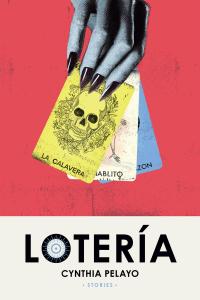
The Mexican board game of Lotería is a game of chance—similar to bingo. However, in Lotería instead of matching up numbers on a game board, players match up images.
There are 54 cards in the Lotería game, and for this short story collection you will find one unique story per card based on a Latin American myth, folklore, superstition, or belief—with a slant towards the paranormal and horrific. In this deck of cards you will find murderers, ghosts, goblins and ghouls. This collection features creatures and monsters, vampires, werewolves and more.
Many of these legends existed long before their European counterparts—passed throughout the Americas via word of mouth, collected just like the tales the Brothers Grimm. These are indeed fairy tales—Latin American fairy tales—but with a horrifying slant.

Feral with grief, Bimbo has become unrecognizable, taking no prisoners in his search for names. Soon, they learn Maria was gunned down by guys working for the drug kingpin of Puerto Rico. No one has ever gone up against him and survived. As the boys strategize, a storm gathers far from the coast. Hurricanes are known to carry evil spirits in their currents and bring them ashore, spirits which impose their own order.
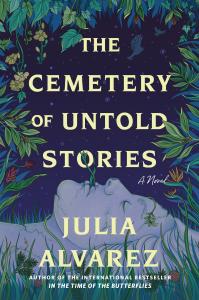
Alma Cruz, the celebrated writer at the heart of The Cemetery of Untold Stories, doesn’t want to end up like her friend, a novelist who fought so long and hard to finish a book that it threatened her sanity. So when Alma inherits a small plot of land in the Dominican Republic, her homeland, she has the beautiful idea of turning it into a place to bury her untold stories—literally. She creates a graveyard for the manuscript drafts and the characters whose lives she tried and failed to bring to life and who still haunt her.
Alma wants her characters to rest in peace. But they have other ideas and soon begin to defy their author: they talk back to her and talk to one another behind her back, rewriting and revising themselves. Filomena, a local woman hired as the groundskeeper, becomes a sympathetic listener to the secret tales unspooled by Alma’s characters. Among them, Bienvenida, dictator Rafael Trujillo’s abandoned wife who was erased from the official history, and Manuel Cruz, a doctor who fought in the Dominican underground and escaped to the United States.
The Cemetery of Untold Stories asks: Whose stories get to be told, and whose buried? Finally, Alma finds the meaning she and her characters yearn for in the everlasting vitality of stories. Julia Alvarez reminds us that the stories of our lives are never truly finished, even at the end.
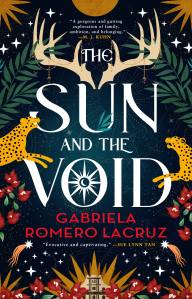
Stuck on the edges of society, Reina’s only hope lies in an invitation from a grandmother she’s never met. But the journey to her is dangerous, and prayer can’t always avert disaster.
Attacked by creatures that stalk the mountains, Reina is on the verge of death until her grandmother, a dark sorceress, intervenes. Now dependent on the Doña’s magic for her life, Reina will do anything to earn—and keep—her favor. Even the bidding of an ancient god who whispers to her at night.
Illegitimate and of mixed heritage, Eva is her family’s shame. She tries to be the perfect daughter, but Eva is hiding a secret: Magic calls to her. Eva knows she should fight the temptation. Magic is the sign of the dark god, and using it is punishable by death. Yet it’s hard to ignore power when it has always been denied you. Eva is walking a dangerous path. And in the end, she’ll become something she never imagined.
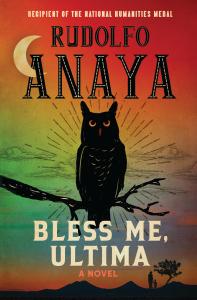
Suddenly, the ordinary challenges and triumphs of childhood become extraordinary. As Ultima shows Tony how to cure ailments, reverse curses, and restore peace to those who have lost it, he embarks on a singular quest, one in which he probes the family ties that bind and rend him, questions the Catholicism that shaped him, and explores the Spanish, Mexican, and Native American influences that informed not only his heritage, but his very sense of self. And at each life turn there is Ultima, who was there the day he was born . . . and will nurture the birth of his soul.