One Bin at a Time: The Pioneering Mind Behind Worms Eat My Garbage
Mary Appelhof used to say that she was changing the world one worm bin at a time. Thirty-five years after her self-published book on vermicomposting first appeared, the verdict is in.
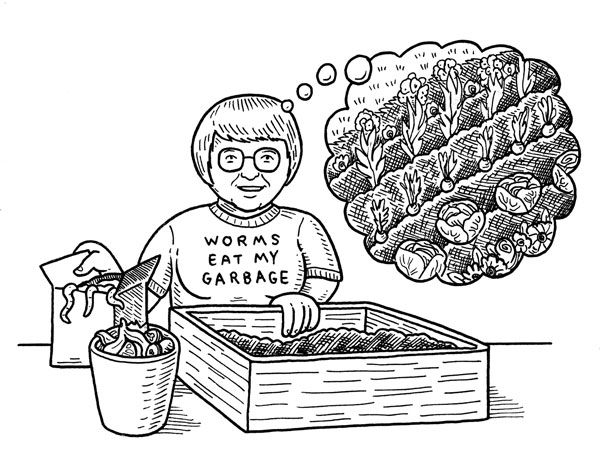
I first met Mary Apelhof in 1982, the year she published the first edition of her book Worms Eat My Garbage and a full ten years after she built her first worm bin.
Mary was a pioneer. She was passionate about sustainability and reducing waste before these things were common concepts. She advocated for vermicomposting — using worms to process organic kitchen waste into valuable compost for houseplants and gardens — even though, at the time, it was not a popular subject. When she first started out, people laughed at the idea of keeping worms in a box. They told her she was “weird” and that no one would ever put worms in their house. But Mary embraced being weird, even wearing a hard hat emblazoned with the words “Worm Woman.” It was not uncommon to see her with knitted boas covered with fabric worms around her neck. She carried a rubber worm in her pocket. She produced a video of herself in a worm bin. She became known as “The Worm Woman of Kalamazoo.” The weirdness was a way to get people thinking and talking about worms, which was her intent.
All the while, she was fearless in her pursuit of spreading the gospel of vermicomposting. Her ability to make dense scientific information accessible to everyone along with her keen sense of humor captured audiences of all ages. I know dozens of people to whom she gifted a worm bin and a carton of worms. Periodically, she would show up for a spontaneous inspection of our bins, to see what kind of worm workers we were. When it came time for my inspection, we found my worms doing so well that Mary was astounded, and so was I: having left the bin under a shelf in my greenhouse, I had completely forgotten about them.
When Mary’s book came out, I set up her bookkeeping system. My pay came in the form of 25 copies of Worms Eat My Garbage. I continued to be her business consultant and after her death, the book and its future were entrusted to me. Much has happened in composting, vermicomposting, and recycling in the last two decades. When I decided it was time to produce a new edition, I knew that Mary’s original research and writing had been so thorough, I suspected the only updating the book would need would be incorporating new information that had arisen since last publishing the work she had already done. I was right.
The definition of a classic work is that it stands over time as being of the highest quality and and outstanding when compared to other works of its kind. Worms Eat My Garbage fits that definition. At a recent international vermicomposting conference, I asked attendees what this book has meant to them. Two common themes emerged in the answers I heard. The first is that the book is a landmark publication and remains the go-to book for worm composting, all these years later. The second theme was gratitude — for the work Mary did and to me (Worm Woman 2.0), for seeing that the book’s life continues, now updated for a new generation of worm workers. I know it would make Mary happy.
Mary used to say that she was changing the world one worm bin at a time, and she was. I trust that you will enjoy the 35th anniversary edition of Worms Eat My Garbage. I know I have enjoyed working on it.
Learn More
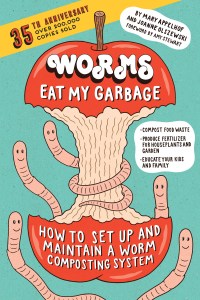
This best-selling guide to the practice of vermicomposting teaches people how to use worms to recycle food waste into nutrient-rich fertilizer for houseplants or gardens.
Small-scale, self-contained worm bins can be kept indoors, in a basement, or even under the kitchen sink in an apartment — making vermicomposting a great option for city dwellers and anyone who doesn’t want or can’t have an outdoor compost pile. This fully revised edition features the original’s same friendly tone, with up-to-date information on the entire process, including:
- Building or purchasing a bin (readily available at garden supply stores)
- How to feed and maintain the worms
- Harvesting the finished compost
You’ll find annotated references to related readings, a glossary of terms for quick look-up, and a sample record sheet to keep track of your setup. Start vermicomposting today and watch the worms get to work!
Related Reads
Featured Titles
-

The Complete Compost Gardening Guide
-
Let It Rot!
-
Secrets to Great Soil
-
What Every Gardener Should Know About Earthworms