
For the Culture | Marcus Collins & e.l.f
Welcome to the Future of Branding
Thank you for attending the “Is the Era of Brand Really Dead?” talk featuring
Dr. Marcus Collins and e.l.f. Beauty CMO Kory Marchisotto at
the Cannes Lions Festival of Creativity.
As a token of gratitude, please enjoy a complimentary read of Chapter One of For the Culture by Marcus Collins and take 25% OFF off your purchase of this groundbreaking book with exclusive code: FTC25
*Code valid between 5/20 — 7/31
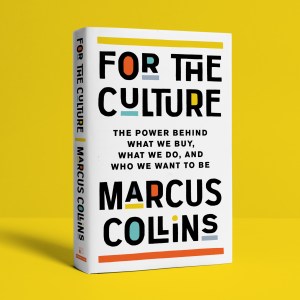
The architect of some of the most famous ad campaigns of the last decade marshals his expertise and “elegantly friendly writing style” (The Wall Street Journal) to reveal how our perspective is influenced by culture
In For the Culture, Marcus Collins argues that true cultural engagement is the most powerful vehicle for influencing behavior. If you want to get people to move, you must first understand the underlying cultural forces that make them tick.
Collins uses stories from his own work as an award-winning marketer—from spearheading digital strategy for Beyoncé, to working on Apple and Nike collaborations, to the successful launch of the Brooklyn Nets NBA team—to break down the ways in which culture influences behavior and how readers can do the same. With a deep perspective built on a century’s worth of data, For the Culture gives readers the tools they need to inspire collective change by leveraging the cheat codes used by some of the biggest brands in the world.
About the Book
- Winner of the Thinkers50’s Radar Award
- A Porchlight Business Book Award winner
- NABJ Outstanding Book Award
- Longlisted for the Non-Obvious Book Awards
- Longlisted for BookPal’s 2023 OWL Awards
- One of Radical Candor’s Inspiring Books to Help You Become a Better Leader In 2023
- A Thinkers50 Best New Management Book of 2023
- A Forbes Must Read Book for Spring
- A Next Big Idea Club Must-Read Book
- An Amazon Best Book of the Year So Far
Complimentary Chapter
What's Inside
CHAPTER ONE: UNPACKING CULTURE
Rewind the clock with me to 1999. Charles Stone III was a music video director with aspirations of making full-length feature films. His work had been most prominent in hip-hop circles, where he had directed videos in the early ’90s for artists like A Tribe Called Quest and Public Enemy. These were still the early days of hip-hop, when budgets for music videos were not as massive as they would come to be by the end of the decade, and the production budgets for Stone’s videos were modest. But Stone had greater ambitions. He wanted to make movies, not music videos, yet he could not get his foot in the door at the major motion picture studios. So in 1999, he decided to take matters into his own hands. With a $1,000 budget, he enlisted his closest buddies from his hometown of Philadelphia to costar in his directorial film debut, a three-minute short simply titled True.
To say that True was light on dialogue would be an understatement. The short film followed a series of exchanges between Stone and his friends—Kevin Lofton, Fred Thomas Jr., Paul Williams, and Terry Williams—that could be summed up in one word: “wassup,” a colloquialism for “what’s up.” It was a common greeting among young urban dwellers, particularly those from the Black community. “Wassup” had found an even larger audience in the ’90s thanks to the meteoric success of Martin Lawrence’s television show Martin. As star of the show, Lawrence, one of the biggest stand-up comedians at the time in real life, played a Detroit radio personality for a fictional radio station with the call letters WZUP, pronounced “wassup.” His signature on-air salute was a high-pitched repetition of “wassup,” which would become one of the many memorable catchphrases of the show. But that would be eclipsed by what happened next.
According to the lore, a creative director from the advertising agency DDB Chicago saw Stone’s short and thought it was perfect for one of his clients, Budweiser. It didn’t feel like advertising to the ad exec. It felt like something altogether different. The short features a twenty-something man on the couch, watching sports. The phone rings. His friend on the line asks, “Yo, what’s up?” The young man responds, “Nothing, man. Just chillin’ ,” to which his friend responds, “True,” as if to say, “I hear ya.” Just then, another friend of the young man enters the apartment and gregariously asks, “Wassup?” in an exaggerated, elongated fashion. The two respond in kind with their own exaggerated exclamation, “Wassup!” Before long, two additional friends join the exchange of “Wassup.” The film ends in a fashion similar to how it started. The original friend asks the twenty-something man, “What’s up with you?” The twenty-something responds, “Nothing, man. Just chillin’,” to which the friend responds, “True.”
The creative director’s instincts were spot-on. At the time, Budweiser positioned itself as a champion of camaraderie, the social lubricant among close friends—your buddies—as signified in its historic tagline, “This Bud’s for You.” From its heights in the 1950s and on throughout the decades, Budweiser had been synonymous with American culture, sponsoring popular shows and sporting events. However, its relevance had begun to wane in the 1990s because it was no longer representative of the cultural zeitgeist. However, True captured the essence of contemporary friendship. You don’t need many words when you’re talking with your closest friends. Friends speak in code, and everyone who understands the code just “gets it.” Stone and his “buds” demonstrated that perfectly in the film, so much so that DDB simply recreated True—with the original cast and all—for the Budweiser campaign. Budweiser’s “Wassup” ad hit the airwaves later that year, and the rest, as they say, was history. Within a matter of months, “Wassup” had been imitated by talk-show hosts and radio personalities, parodied by movies, memed and proliferated by online content creators in the early days of the Internet, and adopted into the cultural lexicon of the masses. America got a new catchphrase, and Budweiser was legitimated as a culturally relevant brand once again, which led to millions in beer sales and major motion picture gigs for Stone—along with a ton of advertising awards.
Budweiser’s “Wassup” commercial was more than an advertisement; it became a part of culture because it understood culture. Like sitcoms and movies that depict the norms of social living in which people can see themselves and relate, the “Wassup” commercial accurately depicted the nuances of what people—particularly young Black people—just did in their everyday lives. And, upon seeing the commercial, we saw ourselves in it. Folks were already using “wassup” as salutatory language years before Budweiser leveraged the phrase for its campaign. The context for “wassup” had already been negotiated as an everyday phrase among peers, not formally between employees and bosses or something I’d say to any other authoritative figure, like my parents or professors. “Wassup” was one of our social facts. By integrating the phrase into its campaign as it did, Budweiser turned something that was typically used to talk to us (advertising) into something that helped us talk to each other and express who we are—both individually and collectively. And we subsequently used the campaign as a way to project our identity and connect with people like us. In this way, the thirty-second film transformed what would normally be considered advertising into what scholars would call a cultural product, the tangible or intangible creations that reflect the shared perspectives of a group of people. Culture has this transformative effect on almost everything it touches. Understanding the underlying physics of culture and its impact on human behavior, therefore, will allow leaders, managers, marketers, and entrepreneurs to leverage its influence, much as Budweiser did here.
The cultural scholar Raymond Williams provided a useful and contemporary perspective on culture that helped me understand the concept better than I had before. Williams is considered one of the founding fathers of cultural studies, and his work on culture widened the aperture of how theorists framed what is thought of as culture and how it relates to society. Williams mapped the genealogy of the word “culture” and its associated meaning, which for me fully revealed the impact of culture and how it can be used to catalyze collective behavior and inspire people to move.
The word originates from the Latin term “colere,” which means to cultivate, to tend to something in a nurturing way. Fittingly, the early usage of the word “culture” occurred within the word “agriculture,” which refers to cultivating soil to grow uniform crops. Farming and growing crops were the economic activities of the agricultural society that persisted for thousands of years. The eighteenth century ushered in the Industrial Revolution, which not only changed the economic landscape of society from harvesting to machinery but also changed the context and usage of the word “culture.” Still keeping its Latin roots, the meaning of the word expanded to include the intellectual, moral, and expressive development of children in an industrial society. Just as farmers, centuries earlier, had tended to the growth of their crops, ensuring uniformity in their optimum flourishing, culture became the means by which parents tended to the growth of their children to ensure predictability in their upbringing within this new society. Like Durkheim, Williams suggested that culture implies social forces—both subtle and overt—that govern the beliefs and behaviors of everyday life.
Williams defined culture as a realized signifying system, a system through which we interpret the world and make sense of it. This system, as Williams argued, is a whole way of life for people—a program for everyday living. It is through this system that we translate our daily experiences to inform how we respond to them because of what they mean. Culture is a realized meaning-making system. More accurately, it is a system of systems—a set of interdependent principles and mechanisms that all inform each other—which, collectively, influences practically everything that we do because of who we are and how we see the world.
Therefore, our cultural affiliation is anchored by how we self-identify—the categorical labels we use to tell people who we are and to associate with other people based on who they are. These labels range from geographical in nature (like where you’re from) to institutions (the college you attended), activities (sports), consumption behavior (anime enthusiasts), and a host of seemingly endless designations that make up our identity. Identity is the cornerstone of culture. Once we take on an identity marker, either by choice (subscription) or endowment (ascription), we implicitly inherit the cultural characteristics of the community through the interworking of the meaning-making system. Let’s explore this further by unpacking the systems.
SYSTEM ONE: HOW WE SEE THE WORLD
Understanding who we are is a fundamental human drive. This designation, our identity, acts as a compass that guides how we see the world. Over seven decades of research on identity-related concepts has shown the critical role that identity plays in shaping the shared attitudes, values, and ideas of a group of people, which, in turn, informs how they make meaning and go about their daily lives. Whether based on socially constructed references (like the familial role of “mother”), an individual reference (like a person we want to emulate, be it a pop star or mentor), a group affiliation (like our religion), or a combination of them all, our identities help provide a lens through which to see the world based on the shared beliefs of the people who subscribe to the same identity. For instance, if you’re a Christian, you see the world one way. If you’re Hindu, you see the world another way. If you’re an atheist, you see the world in an entirely different way, which subsequently influences how you live your life from day to day.
It’s no coincidence that I use religion as an example to illustrate the relationship among identity, worldview, and behavior. Religion is an institution that exists in every known human society. It shapes collective beliefs and powers societal coordination. Members who subscribe to a religious identity also take on a collective consciousness that unifies them within a society. These forces make religion a very useful proxy for understanding the dynamics of culture. In fact, the academic field of sociology itself started with the study of religion for this very reason. Durkheim explored contagious behavior due in part to the social cohesion of religion. Max Weber, another founding father of sociology, explored religion’s role and influence on institutions like the economy and politics, while Karl Marx critiqued the oppression that religion exerts on social classes. The investigation of religion as a means to understand culture has been an ongoing project ever since. Modern scholars have even expanded the remit of religion to encompass cults, fandom, and consumption. From an academic view, religion and culture are inextricably linked.
Whether you’re “religious” or not, you understand the gravitational pull that religion can have on people, which makes religion a helpful tool to explain the power of culture. Throughout this book, you will see religious references used here and there to explain a concept or illustrate a point.
On its surface, the concept of a shared belief is fairly straightforward. It is the collective acceptance of a truth, the communal view of reality. Is there a God? Are there other life forms throughout the galaxies? Was the moon landing a hoax? Should there be a separation of church and state? Are all men created equal? Is there no place for politics in sports? These held beliefs help us frame the endless amount of information that is transmitted from our senses to our brains so that we can make meaning of the world and know how to operate in it. Anaïs Nin is famously quoted as saying, “We don’t see things as they are, we see them as we are.” That is, the truth is not as objective as we would like to believe. The truth is culturally mediated and socially negotiated and constructed based on our communal view of reality—our beliefs.
Shared beliefs and ideologies are the least tangible system of culture but arguably the most important because this system precedes all others. It’s because we hold certain beliefs—deeply and emotionally—that we commit to certain behaviors, not the other way around. Although our beliefs and ideologies are not easily seen, they are reflected in everything we do. The anthropologist and culture scholar Grant McCracken wrote about how our everyday experiences are culturally constituted, shaped, and mediated by our beliefs and assumptions of right and wrong, just and unfair, acceptable and undesirable. It’s our system of shared beliefs and ideologies that dictates what seems “normal” and what seems “out of place,” and therefore, it’s this system that determines what gets adopted and what does not. So appealing to someone’s beliefs and ideologies could have a material influence on their behavior. And the more indoctrinated a person is with those shared beliefs, the more influential that appeal can be.
You probably read that last line and got some serious “cult” vibes, didn’t you? I wouldn’t be surprised. Culture and cults share a lot in common beyond a four-letter root word. Cults are organized groups of people who have devoted themselves to an idea or person. Derived from the French word “culte,” which means worship, “cult” provides a metaphor that captures the seemingly religious devotion of a group of people to a shared set of social facts that govern the group and the worldview in which they are indoctrinated.
I am fascinated by religious cults like the Peoples Temple, Heaven’s Gate, and NXIVM. I read the stories and watch the documentaries about people who found themselves completely consumed by an organization and its ideas. Like most people, I hear these cautionary tales and ask myself, “How could people be so gullible?” I’m just amazed at how seemingly easy it is for people to be swept up in something so obviously “crazy.” But one must wonder, just how crazy is it, really? No one entered these cults thinking they were joining a cult. Yet, over time, they looked up and found themselves firmly planted inside one. This phenomenon can be partially explained by what the French philosopher Louis Althusser refers to as interpellation, the process by which powerful ideas are repeated and begin to weave themselves into our lives to the point that they begin to feel like our own.
According to Althusser, starting at birth, we are raised with the ideas and values that are a part of the family’s belief system and shared among family members. From a very young age through our adolescence, we are conditioned to see the world through this framing and to behave in accordance with it. Naturally, this is a part of a wider societal belief system with which the family self-identifies—be it nationality, religion, or trade. For instance, if your family is a member of a conservative church, then it is likely that you were raised with conservative ideas that you accepted as your own beliefs. This is what it means to be fully indoctrinated into a belief. We are interpellated. While it is convenient to dismiss the people who have fallen victim to the wiles of a cult as “crazy,” we, too, have been indoctrinated into our own cults. We just happen to call them by a different name: culture.
During the summer of 2008, after my first year in the MBA program at the University of Michigan, I had the opportunity to intern at Apple in Cupertino, California. I worked in the partner marketing group of iTunes, Apple’s online music platform, managing our partnership with Nike Sport Music and a major college marketing initiative that I championed. By the end of that summer, my internship had turned into employment, and instantaneously, I felt like I was officially a part of the Apple community. I was, in my mind at least, an “Apple guy.” I had worked this designation into my identity, and I wore that moniker with pride. I would find myself espousing ideas that were commonplace within the walls of the company as if they were my own (i.e., “We say ‘no’ to the thousand things we like so we can say ‘yes’ to the one thing we love” or “That experience isn’t user-friendly”) and unconsciously doing my best Steve Jobs impersonation every time I took the floor to give a presentation. I had become successfully interpellated into the culture of Apple. Of course, it wasn’t just me; it happened to all of us—employees and fanboys alike. Our identities were defined by Apple, and our worldview was shaped by it as well. It’s probably no wonder that companies like Apple, Google, Nike, and Tesla have what many consider to be a “cultlike” following. Their system of shared beliefs and ideologies are salient among those who self-identify with them and are represented in how these people conduct themselves, which leads us to the second system: a shared way of life.
SYSTEM TWO: A SHARED WAY OF LIFE
The second system of culture is a shared way of life. This refers to the way a group of people behave and live in accordance with their shared beliefs and ideologies. Take, for instance, shared faith and patriotism. They both have a fixed set of values and ideas attached to them that influence the way people who subscribe to them live. Christians believe that Jesus Christ is the son of God and, therefore, live their lives according to his teachings. However, the way his teachings are internalized and exercised varies depending on the type of Christian you are.
After the death of Jesus Christ, his disciples—his most fervent followers at that time carried on his teachings (the beliefs and ideologies of Christianity) and began to propagate these ideas to more people across distant lands. In 325 AD, a conference of Christian clergy met as an ecumenical council to address some of the growing questions and disagreements about the nature of Jesus himself. Was he a man? Was he the son of God? Was he both? Though they reached agreement, questions still lingered. A century later, the church began to splinter, and some groups broke away to practice their own understanding of Christianity, with their own systems of shared beliefs and corresponding collections of norms, artifacts, and language. This birthed denominationalism in the Christian faith and new religions altogether, like Islam. In 1054, the church experienced the Great Schism and formed the Roman Catholic Church and the Eastern Orthodox Church, each with its own nuanced system of beliefs and corresponding cultural practices, or way of life. Centuries later, a German priest named Martin Luther voiced his ideological issues with the church in protest and recruited others to form a completely new Christian sect known as Protestants—with the Latin etymology “protestari,” or protester. But even the Protestants could not fully agree on their ideological views, so they, too, splintered into different sects, like Lutherans and Calvinists, each with its own nuanced system of beliefs and way of life.
As we see in the history of Christianity, shifts in beliefs inform how people see the world and, ultimately, how they behave in the world. If you identify as an Orthodox Jew, you see the world differently than a Reformed Jew or a Hasidic Jew, and, therefore, you behave differently. Our identities and corresponding belief systems help us make meaning of the world, and our way of life is how we realize those beliefs. Our beliefs are exercised by the artifacts we employ, the behaviors that we normalize, the language that we use, and all the other forms of cultural practice that are incorporated into our daily lives.
Let’s look at the idea of patriotism in America. Our shared beliefs tend to revolve around the notion of freedom: “land of the free and home of the brave.” Freedom is very much part of the ideological fabric of the United States, even though the country continues to fall short of providing the same freedoms to all its inhabitants. This inequality has been evidenced from the early existence of the United States, with slavery, to our present-day prison industrial complex. Be that as it may, freedom is still held to be a bedrock of the country’s belief system, and it is exercised in our way of life, from free speech to the right to bear arms. For many, any form of rule or law could be perceived as an infringement on their liberty, which would be met with great opposition. Therefore, it should have come as no surprise that when COVID-19 ran rampant across the globe and individual states in the United States began to enforce mask mandates on their citizens, a broad swath of Americans pushed back. Many said that they would rather die than give up their liberty. Why? Because that’s just the American way. Our ideologies inform our way of life.
Surely, this does not apply to everyone in the country. Plenty of Americans wore masks, as was mandated during the pandemic, and abided by the rules laid out by public health officials because they believed it was the right thing to do. Both groups identify as “Americans” and share the same affinity for “freedom.” However, their interpretation of “freedom” differs, and, therefore, they exercise their freedoms differently. Not all people make meaning in the same way, so we tend to gravitate toward those who share a similar worldview and, collectively, self-identify with them. Those who interpret the world the way we do, we call “our people,” and those who do not, we call “crazy.” This difference in interpretation represents a microcosm of the many fractures in American culture that make “what we do around here” so heterogeneous. In the case of wearing masks, some people call this particular fracture the difference between being a liberal and being a conservative. Others might refer to it as “coastals” versus “Middle America” or America versus ’Merica. Whatever the naming convention, they all help us assign identity to people who hold a certain interpretation of the world—a set of beliefs and ideologies—that is manifested through their way of life. The artifacts that we wear, the behaviors we adopt, and the coded language that we use are outward representations of our worldview.
The relationship between our shared belief system and our shared way of life loosely equates to the way our genes make up our physical appearances. It’s what’s inside us that determines our height, skin tone, and facial features. Similarly, it’s because of the beliefs that we hold in our minds that we are the way we are and do the things we do. A deep understanding of the meanings associated with our artifacts, behaviors, and language can reveal much about the beliefs that inform them and empower marketers and leaders to influence them. Let’s start by unpacking artifacts.
Artifacts are human-made objects that people use to signify their cultural affiliations. These objects take many different forms—clothes, tools, decorations, symbols, etc.—but they are all used as a way to exercise the beliefs that people hold and their ideologies about the world. If you are a devoted Catholic, then you might wear a rosary—a wood or metal crucifix that hangs on a string of beads for the purpose of counting a series of prayers—to exercise your faith. However, in the Islamic faith, women don the hijab as a way to exercise their beliefs. The hijab is best known as the head wrap that Muslim women wear to cover their hair. However, the term “hijab” actually refers to any covering as an act of modesty, whether it covers the hair, head, face, legs, or body. The beliefs and ideologies of the Islamic faith are exercised by the meaningful (as in “full of meaning”) artifacts that Muslims use and wear. This is the power of artifacts. It helps us make our culture material by making the abstract beliefs and ideologies that we hold within our cultural subscriptions more tangible. Furthermore, artifacts allow us to express our cultural identity to the world so that we can demarcate our place in the world and identify “people like us.”
Artifacts make the intangible tangible and send a signal to the world that says, “This is who I am.” They also serve as a mnemonic for members of the community to help them live their lives in accordance with the beliefs and ideologies of the community. As my mother would say, “If you look the part, you will act the part.” The garbs, symbols, and adornments we wear and use act as cues to help us stay within the acceptable boundaries of our cultural subscriptions. These cues can be very influential in how people behave because of the artifacts’ associated meaning. More on this in Chapter 5. In the meantime, let’s consider war-torn Afghanistan as an example of how the significance of artifacts can lead to desired behavioral outcomes.
Afghanistan has the world’s worst infant mortality rate, much of which is due to the challenges that doctors in the region face with regard to maintaining an accurate record of a child’s immunizations. These historical records help doctors know what vaccinations are due for a certain child and when said vaccinations should be administered. Without them, doctors are left in the dark as to the medicines a child might need to live. To compound these challenges, Afghani physicians serve a community with a high level of illiteracy and suspicion about vaccinations. Muslim fundamentalists have created resistance within the region by positioning vaccines as an American ploy to sterilize Muslim populations and potentially subvert the will of the god in Islam, Allah. With such hurdles to overcome, the Ministry of Public Health in the Islamic Republic of Afghanistan turned to a cultural artifact.
When Afghani babies are born, it is a tradition to tie a beaded bracelet onto their wrist that serves as a charm to protect the newborn from evil forces. With the help of the advertising agency McCann Health India, the Ministry of Public Health reworked this artifact to serve as an immunity charm, where color-coded beads were placed on the bracelets as a way for doctors to communicate with each other about which vaccines had been administered to the child. Each colored bead represented a different vaccination: yellow for the hepatitis B vaccine, blue for the flu vaccine. With every vaccination, the doctor would add the corresponding bead as a charm to the child’s bracelet, turning a cultural artifact into a medical record. Afghani parents didn’t change their behavior per se. They merely exercised their beliefs and ideologies through the use of the charms to protect their children from bad spirits. However, the ministry was able to save thousands of children’s lives because infants completed their vaccination schedules.
Of the three elements that comprise our way of life (artifacts, behaviors, and language), artifacts are the most easily identifiable because they are overtly visible. Symbols, patterns, pins, buttons, hats, clothes, tools, and technology of all kinds of variety make up the many forms of human-made creations that reveal information about the values and customs of the people who use them. We know what we know about ancient civilizations because of the artifacts that archaeologists discovered from the past that divulged information about those societies. These artifacts of the past are remnants of the material world that members of society at the time modified with embedded meaning to serve both functional and social needs, just like the artifacts we use today. Consider braces, for example. Legions of teenagers around the country wear braces to straighten crooked teeth. While braces provide a tangible function, they also reveal information about society’s aesthetic standard and the lengths to which people will go to achieve it. I wore braces for three years, as did over half of my classmates growing up. Like braces, artifacts are more than material; they are also conceptual, as we saw with the Afghani bracelet.
The American psychologist and philosopher John Dewey described artifacts as natural things that have been reshaped and reworked for the sake of human engagement. They serve a practical function and a social function, each of which has separate and related utility for members of society. Artifacts help us navigate the abstractions of the social world—through their ability to signify—and manage the possibilities of the physical world—through their ability to extend human limitations. The sneakers we wear, the computers we use, and even the cutlery we buy are all artifacts that serve a dual purpose of both function and meaning. Consequently, the products that best satisfy these purposes for a particular community are those that are more likely to be consumed and adopted into the community’s cultural practices as a shared behavior.
Behaviors are the set of actions, manners, rituals, traditions, and ceremonies in which members of a community engage. Birthday observations, bar/bat mitzvahs, Thanksgiving dinners, graduations, baptisms, weddings, funerals, proposals, baby showers, the singing of the national anthem before a game, and an endless list of other social performances make up the rituals that constitute the expected cultural behaviors of a community. Like rites of passage, rituals and everyday performative ceremonies (like reciprocal “hello” waves), these behaviors are intentionally embedded with symbolic meaning to exercise the underlying beliefs and ideologies of the culture.
Christians baptize their parishioners as a symbolic outward gesture (submerging oneself in water) of an inward belief (accepting Jesus Christ as their lord and savior). Jews commemorate the coming of age of younger community members through a rite of passage known as bar mitzvah (for boys) and bat mitzvah (for girls), which denotes a moment of spiritual adulthood. The rituals in which we engage are all impregnated with meaning, and over time, they become expected behaviors of community members. In other words, these rituals become socially normative—the performative rules and standards that are understood and expected by members of the community. These norms exist in many, many forms. Some are folkways (customs or behaviors like shaking hands or chewing with your mouth closed) or mores (norms of morality that are perceived as “right” or “wrong,” like marital affairs), and others are laws (the societal norms, such as monogamy, that have moved from implicit rules to formal rules with specified consequences, for example, in cases of polygamy). These norms emerge when people expect that others will approve or disapprove of a particular set of behaviors, the result of which can lead tosocial cohesion or social punishment, respectively.
One of the best parts about being a marketing professor is that I get to travel the world, meet lots of people, and experience many different cultures. I get to partake in their way of life, if only for a moment, and sense what it might be like to be a member of their society. Over the years, I have become particularly fascinated by the traditions and social norms surrounding dating and courtship in different cultures because it reveals so much about people’s beliefs. Do men make the first move? Do people date strangers? Do they kiss on the first date? All of these soft rules are culturally mediated and anchored by people’s identity and the subsequent beliefs to which they have been indoctrinated. So after I touch down in a foreign country, gather my belongings, proceed through customs, and hop into a car to make my way to the hotel, I chitchat a bit with the cab driver and begin my investigation. “What’s dating like here?” It’s almost always met with a nervous chuckle. Maybe it’s the wedding ring on my finger that gives them the idea that I’m looking for some debauchery during my travels. Or maybe it’s an embarrassing question to ask because of how personal the inquiry might be. In any case, they are usually willing to talk about it after a few “ums” and awkward silences. Of all the places I’ve traveled and all the cab drivers I’ve interrogated, the most fascinating dating culture I’ve heard about is that of Sweden. Dating in Sweden is quite the choreographed dance, I’ve come to find. Apparently, you never directly ask someone out on a date. In Sweden, you ask someone out for “fika.”
There is no direct translation for the Swedish word “fika,” but the closest one might be the phrase “coffee break.” In 1746, King Gustav III imposed a heavy tax on coffee and tea in hopes of reducing their consumption because of the fear that excessive drinking of these beverages could lead to health problems. Once this decree was lifted, coffee drinking became a cultural staple in the Swedish way of life. So much so that Swedes carved out a tradition, called “fika,” where they would meet with friends, family, or colleagues to drink coffee and tea with an accompanying sweet on the side. In Sweden, fika is much more than just drinking coffee. It is an exercise of social bonding that Swedes take seriously, whether it is done with people they know or someone they are trying to get to know. So in the case of dating, you don’t ask to “go on a date.” You invite someone for “fika,” and your first fika becomes your first date. In the States, getting coffee is almost seen as transactional, so a date over coffee in the United States doesn’t feel as meaningful as a date over dinner, presumably because of the time commitment involved in having dinner with someone. However, in Sweden, coffee is meaningful, and therefore, dating life revolves around it. Behaving in a manner that is out of step with these societal expectations for dating in Sweden is tantamount to breaking the social rules that society has implicitly agreed to regarding the “normal way we do things around here.” Violation of these rules can lead to social punishment and sometimes alienation—more on this in Chapter 4.
Social norms are so pervasive and so deeply embedded in our performative muscle memory that we typically engage in them without even thinking. When someone greets us and asks, “How are you?,” we tend to respond automatically and oftentimes in the affirmative, with something along the lines of “I’m OK,” or “Doing well,” or “Not bad.” The response is hardly ever “You know, I’m having a pretty awful day, and I’m really worried because there is talk of layoffs happening at my job,” even though that may be the case. This degree of transparency upon greeting someone is typically perceived as socially awkward. The list of social norms within a given community or society is ever growing and ever changing as community members negotiate what is acceptable behavior based on the standing beliefs and ideologies of the collective. During this process, new rules are constructed and enforced to establish expectations for community members. Social norms could easily be reduced to practicing “good behavior,” but it’s much more than that. Social norms are the means by which social cohesion is achieved. Orderly living depends on them. And we navigate these rules, and thousands more like them, every single day that we engage in the world around us.
July 5, 1989, marked the debut of one of the most beloved and influential sitcoms to ever appear on television. The show was Seinfeld, the brainchild of comedic writer Larry David and stand-up comedian Jerry Seinfeld. Seinfeld was famously labeled “the show about nothing,” which couldn’t have been further from the truth. It was a show about social norms and the societal consequences that result when these norms are violated. Each week chronicled the lives of four friends—Jerry, Elaine, George, and Kramer—along with the many norms and rituals that govern our lives and the social rejection that comes from subverting cultural expectations. Don’t double-dip your chip. Don’t urinate in the shower. Don’t stand too close when you talk. What we consider good manners are actually social norms that dictate what is culturally acceptable behavior for members of a community. Over the course of the 180 episodes that ran during its nine years on air, Seinfeld gave us an in-depth look at the dominant American culture and the rituals that exercise its underlying beliefs and ideologies. As members of the community, we perform these cultural rituals to promote social solidarity within the collective. Even when we visit new places with cultures foreign to us, we adopt their rituals with some fidelity so as not to offend or incur any unwanted social consequences. As the saying goes, “When in Rome, do as the Romans do,” which evidences the influence of culture on groups of people through a given set of rituals.
Jimmy Faruggia was a World War II veteran who drove trucks for a living as a way to save money for his entrepreneurial pursuits. In 1954, Jimmy achieved that goal when he opened Jimmy’s Red Hots, a hotdog stand located on the west side of Chicago, Illinois. However, Jimmy’s contribution to the city would be more than processed meat on a bun. As the lore goes, Jimmy was an adamant opponent of ketchup. It’s a puzzling position considering how ubiquitous the pairing of ketchup and mustard is as condiments on hot dogs. But Jimmy held the belief that ketchup was used to cover up the rotten taste of spoiled meat. To evidence the freshness of his hot dogs, Jimmy never offered ketchup as a condiment—ever. On the wall of the restaurant hung a sign that said, “Don’t even ask!” Couple this with the idea that ketchup duplicated the taste that was already present on a Chicago-style hot dog—mustard, sweet relish, onion, tomato, a pickle spear, sport peppers, and a dash of salt—and the identity ownership associated with that hot dog, and you have what would soon become a long-standing norm among Chicagoans: nobody puts ketchup on a hot dog.
For Heinz Ketchup, a client of Wieden+Kennedy, this standing norm was not so good for business. To combat this resistance to its famed condiment, Heinz decided to conduct a social experiment. If you removed the social taboo from putting ketchup on your hot dog, would Chicagoans enjoy it? On National Hot Dog Day in 2017 (before Wieden+Kennedy’s relationship with the company), Heinz introduced its new “Chicago Dog Sauce,” which was merely ketchup by another name disguised in different packaging. Local patrons of a Chicago hot-dog stand were encouraged to try the new sauce while hidden cameras filmed their reaction. The patrons gave the mysterious condiment a shot upon the recommendation of the shop workers, though admittedly with reservations. As the sauce came out of the pump, one patron said, “I don’t think I’ve ever seen anything this red on my hot dog before.” Upon consumption, the praises for the “Chicago Dog Sauce” increased with every bite. However, when it was revealed that the new sauce was really ketchup, the patrons’ praise immediately became contempt. One patron said, “I don’t know if I can finish this [hot dog] now,” while others responded with much more colorful language. While this campaign likely did not lead to more ketchup consumption in the market, it revealed a very powerful truth: rituals are hard to break, even if the alternative is better. As another patron from the experiment said, “You’re challenging people’s identity here, man. This is dangerous.” Indeed, our identity, through which we subscribe to a culture, establishes a set of beliefs and ideologies that are exercised through the behaviors that are expected of us as community members. Leveraging a current ritual—or perhaps even catalyzing the adoption of a new one—can be very influential if you’re trying to get people to move.
So far, we have examined two of the elements of the second system of culture—artifacts and behavior—in depth. Now, let’s unpack the third element that makes up our shared way of life: language. The Bible tells a story of a time when the world had one language and one common way of speaking after the great flood in the days of Noah. The people settled on a plot of land and decided to build a tower so high that it reached the heavens to prepare for the possibility of another flood. According to the story, God saw this as blasphemy in that the people would forgo faith for a human-made structure. And the Lord said, “Behold, the people is one, and they have all one language; and this they begin to do: and now nothing will be restrained from them, which they have imagined to do.” Language enables cooperation among individuals. So God confused their language, giving them different tongues so that they could not understand each other and therefore could not finish the tower. The book of Genesis refers to this place as Babel, which today means confused noise, like that of a baby’s speech. The story of the Tower of Babel, as it is commonly known, illustrates the role that the lexicon of a community plays with regard to how it enables cooperation among its members.
The lexicon is the vocabulary, language, or dialect that is used among a group of people. Linguists refer to the lexicon as the set of words that are used to carry meaning—be it technical jargon or colloquialisms. For instance, growing up in Detroit, we would often use the phrase “you straight,” which had many different meanings. “You straight” could mean, “Are you OK?” It could also mean, “You are OK,” as in “No problem, I got it.” “You straight” could mean “How have you been?” but also “Did you get enough [to eat]?” “You straight” could be a way to end a conversation contentiously, as in “You straight, stop talking to me,” or a way to say, “You’re welcome.” “You straight” could also be a way to ask people if they needed something or a way to end a dispute, as in “No need to say ‘sorry.’” It’s the same phrase, but it has different coded meanings. It’s no different than the word “bad” meaning something both negative (as in “that’s not good” bad) and something positive (as in Michael Jackson’s “Bad”). However, within a more specific cultural context, the shades of meaning associated with the lexicon of a group of people can be extremely nuanced, as in the case of “you straight” or even “wassup.” On the surface, these words seem to carry one universal translation, but what lies beneath the surface is a rich tapestry of cultural meaning that is exchanged through the discourse of community members.
Community members use their lexicon, much like artifacts and behaviors, to signify their cultural subscriptions and exercise the beliefs and ideologies associated with it. It is expected that community members will not only use this language but also understand the nuanced meaning framed by the context in which it is used. Families, religions, fraternities, clubs, schools, and companies all have coded language that signal membership through the use and understanding of their lexicon. In the culture of cosplay, community members use the word “canon” to describe a costume that precisely recreates an outfit worn by a character at a specific point of time within a story. In the culture of gamers, community members use the term “FPS,” an acronym for “first-person shooter” that describes the kind of game that is being played. They also use the term “KD,” which is a shorthand for a user’s “kill-death” ratio, a unit of measurement to evaluate the skill of a player. In the culture of electronic music, community members use the term “PLUR,” an acronym for “peace, love, unity, respect,” to communicate the shared beliefs that unite them. If you are not part of these communities, these terms might feel like a different language because, well, they are.
It’s easy to write off the language of another community as “strange” until we stop and consider the peculiar nature of our own. Take all the business jargon used in corporate America, for example. For someone who is not of the business world, this lexicon might seem completely foreign. “Let’s circle back on that. I’ll flip that over to you ASAP, but it likely won’t be until EOD. I’m curious to hear your POV, so ping me when you get a chance. I also want to double-click on that topic regarding the low-hanging fruit of thinking out of the box. Assuming, of course, that you have the bandwidth for it. Net-net, I think the synergies that might come from thinking glocal will be a win-win for the firm. Looking forward to giving you the download.” What? To someone outside this community, you might as well be speaking Klingon. The same can be said of technical jargon, slang, religious phraseologies, and other casual language shorthands.
The culture writer and linguist Amanda Montell refers to language as the way we get people on the same ideological page and make them feel that they belong to the group. To know the hidden meanings within a coded language is to evince a level of intimacy within a community, a way of proving you’re “one of us.” The use and understanding of the lexicon within a community not only signals membership and intimacy but also provides a currency that community members can exchange as an act of social cohesion. Much like apes physically groom the hairs of other apes to foster community, we use the exchange of language to promote social bonding through the act of mimicry. When we engage in conversations with others, we begin to coordinate breaking patterns, use the same words and similar grammatical structures. These are all means of community building, and the lexicon of the group plays a large role in this performative act.
CULTURAL PRODUCTION
The third and final system of culture is cultural production. This is the shared creative output of a community that reflects its perspective on the world. This could be art, architecture, movies, television, comic books, podcasts, stories, music, instruments, dance, literature, fashion, hairstyles, food, poetry, toys, or branded products. Community members use these productions as outward expressions or justifications of their beliefs and ideologies that are subsequently integrated (and sometimes mandated) into their way of life.
Cultural production also provides an avenue for us to learn about the expectations of what it means to be a member of the community as well as a way to engage in meaning making within the community. Artists, journalists, writers, and other cultural producers create text and materials to contribute a point of view about a topic or societal condition that either reflects or challenges the standing shared beliefs of a community. Be it a song like “This Is America,” by the artist Donald Glover, that critiques our consumption of gun violence or a movie like Do The Right Thing, by Spike Lee, that tackles America’s racial tensions, these productions offer a perspective on the world that is informed by the way a community sees the world. The creations of producers, like Glover and Lee, act as a vessel of cultural information that is discussed and negotiated by the community to decide whether it reflects “people like us.” When it does, we include these products in our cultural practices. We’ll discuss this further throughout the book, but for the time being, let’s explore cultural production through the lens of hip-hop.
Though commonly thought of as a style of music, hip-hop is much more. It is an entire culture with beliefs and ideologies, a way of life, and cultural production. Rap music is the cultural product of hip-hop culture. Hip-hop began in the late 1970s in the housing projects of the South Bronx, New York, where residents faced poverty, crime, and racial injustice. These challenges led to an infestation of drugs, a proliferation of street crime, and the adverse effects of a crumbling city infrastructure and the deindustrialization of American cities. These conditions produced an aspiration for something greater than what the South Bronx offered its residents. Hip-hop emerged as a response to these conditions and became a cultural force of creativity that provided an avenue for self-expression and a political voice for the disenfranchised youths of the Bronx. By the 1980s, most people who subscribed to hip-hop culture were producing or participating in the hip-hop cultural product, whether that was emceeing (spoken word over music), deejaying (sampling and scratching records), breaking (break dancing), or tagging (graffiti). It was not long before hiphop reverberated across state lines and found a home in cities that mirrored the social tensions of the South Bronx. Young Black and Hispanic Americans across the country clung to hip-hop as a way to escape, rebel, and elevate their social status. Emcees—the storytellers of hip-hop—used their art form to narrate the realities of their environments as social currency in the form of stories that were relatable to audiences, many of which also came from similar environments.
The gravitational pull of hip-hop culture in the United States had a similar effect across the world. Although the environments outside the South Bronx were manifested differently, the same disenfranchisement that was felt in the streets of the South Bronx—poverty, crime, and racial injustice—could also be felt in the streets of South Africa, for example. The stories narrated in the music of hip-hop—rap music— tell a story of universal experiences, and the Internet both exposed international audiences to hip-hop culture and allowed hip-hop consumers to connect. These universal experiences—what the hip-hop scholar Halifu Osumare refers to as “connective marginalities”—are part of what made hip-hop so attractive: they reveal a shared sense of marginalization, frustration, and rebellion against oppression around the world.
Over time, hip-hop culture diffused beyond the inner cities and moved out into the suburbs, impregnating the popular culture and influencing peripheral markets. As the hip-hop journalist Jeff Chang described in his book Can’t Stop Won’t Stop, “The ubiquity of an art form developed by Black and Latino youths well exemplifies the theoretical observation that what is socially marginalized often becomes culturally centered.” The runaway success of the Broadway musical Hamilton—which tells the life story of the American founding father Alexander Hamilton—is an example of hip-hop’s permeation of the dominant culture. The entire two-hour-forty-five-minute show is performed in a rap-styled cadence, and Hamilton has performed to soldout audiences, coast to coast, night after night, since its debut in 2015. More recently, break dancing has been provisionally approved as an Olympic sport for the 2024 games in Paris, France.
Hip-hop as cultural production is relatable and accessible. Its primary musical instrumentation is through sampling, where musical elements are borrowed from other artists’ compositions, looped, and spoken over. Most forms of music require instruments, which can be expensive and unaffordable for marginalized or impoverished groups. In contrast, hip-hop is completely democratized, in some cases requiring nothing more than the human voice, which lowers the barrier to entry. With no instruments or equipment necessary to participate in the musical art form, literally anyone can contribute to the culture, and the same can be said of breaking and tagging. Such an easy onramp creates a wide door to membership in the hip-hop collective. The result of this ease of entry simultaneously drives creation and consumption, enabling anyone who subscribes to the ethos of hiphop to contribute artifacts to the community and influence its cultural characteristics.
Today, rap music—a cultural product of hip-hop culture—is the most consumed music genre in the United States, and hip-hop fashion, vernacular, attitudes, and body language have been adopted throughout the country and beyond. The art form often takes preexisting material and reworks it through a new meaning frame or remixes it. The spread of rap music has led to the adoption of hip-hop culture the world over—spanning ethnic, linguistic, and geographic boundaries. People experience the cultural product and find alignment with the meanings embedded in it because they, too, subscribe to the ideologies that inform the output.
THREE SYSTEMS OF CULTURE
These are the three systems that make up culture. Our beliefs and ideologies are the closest sphere to us. This sphere serves to help us make meaning of the world and frame our reality. The shared beliefs of our communities are realized and exercised by our way of life, which demarcates what’s acceptable based upon the negotiated and constructed social facts of our community. Not only is this realization exercised in our way of life, but it is also expressed and reworked through cultural production. This operating system—culture—and its social facts provide both the unwritten rules of the community and the societal expectations of what it means to be a member in good standing of it.
These elemental codes of culture create a shared way of understanding the world and establish an orderly way of behaving in it—an operating system that governs everyday life. Durkheim argued that members who subscribe to a particular culture tend to act in concert to promote social solidarity among its members. He referred to this phenomenon as “collective effervescence.” This concept is superpowerful because it suggests that what we believe, what we do, how we make meaning of the world, and how we communicate are all by-products of the cultural operating system to which we subscribe. This system drives our collective behavior. What we buy, what we drive, how we style ourselves, how we conduct business, what we eat, what we say, where we work, where we vacation, how we worship, how we marry, whom we decide to marry, how we celebrate birth, how we bury the dead, where we go to school, how we vote, what we watch, whom we support, and just about every other aspect of social life are all cultural acts.
This makes culture a pretty compelling vehicle for catalyzing collective behavior, not just for marketers but for anyone interested in getting people to move—politicians, managers, content creators, activists, clergy, and so on. The sway of culture has a way of subconsciously influencing our lives, and against its forces, we are relatively defenseless. Yes, you, too! Why? Because we—the human race—are wired that way.
This is why Budweiser’s “Wassup” campaign had the effect that it did. The depiction of Stone and his buddies reflected the ceremony that was common among the culture of “bros” in the late 1990s. You’ve likely used the term “bro-ey” to describe the behavior associated with this group of people in a modern-day sense. The ad perfectly encapsulated the ease of quick verbal exchanges among friends during their day-to-day interactions as well as the comedy that ensues when more “bros” participate in these exchanges. Stone nailed this in his short film True, which made it perfect for Budweiser because it captured the essence of friendship and positioned the beer as the ideal complement to what friends do when they get together.
However, Stone’s coup went beyond his pinpoint accuracy in depicting an aspect of culture. It was his contribution of language—“wassup”—that made the ad so unbelievably tangible for the culture of “bros” to use as social currency among its members, fortifying the relational bonds that connect them. “Wassup” was more than just a catchy phrase; it was a shorthand code that signaled “we are friends.” For a good three months, every time my dear friend Steven Snead called me, I was greeted with “Wassup!” in a spot-on imitation of Stone and his friends. What’s more, Steven would call me from his dorm room, which would not register on the caller ID of my apartment landline, so I would answer the phone not knowing who was on the line. As soon as I heard “wassup” and recognized his voice, I immediately felt at ease.
Importantly, the adoption of “wassup” did not require a meeting or parliamentary procedure. It happened subconsciously, primarily because the ad evidenced the cultural system right before viewers’ eyes—with every viewing—which created legitimacy. They saw the ad and saw themselves. The more people started using “wassup” in conversations among friends, the more other people started using it as well. The brand found itself steeped in the cultural zeitgeist, and its legitimacy within the culture led to increased beer sales. But as they say, all good things must come to an end.
MADE IN AMERICA
By 2011, over ten years after the debut of “Wassup,” Budweiser had lost favor among the bros. The brand that had once reflected their cultural system no longer seemed relevant to them or reflective of them. Not only was the brand facing its own challenges, but the entire premium beer category was under attack by IPAs and craft beers that had come into vogue at the time. Budweiser was in trouble, so it reached out to the New York–based advertising agency where I worked at the time, Translation, to help correct its course.
Translation started as a brand consultancy that helped ambitious brands thrive in contemporary culture. It was founded by music mogul–turned–advertiser Steve Stoute along with his silent partners: the legendary music executive Jimmy Iovine and the hip-hop superstar Jay-Z. Translation had a reputation as a cool agency with a special knack for recruiting celebrities and musicians as media vehicles for some of the biggest brands in the world. I met Stoute in 2010 when he asked me to join the agency and build its social media marketing practice. After a nine-month courtship, I decided to join Translation as the director of social engagement, developing and leading a team of social strategists, distribution and partnership managers, data analysts, and content creators. And the first assignment I was given? Help Budweiser’s brand regain its cultural relevance.
The Budweiser brand is an American icon. The problem was that Budweiser represented yesterday’s Americana. This wasn’t the prior decade’s flag-waving, salute the troops, belt out “I’m Proud to Be an American” Americana that resulted from increased patriotism as a response to the 9/11 terrorist attacks on the country. This was the “new Americana and we smoke marijuana” type of patriotism. This Americana didn’t wave flags but wore them ironically on T-shirts. These Americans didn’t believe in “the land of the free, home of the brave,” but they did believe in the American dream—here, you can make something of yourself no matter where you come from. It was this cultural truth that would lead to Budweiser’s way back. But getting there wasn’t going to be easy.
Stoute had an early read on the solution. As a music executive at some of the most prominent record labels in the world and a trusted voice to the biggest names in entertainment, he had a keen sense for identifying cultural opportunities that involved music. Stoute knew that Budweiser had historically invested in music as a vehicle to connect with consumers through an endeavor called the Budweiser Superfest, an annual blockbuster summer concert. The first Superfest took place on July 19, 1980, and featured larger-than-life acts of the time such as Rick James, Ashford & Simpson, and Teddy Pendergrass. In later years, Stevie Wonder, Aretha Franklin, and Whitney Houston all graced the Superfest stage, playing to sold-out audiences that filled football stadiums in multiple cities each summer. By the time Budweiser approached us in 2011, however, the Superfest had lost its luster, and crowd sizes had significantly dwindled. Knowing this, Stoute recommended that we reimagine the Superfest, considering the impact that music has on forging consumer connections, by approaching it with the contemporary music fan in mind. So on a July evening in 2011, thirty-one years almost to the day after the launch of the first Superfest, three of my Translation colleagues and I were camped out in a St. Louis Westin Hotel room in the wee hours of the night, preparing for our big pitch to Budweiser the next morning. It was the start of a chain of events that would lead to a partnership with Jay-Z, a documentary with the legendary filmmaker Ron Howard, and a shout-out by the then president of the United States, Barack Obama.
The original Superfest was a multicity concert that was headlined by megastars within the world of R&B music. But times had changed. Not only had R&B been usurped by hip-hop as one of the more dominant music genres, but the music industry had begun to turn away from the traditional concert format with a growing affinity for music festivals like Coachella, Bonnaroo, and Lollapalooza. Fresh off the heels of a recession, music fans wanted a way to see all their favorite artists across genres instead of seeing a handful of acts from the same genre at a comparable ticket price. This desire was also influenced by the way people listened to music. Long gone were the days of buying an album and listening to the full body of work from beginning to end. Instead, people listened to their music on shuffle thanks to the advent of digital music platforms and devices, like Apple’s iTunes and iPods, that made it commonplace for users to mash up their music libraries and listen to songs from different artists and different genres in one continuous listening session. Music festivals were essentially the physical manifestation of listening to music on shuffle—fans could see a set from Radiohead, Kanye West, Jack Johnson, Coldplay, and Rage Against the Machine under one ticket price. Changing the Superfest from a multicity concert to a multiday festival seemed to be the logical choice. The next step was identifying a positioning of the festival that made sense for Budweiser.
Drawing on the brand’s Americana association, we decided to look at the festival through the lens of the “New Americana.” This Americana rested on the belief that in this country, people who create things and put ideas into the world can achieve the American dream. That no matter who you are or where you come from, if you have an idea, you can make something of yourself. Or, as we pitched it, the culture of the New Americana was driven by a new tribe—a neotribe—that we dubbed “Makers.” “Makers” believe that self-expression is a way of life and that what you wear can be (and, arguably, should be) an expression of you, made by you. This is a collective of people who believe that creating isn’t what you do but who you are.
This would be the angle that Budweiser would lean into, reimagining Superfest as a Maker music festival. This would be not just a music event but a celebration of the Makers—those who created the music, art, and fashion that fueled the New Americana, populated popular culture, and represented what makes this country so great. Those who were living out their pursuit of the American dream. And no one represented this ideology more than Shawn “Jay-Z” Carter.
Jay-Z was raised in the Marcy Projects of Brooklyn against the backdrop of crime, drugs, and street life. Once a drug dealer himself, Jay-Z traded a life of crime for a life as a rapper and ascended to meteoric heights as a musician, music executive, and businessman. He was the personification of the American dream, the modern-day ragsto- riches story, and the perfect face for our new music festival idea. It also didn’t hurt that he had been a partner at Translation and was a close friend of Stoute’s. But that aside, his congruence with the cultural characteristics of the Maker community was perfect.
Stoute pitched the idea to Jay-Z, and he was into it right away. With Jay on board, we took Budweiser’s American iconicity and updated the brand to represent the more modern cultural system of the country by creating the Budweiser Made in America Festival—a two-day music festival that took place on Labor Day weekend at the heart of Benjamin Franklin Parkway in Philadelphia. Does it get more American than that?
As our partner, Jay-Z curated the festival’s talent lineup, picking an eclectic range of artists whose diversity mirrored that of the American tapestry. From D’Angelo to Run DMC, the Hives to Pearl Jam, Made in America reached across generations, racial boundaries, and genres. On Labor Day weekend 2012, we kicked off the festival, welcoming ninety thousand attendees to a two-day Budweiser sampling event (the brand was the only beer on pour at the festival) with some of the biggest acts in music as the atmospheric backdrop. Through the legitimation of the festival, the Budweiser brand became a symbolic artifact that represented this New Americana and the system of beliefs and behaviors that governed its cultural members. At the time of this writing, Made in America is in its tenth year of existence and is counted among the top five music festivals in the country, providing new footing for Budweiser within the cultural system of the Maker community. Like its success with “Wassup” over a decade earlier, Budweiser (with our help) catalyzed collective behavior by leveraging the sway of culture—in particular, the shared beliefs, way of life, and cultural production of the Maker community.
Budweiser is only one example, but there are many more that span a wide diversity of industries, contexts, and targets. As different as the examples may be, the through line in each of these instances is consistent: the influence of culture holds a powerful sway over our day-today lives. It affects how we consume, how we interact, how we work, how we vote, how we present ourselves, and just about every other facet of humanity that you can think of. There is no vehicle more influential over human behavior than culture. And now that we’ve taken the guesswork out of what culture is, let’s dig into why it has such a commanding and predictable effect on getting people to move.
FROM KNOW-WHY TO KNOW-HOW
The abstract nature of culture makes it difficult to describe and even harder to leverage as a way to get people to adopt behavior. Therefore, it’s critical that we have the vocabulary to talk about what culture is and a tangible perspective to describe how it works so that we can move beyond the nebulous and on to the operational and applicable. When someone says, “We want to get our idea into culture,” what do they really mean? Into what culture? And to what extent? These delineations require an understanding that you now have.
Culture is a realized meaning-making system that is anchored in our identity (who we are) and made up of three elements: how we see the world, our shared way of life, and the creation of shared expression. The relationship between identity and the three elements: Belief Ideologies, Artifacts Behaviors Language, and Cultural Product: Art, Literature, Film, Tools, Materials, & Brands. This is the system of systems that constitutes culture. Together, these elements—a community’s social facts—inform how members of that community see the world and how they show up in the world. And if we can understand these social facts, then we can leverage their influence to excite people to move.
Learn more about For the Culture
Meet the Author
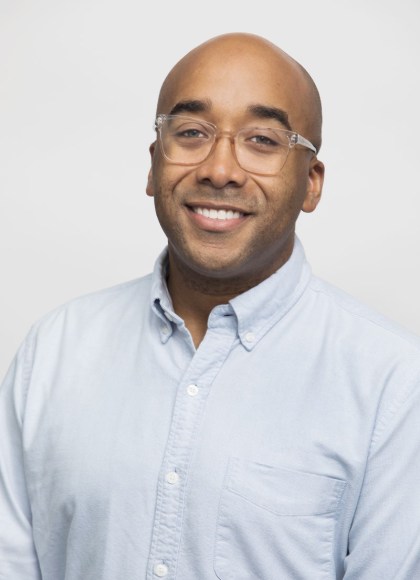
Follow Marcus on Social




Newsletter Signup
By clicking ‘Sign Up,’ I acknowledge that I have read and agree to Hachette Book Group’s Privacy Policy and Terms of Use