
Autism Awareness Month
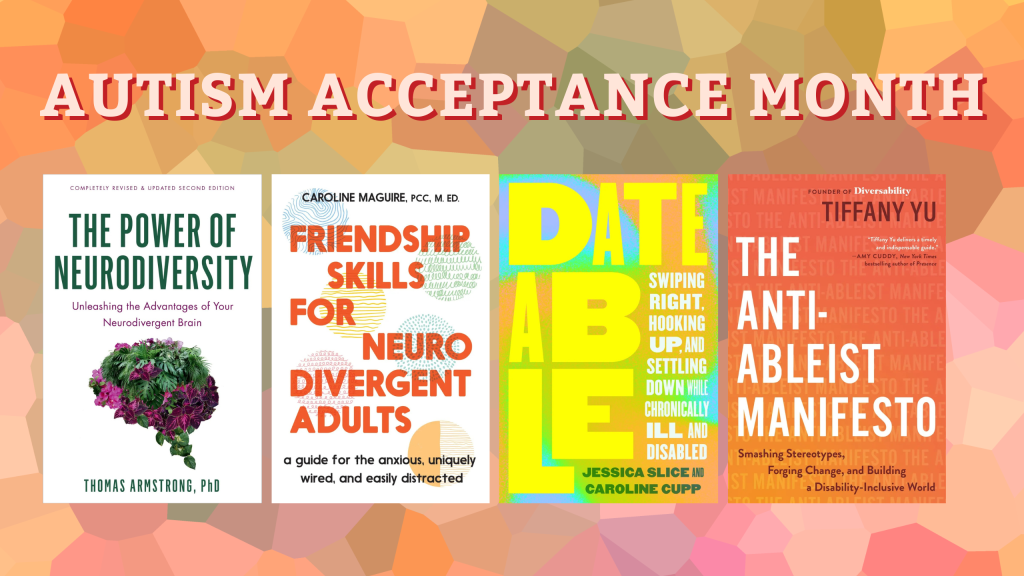
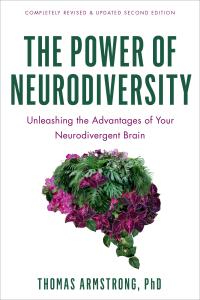
From a bestselling author and psychologist, an exploration and celebration of neurodivergence, completely revised with the most up-to-date research and insights.
From ADHD and dyslexia to autism, the number of diagnosis categories listed by the American Psychiatric Association has tripled in the last fifty years. With so many people affected, it is time to revisit our perceptions of people with disabilities.
Thomas Armstrong illuminates a new understanding of neuropsychological disorders. He argues that if they are a part of the natural diversity of the human brain, they cannot simply be defined as illnesses. Armstrong explores the evolutionary advantages, special skills, and other positive dimensions of these conditions, including: autism, ADHD, dyslexia, schizophrenia, anxiety, intellectual disabilities, and mood disorders.
With an emphasis on positive niche construction for each area, The Power of Neurodiversity is a manifesto as well as a keen look at disability, as well as a must-read for parents, teachers, and anyone who is looking to learn more about neurodivergence.

Friendship can be hard for many Neurodivergent adults. There is an assumption that good, worthwhile friendships “should” come easy. However, for Neurodivergent adults, there are brain-based reasons why friendship can feel less intuitive. From differences in the parts of the brain that are vital to managing the logistics of a fulfilling social life to difficulty with self-regulation, the way neurodiverse individuals experience social bonding and connection can feel unintuitive.
Friendship Skills For Neurodivergent Adults is a guide to navigate these differences, broken into three parts:
1. How friendship works
2. How to find your people
3. How connecting will get you in motion
With the guidance of Friendship Skills For Neurodivergent Adults, readers will feel less alone, and have the tools to understand the unique way neurodiverse individuals can approach friendship.
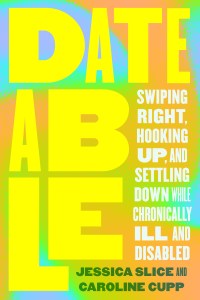
Disabled people date, have casual sex, marry, and parent. Yet our romantic lives are conspicuously absent from the media and cultural conversation. Sexual education does not typically address the specific information needed by disabled students. Mainstream dating apps fail to include disability as an aspect of one’s identity alongside race, ethnicity, gender identity, and sexual orientation. The few underutilized disability-focused apps are paternalistic and unappealing. Bestselling dating books do not address disability, and the few relationship books marketed to disabled people focus on the mechanics of sex rather than the complex interactions that create the conditions for it.
In Dateable, disabled authors Jessica Slice Caroline Cupp team up to address the serious gap in the dating space. Dateable is the first book on disabled dating and relationships; it’s a dating guide made especially for disabled and chronically ill people, that also calls in nondisabled readers. Jessica and Caroline take on everything from rom-com representation and dating apps to sex and breakups with a strong narrative underpinning and down-to-earth advice. The book is as much a practical tool as it is an empowering guide.
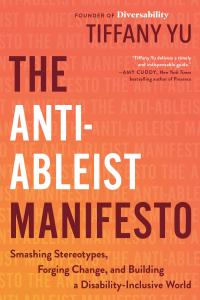
Tiffany Yu takes readers on a revelatory examination of disability—how to unpack biases and build an inclusive and accessible world.
“A powerful journey, merging personal narratives with collective insights to confront and dismantle ableism. As someone deeply immersed in the study of prejudice, including the often-overlooked discrimination faced by people with disabilities, I find that Yu delivers a timely and indispensable guide.” -Amy Cuddy, New York Times bestselling author of Presence
As the Asian American daughter of immigrants, living with PTSD, and sustaining a permanent arm injury at age nine, Tiffany Yu is well aware of the intersections of identity that affect us all. She navigated the male-dominated world of corporate finance as an investment banker at Goldman Sachs before founding Diversability, an award-winning community business run by disabled people building disability pride, power, and leadership, and creating the viral Anti-Ableism series on TikTok.
- Organized from personal to professional, domestic to political, Me to We to Us, The Anti-Ableist Manifesto frames context for conversations, breaks down the language of ableism, identifies microaggressions, and offers actions that lead to authentic allyship.
- How do we remove ableist language from our daily vocabulary?
- How do we create inclusive events?
- What are the advantages of hiring disabled employees, and what market opportunities are we missing out on when we don’t consider disabled consumers?
With contributions from disability advocates, activists, authors, entrepreneurs, scholars, educators, and executives, Yu celebrates the power of stories and lived experiences to foster the proximity, intimacy, and humanity of disability identities that have far too often been “othered” and rendered invisible.