
Algonquin September Book Sweepstakes
Algonquin September Book Sweepstakes
Prize Package
One lucky winner will receive the following:
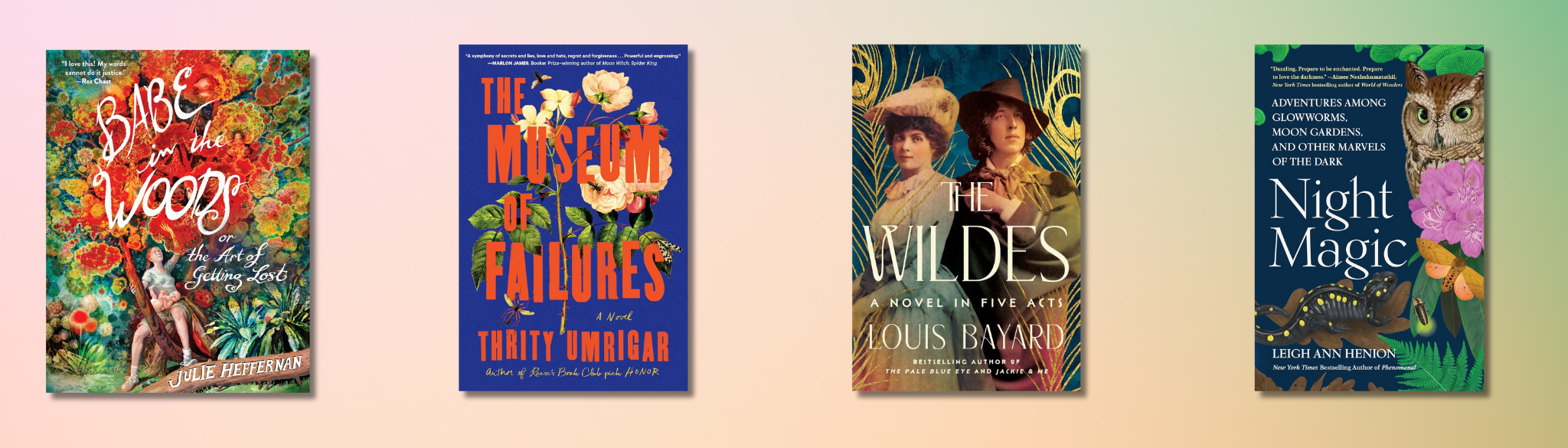
One summer day, a young artist with a newborn—sleep-deprived, desperate to escape her hot, cramped apartment and her oblivious husband—sets off on a hike in the country with her baby boy, Sam, strapped to her front and her senses fully attuned to the colors, the sounds, and the flora and fauna in the woods around her. During her journey, Julie reflects on her childhood, her parents, her marriage, and her path to becoming a painter. Her memories soon merge with the imaginative pictorial worlds she invents in her work, creating a glorious and perturbing narrative.
When Julie suddenly realizes that they are lost, with few supplies, as darkness begins to set in, she must come to terms with the sudden gravity of her situation and invent tools for coping. She then discovers her own resourcefulness: snacking on wild garlic and fixing a torn shoe; tucking herself and her baby into a cave for the night; climbing a tall tree for a better vantage point. Each step in the unknown terrain of the forest leads her deeper into a reckoning with survival and unresolved past issues. She invokes the struggles of painters like Artemesia Gentileschi, women’s strength in Rubens’ Rape of the Daughters of Leucippus, and the plights of activists like Julia Butterfly Hill, illuminating how great art can be a vehicle for perspective—how it teaches us how to see, think, and navigate obstacles and wonders and find one’s way out into a capacious and self-determined life.
Beautifully told and illustrated by an established fine painter whose work has been collected around the world, Julie Heffernan’s Babe in the Woods is an extraordinary journey of memory, remorse, and rebirth, and a powerful lesson in trust in one’s self, offering a new way of seeing for anyone who feels lost in the world.
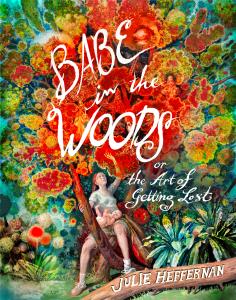
When Remy Wadia left India for the United States, he carried his resentment of his cold and inscrutable mother with him and has kept his distance from her. Years later, he returns to Bombay, planning to adopt a baby from a young pregnant girl—and to see his elderly mother again before it is too late. She is in the hospital, has stopped talking, and seems to have given up on life.
Struck with guilt for not realizing just how ill she had become, Remy devotes himself to helping her recover and return home. But one day in her apartment he comes upon an old photograph that demands explanation. As shocking family secrets surface, Remy finds himself reevaluating his entire childhood and his relationship to his parents, just as he is on the cusp of becoming a parent himself. Can Remy learn to forgive others for their human frailties, or is he too wedded to his sorrow and anger over his parents’ long-ago decisions?
Surprising, devastating, and ultimately a story of redemption and healing still possible between a mother and son, The Museum of Failures is a tour de force from one of our most elegant storytellers about the mixed bag of love and regret. It is also, above all, a much-needed reminder that forgiveness comes from empathy for others.

In September of 1892, Oscar Wilde and his family have retreated to the idyllic Norfolk countryside for a holiday. His wife, Constance, has every reason to be happy: two beautiful sons, her own work as an advocate for feminist causes, and a delightfully charming and affectionate husband and father to her children, who also happens to be the most sought-after author in England. But with the arrival of an unexpected houseguest, the aristocratic young poet Lord Alfred Douglas, Constance gradually—and then all at once—comes to see that her husband’s heart is elsewhere and that the growing intensity between the two men threatens the whole foundation of their lives.
The Wildes: A Novel in Five Acts takes readers on the emotional journey of this family, moving from the Italian countryside, where Constance Wilde flees from the aftermath of Oscar’s imprisonment for homosexuality, to the trenches of World War I and an underground bar in London’s Soho, where Oscar’s sons Cyril and Vyvyan must both grapple with their father’s legacy. And in a brilliant feat of the imagination, act 5 reunites the entire cast in a surprising, poignant, and tremendously satisfying tableau.
With Louis Bayard’s trademark sparkling dialogue and deep insight into the lives and longings of all his characters, The Wildes could almost have been created by Oscar Wilde himself. Lightly told but with hidden depths, it is an entertaining and dramatic story about the human condition.
“Wonderfully researched, beautifully crafted, movingly told, The Wildes is a treasure to read.”
—Andrew Sean Greer, Pulitzer Prize-winning author of Less and Less Is Lost
“The Wildes is a marvel of tenderness, irony, heartbreak, and reclamation that demonstrates why Bayard is among the most essential—and most entertaining—interrogators of the past.”
—Anthony Marra, author of Mercury Pictures Presents and A Constellation of Vital Phenomena
In this glorious celebration of the night, New York Times bestselling nature writer Leigh Ann Henion invites us to leave our well-lit homes, step outside, and embrace the dark as a profoundly beautiful part of the world we inhabit. Because no matter where we live, we are surrounded by animals that rise with the moon, and blooms that reveal themselves as light fades. Henion explores her home region of Appalachia, where she attends a synchronous firefly event in Tennessee, a bat outing in Alabama, and a moth festival in Ohio. In North Carolina, she finds forests alight with bioluminescent mushrooms, neighborhood trees full of screech owls, and valleys teeming with migratory salamanders. Along the way, Henion encounters naturalists, biologists, primitive-skills experts, and others who’ve dedicated their lives to cultivating relationships with darkness.
Every page of this lyrical book feels like an opportunity to ask: How did I not know about this before? For example, we learn that it can take hours, not minutes, for human eyes to reach full night vision capacity. And that there are thousands of firefly species on earth, many with flash patterns as unique as fingerprints. In an age of increasing artificial light, Night Magic focuses on the amazing biodiversity that still surrounds us after sunset. We do not need to stargaze into the distant cosmos or dive into the depths of oceans to find awe in the dark. There are dazzling wonders in our own backyards. And readers of World of Wonders, Entangled Life, and The Hidden Life of Trees will discover joy in Night Magic.