
Algonquin November Book Sweepstakes
Algonquin November Book Sweepstakes
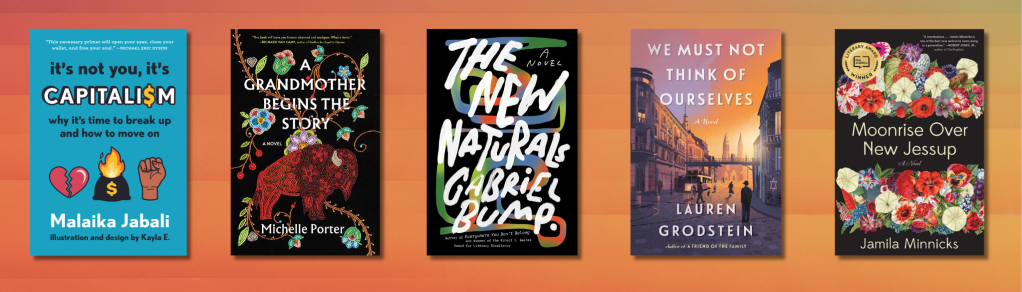
November is a month full of great new book releases, which means it’s the perfect time to kick off our first-ever monthly book bundle sweepstakes! Enter below for a chance to win a collection of captivating novels and nonfiction, and refer your friends to get more entries.
Prize Package
One lucky winner will receive the following:
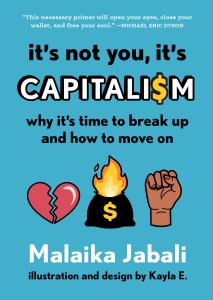
This biting, brilliant, often hilarious guide to socialism by journalist Malaika Jabali debunks myths, centers forgotten socialists of color who have shaped our world, and shows socialism is not all Marx and Bernie Bros—it’s time for all of us to ditch capitalism and try something finer.
We’ve all dated someone who took control of the relationship—you know, someone who makes you feel like you’re unhappy because you’re just not putting in the work, or it’s all in your head. But when you think about trying to meet new people, it feels terrifying. Like, have you looked at Tinder recently? It’s rough out there!
Your tough-love new best friend, award-winning journalist, policy attorney, and life-long socialist Malaika Jabali is here to say: we are all in a generations-long toxic relationship with Capitalism, and it is time to get the h*ll out of there and move ALONG.
She gives you everything you need to know about what a healthy relationship could actually look like, issue by issue—from healthcare and housing to the whole concept of American democracy—with our new boo: Socialism. And no, Socialism isn’t the boring, grey, authoritarian, Cold-War-era monster that you’ve heard about.
With accessible explanations and illustrations, often surprising graphs and stats, and some Drake memes, this book will show you that we NEED to build a world that’s safer, kinder, cleaner, healthier, and more equal. And that this isn’t a utopian dream – it’s within our grasp, if we collectively decide to call out Capitalism for what it really is and wake up to a better future.
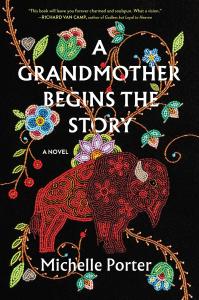
Carter is a young mother on a quest to find the true meaning of her heritage, which she only learned of in her teens. Allie is trying to make up for the lost years with her first born and to protect Carter from the hurt she herself suffered from her own mother. Lucie wants the granddaughter she’s never met to help her get to her ancestors in the afterlife. And Geneviève is determined to conquer her demons—before the fire inside burns her up—with the help of the sister she lost but has never been without. Meanwhile, Mamé, in the afterlife, knows that all their stories began with her; she must find a way to cut herself from the last threads that keep her tethered to the living, just as they must find their own paths forward. And a young bison wants to understand why he keeps being moved and whether he should make a break for it and run for his life.
This extraordinary novel, told by a chorus of vividly realized, wise, confused, struggling characters attempting to make sense of this life and the next, heralds the arrival of a stunning new voice in literary fiction.
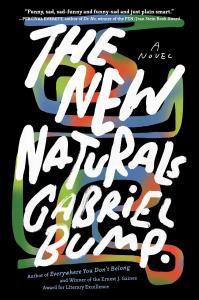
An abandoned restaurant on a hill off the highway in Western Massachusetts doesn’t look like much. But to Rio, a young Black woman bereft after the loss of her newborn child, this hill becomes more than a safe haven—it becomes a place to start over. She convinces her husband to help her construct a society underground, somewhere everyone can feel safe, loved, and accepted.
Soon their utopia begins to take shape and attracts the unhoused, the disillusioned, and the spiritually lost. But no matter how much these people all yearn for a sanctuary from the existential dread of life above the surface, what happens if this new society can’t actually work?
From an exciting new literary voice, The New Naturals is fresh and deeply perceptive, capturing the absurdity of life in the 21st century. In this remarkable feat of imagination, Bump shows us that, ultimately, it is our love for and connection to each other that will save us.
**A 2023 NEW YORK TIMES and WASHINGTON POST Notable Book and a BOSTON GLOBE Best Book of the Year**
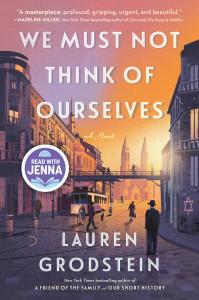
On a November day in 1940, Adam Paskow becomes a prisoner in the Warsaw Ghetto, where the Jews of the city are cut off from their former lives and held captive by Nazi guards to await an uncertain fate. Weeks later, he is approached by a mysterious figure with a surprising request: Would he join a secret group of archivists working to preserve the truth of what is happening inside these walls?
Adam agrees and begins taking testimonies from his students, friends, and neighbors. One of the people Adam interviews is his flatmate Sala Wiskoff, who is stoic, determined, and funny—and married with two children. Over the months of their confinement, in the presence of her family, they fall in love. But when Adam discovers a possible escape from the Ghetto, he is faced with an unbearable choice: whom can he save, and at what cost ?
Inspired by the testimony-gathering project with the code name Oneg Shabbat, and told with immediacy and heart, We Must Not Think of Ourselves is a piercing story of love, determination, and sacrifice.

It’s 1957, and after leaving the only home she has ever known, Alice Young steps off the bus into all-Black New Jessup, where residents have largely rejected integration as the means for Black social advancement. Instead, they seek to maintain, and fortify, the community they cherish on their “side of the woods.” In this place, Alice falls in love with Raymond Campbell, whose clandestine organizing activities challenge New Jessup’s longstanding status quo and could lead to the young couple’s expulsion—or worse—from the home they each hold dear. As they marry and raise children together, Alice must find a way to balance her undying support for Raymond’s underground work with her desire to protect New Jessup from the rising pressure of upheaval from inside, and outside, their side of town.
Based on the history of the many Black towns and settlements established across the country, Jamila Minnicks’s heartfelt and riveting debut is both a timely examination of the opposing viewpoints that attended desegregation in America and a celebration of Black joy.