
Books to Read if Science was Your Favorite School Subject

If you’re a science nerd who is always looking for something new to learn, check out these explorations of nature, sounds, and the brain. Become the highlight of your next party with loads of fun facts and scientific anecdotes!
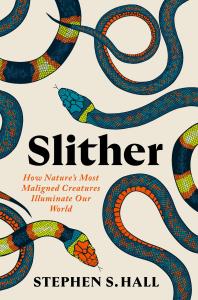
In this “wise and wondrous” (David Quammen) exploration, a science writer reintroduces readers to The Snake, encouraging our initial reaction to the slithery creature to be one of awe rather than disgust.
For millennia, depictions of snakes as alternatively beautiful and menacing creatures have appeared in religious texts, mythology, poetry, and beyond. From the foundational deities of ancient Egypt to the reactions of squeamish children today, it is a historically commonplace belief that snakes are devious, dangerous, and even evil. But where there is hatred and fear, there is also fascination and reverence. How is it that creatures so despised and sinister, so foreign of movement and ostensibly devoid of sociality and emotion, have fired the imaginations of poets, prophets, and painters across time and cultures?
In Slither, Stephen S. Hall presents a naturalistic, cultural, ecological, and scientific meditation on these loathed yet magnetic creatures. In each chapter, he explores a biological aspect of The Snake, such as their cold blooded metabolism and venomous nature, alongside their mythology, artistic depictions, and cultural veneration. In doing so, he explores not only what neurologically triggers our wary fascination with these limbless creatures, but also how the current generation of snake scientists is using cutting-edge technologies to discover new truths about these evolutionarily ancient creatures—truths that may ultimately affect and enhance human health.
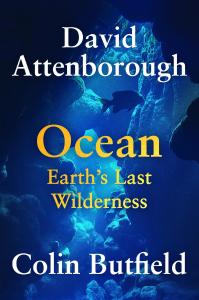
Through personal stories, history and cutting-edge science, Ocean uncovers the mystery, the wonder, and the frailty of the most unexplored habitat on our planet—the one which shapes the land we live on, regulates our climate, and creates the air we breathe. This book showcase the oceans’ remarkable resilience: they can, and in some cases have, recovered the fastest, if we only give them the chance.
Drawing a course across David Attenborough’s own lifetime, Ocean takes readers on an adventure-laden voyage through eight unique ocean habitats, countless intriguing species, and the most astounding discoveries of the last 100 years, to a future vision of a fully restored marine world—one even more spectacular than we could possibly hope for. Ocean reveals the past, present and potential future of our blue planet. It is a book almost a century in the making, but one that has never been more urgently needed.

One of Smithsonian Magazine's Top Ten Books of 2025
Hailed as a “worthy successor” to John McPhee (Kirkus Reviews), Ben Weissenbach —a digital native with little prior wilderness experience—embarks on a series of scientific adventures across the wilds of Alaska with some of the state's most distinguished and audacious researchers.
At the age of twenty, college student Ben Weissenbach went north to Arctic Alaska armed with little more than inspiration from his literary heroes and a growing interest in climate change. What met him there was a world utterly unlike the 21st century Los Angeles in which he grew up—a land of ice, rock, and grizzlies seen by few outside a small contingent of scientists with big personalities.
There’s Roman Dial, the larger-than-life ecologist with whom Ben walks and rafts a thousand miles across Alaska’s Brooks Range. There’s Kenji Yoshikawa, the reindeer-herding permafrost expert who leaves Ben alone for eleven days to care for his off-grid homestead, where temperatures drop to -49 degrees Fahrenheit. And there’s Matt Nolan, the independent glaciologist who flies him to the largest glaciers in the American Arctic.
As these scientists teach Ben to read Alaska's warming landscape, he confronts the limits of digital life and the complexity of the world beyond his screens. He emerges from each adventure with a new perspective on our modern relationship to technology and a growing wonder for our fast-changing—ever-changing—natural world.
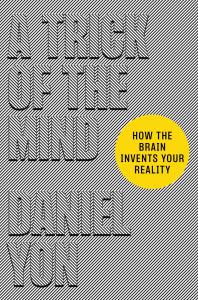
From a groundbreaking neuroscientist, a book that will reshape the way we understand how our brain perceives the world around us—for readers of Adam Grant’s Think Again and Lisa Genova’s Remember.
How does your brain decide what it’s seeing, from the physical world to other people? For decades, scientists have tried to understand how our brains work, not realizing that the answer lies much closer to home. New research in neuroscience and psychology suggests that the brain is doing the same thing that the scientists are: using past experiences to build theories of how the world works, and using these models to predict and make sense of it. Through this process, your brain constructs the reality that you live in.
Daniel Yon takes the research one step further, uncovering how your brain colors your perception of the world, the judgements you make about other people, and the beliefs you form about yourself. These mental processes help us navigate the world—but can also lead us astray, causing us to believe outlandish conspiracy theories or to see things that aren’t really there. By understanding the ways each of our brains construct our realities, we can better engage with other communities and make more informed approaches about mental illness. With cutting-edge research and transformative practical applications, A Trick of the Mind will revolutionize the way you think.
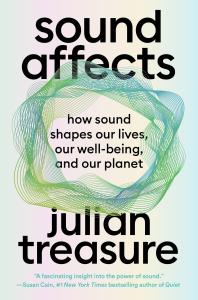
Hearing is the first sense we develop—a primary warning instinct hardwired into our brains. And yet, in an increasingly noisy and distracted world, most people pay very little attention to sound. In school, we teach reading and writing, but not listening. Conscious listening is rare, and, with over half the world's population now living in cities, billions of people never experience the rich and health‑enhancing sounds of the natural world. Every day, the sounds around us affect our experience and fundamentally alter our quality of life, for better or worse.
In four sections—geophony, the sounds of the planet; biophony, the "great animal orchestra"; anthropophony, the sounds of humanity; and silence, a sound in its own right—this book will help readers rediscover the wonder of sound and understand how powerfully it affects us, whether we're paying attention or not. It will also offer readers a manual for taking back responsibility for the sounds we consume and the sounds we make, so we can enhance our own happiness.