
Books to Read if English was Your Favorite School Subject
English lovers (aka 99% of our publishing colleagues) should check out these fascinating retellings of our favorite required readings, classic yet still poignantly relevant stories, and beautiful, transporting poetry.
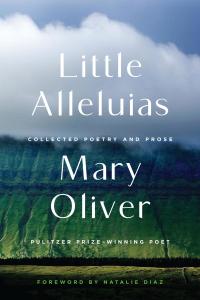
For the many admirers of Mary Oliver's breathtaking poetry of touch and transcendence, as well as for those coming to her words for the first time, Little Alleluias is a revelation.
These works observe, search, pause, astonish, and give thanks to both love and the natural world. In constant conversation with the sublime, (i.e. "Are you afraid? / Somewhere a thousand swans are flying / through winter's worst storm."), Oliver has the rare skill of rendering life: her poems and essays bring movement to stillness, and people to the Earth, themselves, and each other. Page by page, she invites us to walk through her minutes, her moments, and revere the light and dark and rainbowed clothes of world alongside her.
With three distinct books collected in one volume for the first time, Little Alleluias asks what passes and what persists, and offers readers the peace that every mind deserves.
“Hers is a purposeful language, one that looks not just with attention but with sensual intention, and though awestruck, seeks to hold, even briefly, the unknowns of the energies that make any life. Little alleluias, she called her writings. Not meant to define but to praise, to rejoice in the maker and what has been made, to dare be heard as a whisper or a shout in this immense world.”—Natalie Diaz, in her Foreword
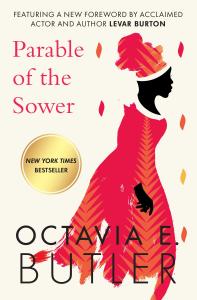
From a celebrated, award-winning author, a modern classic about a young girl fighting for survival in a post-apocalyptic world, perfect for fans of N.K. Jemisin and Margaret Atwood.
Fifteen-year-old Lauren Olamina lives inside a gated community with her preacher father, family, and neighbors, sheltered from the surrounding social chaos and anarchy caused by climate change and economic crisis. In a society where any vulnerability is a risk, she suffers from hyperempathy—a debilitating sensitivity to others' emotions.
Precocious and clear-eyed, Lauren must make her voice heard in order to protect her loved ones from the imminent disasters her small community stubbornly ignores. But what begins as a fight for survival soon leads to something much more: the birth of a new faith . . . and a startling vision of human destiny.
Includes a foreword by LeVar Burton and an afterword by N. K. Jemisin
Lauren's story continues in The Parable of the Talents.
"In the ongoing contest over which dystopian classic is most applicable to our time, Octavia Butler's 'Parable' books may be unmatched."—The New Yorker
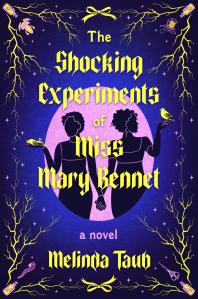
Awkward, plain, and overlooked, Mary Bennet has long been out of favor not only with her own family but with generations of readers of Pride and Prejudice. But what was this peculiar girl really doing while her sisters were falling in love?
As, one by one, Mary’s sisters get married, she hatches a plan. If the world won’t give this fierce, lonely girl a place, she’ll carve one out herself. In a desperate bid to avoid becoming a burden on her family or, worse, married to a controlling man, Mary does what any bright, intrepid girl would do. She takes to the attic and teach herself to reanimate the dead. If finding acceptance requires a husband, she’ll get one. . . even if she has to make him herself.
However, Mary’s genius and determination aren’t enough to control the malevolent force that she unwittingly unleashes. Soon, her attempts to rein in the destruction wreaked by her creations leads her to forge a perhaps unlikely friendship with another brilliant young woman unlike any she’s ever known. As that friendship blossoms into something passionate and all-consuming, Mary begins to realize that she may have to choose between the acceptance she’s always fought for and true happiness.
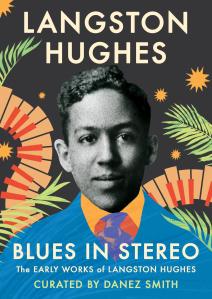
Publishers Weekly’s Top Ten Fall 2024 Poetry Books
From Harlem Renaissance poet Langston Hughes, a stunning collection of early works written from 1921-1927 curated by award winning poet and National Book Award finalist, Danez Smith. Hanif Abdurraqib calls the collection of polished poems and raw, unfinished, works-in-progress, “a gift to any poet working at any stage of their life and career.”
Before Langston Hughes and his literary prowess became synonymous with American poetry, he was an eighteen-year-old on a train to Mexico City, seeking funds to pursue his passion. Beloved verses like “The Negro Speaks of Rivers,” were written without formal training, often on the back of napkins and envelopes, and were inspired by the sights and sounds of Black working-class people he encountered in his early life. Blues in Stereo is a collection of select early works, all written before the age of twenty-five, in which we see Langston Hughes with fresh eyes.
From the intimate pages of his handwritten journals, you will travel with Hughes outside of Harlem as he travels the world, celebrate love as a tool of liberation, and enjoy his musical verse poetry, including a play he cowrote with Duke Ellington with a full score. Blues in Stereo foreshadows a master poet that will go on to define literature for centuries to come. And by keeping his original, handwritten notations found in archival material, we get to witness a genius’s earliest thought process in real time. National Book Award-nominated poet Danez Smith offers their insight and notes on themes, challenges, and obsessions contained in Hughes’s early work.
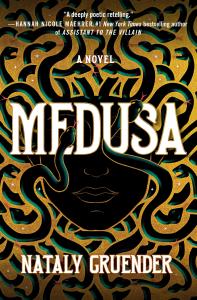
You know how Medusa’s story ends, but you’ve never heard her tell her own story… until now.
The only mortal daughter of two sea gods, and a priestess of Athena, Medusa was a woman who thought she had found her place in the world. But when Medusa suffers a horrific violation at the hands of Poseidon, Athena is outraged over the desecration of her name and sends a message by transforming Medusa into the snake-haired monster of legend. With one look, any who meet her gaze is turned to stone. Word of her monstrosity travels fast, igniting a king’s fear so greatly that he commands the boy-hero Perseus to bring him her head. With a power that will spare no one, Medusa begins to wonder if this is a blessing or a curse. Medusa only knows that she must leave the city she has come to call home before she harms another soul.
Searching for a haven free from mortals, anger buoying her every step, Medusa journeys across ancient Greece. Her eyes are hidden beneath a blindfold, with nothing but the snakes for company. Through her travels, Medusa discovers solace and understanding in the mythical figures she stumbles upon: A debaucherous wine god, an alluring nymph, and a three-headed dog. But one cannot escape fate forever. As Perseus closes in, Medusa faces a choice: become the monster everyone expects her to be, or cling to the last piece of her humanity.