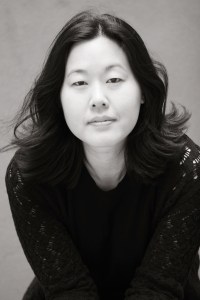
You have studied writing at...
You have studied writing at Brown University and the University of Montana. Before attending Brown, did you know you wanted to be a writer? How has formally studying the craft of writing been beneficial to you?
I was in the eleventh grade when I thought that maybe I could be a writer. Until then, it seemed outside the scope of possibility, even though writing was something I was always interested in. What changed for me was simply having a close friend who also wrote and who was even more impractical and idealistic than I was. Somehow it no longer seemed like such a crazy thing to want to devote my life to writing. If the world thought I was foolish, it was comforting to know there was someone else who shared my delusions.
Finding a community of writers might be one of the best reasons to go to graduate school to study creative writing. As a writer, you face rejection at every turn, and what's worse, people often regard you as naïve, lazy, and unfortunate. So one of the things that makes this a little more bearable is finding others, like you, who are struggling to put words down on the page and who don't question the validity of what you're doing. It certainly can turn the solitary endeavor of writing into a more hopeful, less lonely one.
Before going to the University of Montana, I must say, I was drifting as a writer. I had no sense of audience (that is, when I wrote, I didn't have any consideration for my reader), I wasn't reading contemporary fiction, and I didn't have friends who were serious, practicing writers. In short, I was writing in a vacuum, and the result was incredibly stilted, pretentious stuff. I had a grandiose desire to write brilliantly, to write sentences of genius, but this ended up paralyzing me. Going to school for creative writing was a nice dose of reality and allowed me to come down from the ether. I had to start from the very beginning, with no pretensions and no ego, just a desire to communicate as truthfully as I could.
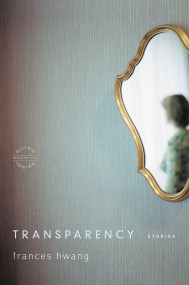
Some of the stories in Transparency involve people who have limited interaction with society. Your character Marnie Wilson, for instance, stays in her apartment and seems unwilling or afraid to go out. Why do you think you're interested in writing about this subject?
It definitely wasn't a conscious obsession, but I do notice that it's a recurring theme in my work. Maybe it has to do with my profession, how I have to shut myself up in a room and not socialize if I want to focus and write. It also seems to me that modern life can be very isolating. The world is smaller and in a sense more connected through the power of the media, but we ourselves seem to be diminished, made numb, by the constant barrage of information and entertainment we view when we turn on our televisions and computers. We might not know our neighbors, but we do know the latest celebrity gossip. So when I write about shut-ins, I'm trying to touch upon this feeling of disconnection and unreality that pervades our lives amid all the confusion and chatter.
Several years ago, when I was living in Philadelphia, an acquaintance of mine was talking about some artist or thinker who believed that as humans we're fated to live apart from one another, trapped inside our own separate rooms. There are windows we can look out of, and this is how we communicate, but ultimately we're separated by glass. This person I knew said that he might have to fi nd a key or break a window, but whatever it took, he would do all that he could to get out of that room. I was struck by what he said. All of us have a hope for connection, a deep longing to get out of our separate selves.
In "Blue Hour," Iris likes the idea that people are always remarking on her resemblance to Laura, mistaking the two friends for sisters. But Laura tells Iris that they don't look alike at all and that "people are always confusing one Asian for another." No other mention is made of the ethnicity of these two characters. Was this a conscious choice of yours?
As I wrote that story, Iris and Laura's ethnicity wasn't a crucial detail for me. They could have been any ethnicity, and the point of "Blue Hour" would still be the same. Iris is worried about her fading friendship with Laura and her imperfect, rather tenuous relationship with Paul, but she isn't obsessing about her Asian identity. And yet I deliberately included Laura's observation because I've found that unless a character is specifically labeled as such or given an ethnic-sounding name, readers will probably assume the character is white. I wanted to make it clear to the reader that Iris and Laura are Asian, maybe for the perverse reason that the story has little or nothing to do with being Asian. I think some readers tend to assume that an Asian character's experience is primarily shaped by and concerned with being Asian. But you can't reduce a person's experience to his or her ethnicity. Similarly, there's often an assumption that a minority writer's subject matter is going to be dealing heavily with race and culture. I'm afraid it's a way of pigeonholing and even dismissing that writer's work. There's no doubt that my ethnicity informs my identity and my writing, but it's not the only subject I want to write about.
How has your reading life informed your writing life? Which writers have most influenced your work?
I have strong, vivid memories of the books I read as a child and the joy I felt while reading them. There was nothing as wonderful as leaving behind dull reality and falling into another world — and all I had to do was open up a book. More than anything, it was this love of reading that made me want to write.
The writers I feel most strongly about are the Russians. Tolstoy, Dostoevsky, and Chekhov are my holy triumvirate. They seem to go the furthest in terms of everything — the heart, the mind, the spirit. Everything. Other writers who have left an indelible impression on me are Joyce, Woolf, Faulkner, and Proust, just to name a few. Probably the writers whose infl uence I was most conscious of as I wrote this collection were Chekhov and Alice Munro. What I admire about Chekhov is how clearly he sees his characters, revealing their limitations in precise, devastating ways, yet never losing compassion for them. And Munro is doing something so delightful and unexpected with the short story. I've found that I can't ever predict where her stories will go and how they will end. She manages to surprise me every time, yet I never feel tricked by her because somehow her surprises are those that life affords us.
What I love about fiction is how it encourages us to step outside the boundaries of our lives and to empathize with people whom we'd never otherwise meet. This ability to identify with others, to understand their situations and be moved by their experiences, is probably the most important thing fiction does for us. In this way, I believe reading literature humanizes us.