
A Brief History of Nome, Alaska
In 1898 the “three lucky Swedes,” Jafet Lindberg, Erik Lindblom, and John Brynteson, discovered fabulous deposits of gold in Anvil Creek above present-day Nome. Word reached Dawson the next spring, and by fall 10,000 stampeders had arrived and set up tents on the beach, only to have them blown away by a fierce September storm that prompted a migration inland. There, more gold was found; in fact, placer deposits were carried by most streams that emptied into the Bering Sea.
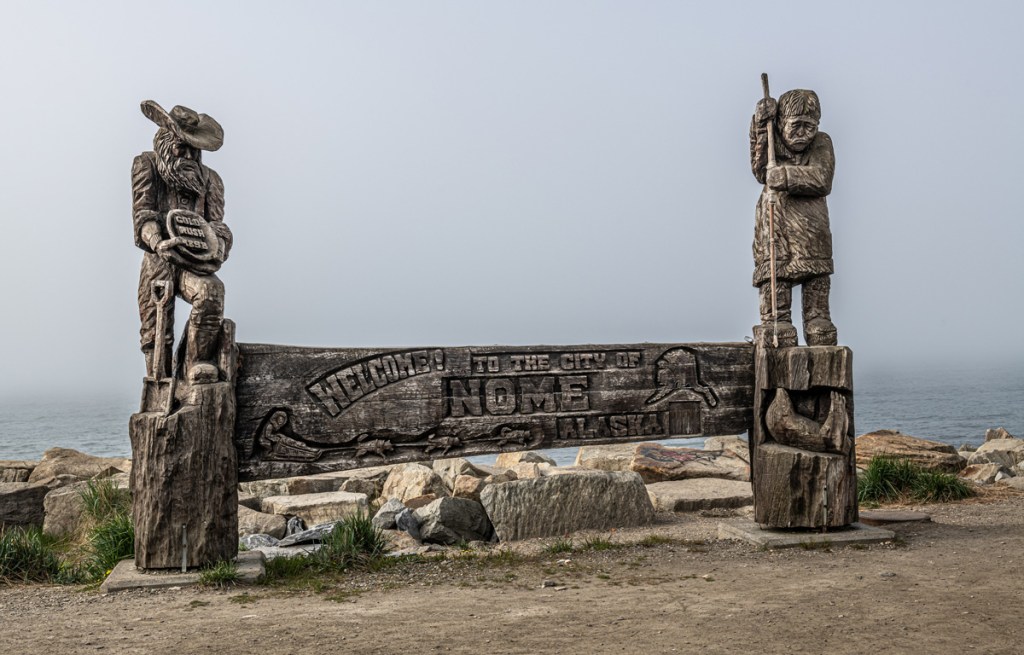
Twenty thousand prospectors crowded the coast by 1900, fully one-third of the white population in Alaska at the time. For a time it was the territory’s largest city. A railroad had been built to Anvil Creek, which produced several dozen million-dollar claims. Some became rich, but many people who had bought one-way passage to the gold fields found themselves destitute, and the Army had to be brought in to get them home before the winter of 1901. Judge James Wickersham brought law and order to Nome in 1902 after the first judge was convicted of corruption. Several devastating fires and storms have destroyed most of Nome’s historic downtown buildings, but a few of the original buildings survive.
In 1925 a diphtheria epidemic required emergency delivery of serum from Nenana, 650 miles overland by dogsled. Through the heroic efforts of mushers and dogs, the serum arrived in time to save many lives. This event is commemorated today in the famous Iditarod Sled Dog Race from Anchorage to Nome. The race takes place every March and turns Nome into a late-winter carnival.
During World War II, Nome was a major transfer point for lend-lease aircraft being sent to Russia from the United States. The planes were flown up to Alaska from the Lower 48 states, transferred to Russian pilots in Fairbanks, and then flown on to Nome and the Soviet Union. Almost 8,000 planes came through Nome 1942–1945, with most making it to the front for use in the war against Germany.
Today, Nome survives on small-scale gold mining, tourism, and as a regional center for the Seward Peninsula. Many visitors try their luck at panning for gold along the beaches here. Nome is a good place to buy ivory and other artwork in the various gift shops, along with imported crafts from Russia. Of course, the Iditarod Race focuses international attention on Nome every March.
Plan your adventure today

- Flexible itineraries including four days in Anchorage, four days in Denali National Park, day cruises, and a 10-day adventure covering the best of the Kenai Peninsula
- Must-see highlights and outdoor experiences: Embark on a cruise to admire stunning fjords and watch brown bears catch wild salmon from a river. Go skiing at a mountain resort or hike through alpine forests. Dine on fresh king crab at the best restaurants in Anchorage or catch your own halibut on a fishing expedition. Take an intrepid “flightseeing” tour to secluded glacier landings in Denali National Park and discover the best spots to watch the northern lights dance across the sky
- Expert advice from Homer local Don Pitcher on when to go, where to stay, and how to get around
- Full-color photos and detailed maps throughout
- Thorough background information on the landscape, wildlife, history, and local culture, plus up-to-date information about health and safety, transportation, and recreation
Expanding your trip? Check out Moon Alaska.
About Moon Travel Guides: Moon was founded in 1973 to empower independent, active, and conscious travel. We prioritize local businesses, outdoor recreation, and traveling strategically and sustainably. Moon Travel Guides are written by local, expert authors with great stories to tell—and they can’t wait to share their favorite places with you.
For more inspiration, follow @moonguides on social media.