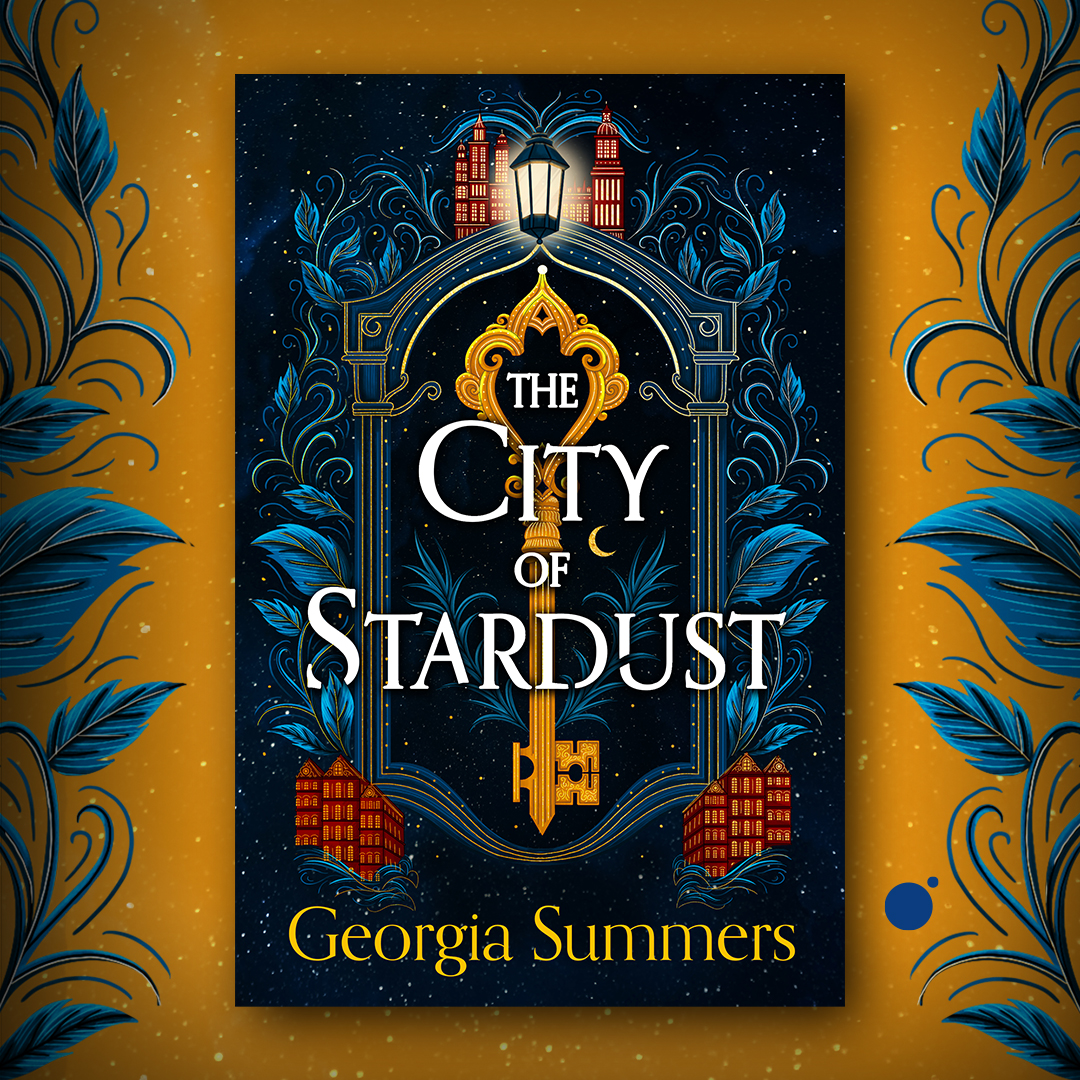
Read an Exclusive Extended Excerpt of The City of Stardust by Georgia Summers
A young woman descends into a seductive magical underworld of power-hungry scholars, fickle gods and monsters bent on revenge to break her family’s curse in this spellbinding debut.
Read an exclusive, extended early excerpt of The City of Stardust below!
‘She took a step forward, her brow pensive, her mouth a conspiracy of secretive emotion. Her foot lifted higher, higher – and then she was soaring, swallow-winged and beautiful, and altogether the most wondrous sight on that starry evening. For what was more natural than flight to these creatures of such peculiar whimsies? And it was our greatest regret that we plain mortals could not join her.’
– Hyacinth Watson, The Fairy Knight’s Daughter & Other Stories
Non est ad astra mollis e terris via.
There is no easy way to the stars from earth.
– Seneca the Younger, Hercules Furens

PROLOGUE
IN PARIS, A child goes missing.
A baby, to be more precise. One minute he is in his pram, making chubby fists while his mother wheels him around a grocery shop. For a moment – just a moment, she will insist afterwards – she glances away to examine her shopping list, certain she’s forgotten something, but unable to recollect what. The next, he is gone, whisked away by sure, confident hands. By the time his mother looks back at the soft place where her baby used to be, the perpetrator has vanished. In the heart-stopping seconds between her realisation and the scream that wrenches its way past her throat, she catches an unusual vanilla scent in the air.
In Vienna, the child is two and visiting an art gallery for the first time. She is lulled by a song that sounds like a memory from the womb, like a melody she has never heard, and yet has been hearing all her life. While her parents pause to admire a painting, she slips through a crowd of tourists to waiting arms and vanishes forever. There are phone calls to the police, then accusations and a lawsuit. The detectives dutifully check the security camera footage, only to find that it’s irretrievably corrupted. Someone mentions a woman who smelled like vanilla, but the detail goes ignored and the child remains lost.
In Prague, it’s a boy with eyes the colour of grey sea glass. He mumbles in his sleep, one amongst so many in this orphanage. A woman wearing a vanilla scent approaches him with her calculating gaze and her sure hands, her conscience untroubled by the crime she is about to commit. She can already see his life without this intervention: unremarkable, unloved, possibly traumatic. A life where there are no heroes or last-minute rescuers. No fairy-tale parents to whisk him back home, a prince mistaken for a pauper. In Prague, he will live and die a nobody.
But where she is going, he will be more than anyone will ever know.
She leans over his bed and whispers, ‘I hear you singing, little dreamer. And I come to answer the call.’
Marianne Everly is walking into a thunderstorm.
It’s a night that promises only disaster: lashing rain that rattles against the windowpanes as though the house itself has committed a crime; bruised clouds flashing with white fury; ominous puddles hiding their treacherous depths. It would be better, Marianne reflects, if she could have waited until the morning, with the sun and goodwill chasing at her back. But she can’t ignore the song thrumming through her bones, or the whisper that the time has come to say goodbye to her rambling house and its occupants.
Her brothers’ silhouettes frame the doorway, their expressions unreadable. Guilt, grief, anger – they have already run the gamut, and all that remains is the steady certainty that there is no turning back now.
Aside from the house, she’s leaving behind so little. A silk-bound book of fairy tales, the edges fuzzy with wear. A pair of bracelets that glitter with unusual lustre. An ancient and useless sword with a dulled edge, passed down from one fusty ancestor to another.
A daughter, too, if she wishes to be thorough.
Against the shadow of the house, her daughter’s light is on, though she was fast asleep when Marianne pressed a farewell kiss to her forehead.
For a moment, Marianne pauses, her gaze trained on the bright window. Maybe she hesitates because despite everything that has led to this moment, the call of her child is almost stronger than the call of elsewhere.
Then again, maybe not. Perhaps she’s throwing off the mantle of motherhood with relief, shedding a load she never wanted to bear.
Watching her in the rain, it’s hard to say.
The darkness closing in on her, Marianne Everly takes a worn key from around her neck, turns it in the air – and vanishes.
A curse can be many things. A wish left out to spoil in the sun, putrid and soft, leaving behind only calcified desire and oxidised envy. Or a poisoned chalice, a mistake tattooed across an entire family tree, with every generation promising, vowing to never sip until they do. Sometimes, it’s a deal and bad luck conspiring like old grifters closing in on an easy mark.
For the Everlys, it begins with stardust.
PART ONE
CHAPTER ONE
YEARS FROM NOW, this is what Ambrose Everly will remember.
Not the rain sheeting down the windows, squeezing through every neglected gap, filling the Everly house with soft plinks as water drips into various bowl-shaped objects. Nor the white flash of lightning, which promptly short-circuits the electricity and sends him rummaging through the cupboards for candles and a book of matches. But the unbearable stillness, as though the house is holding its breath, waiting.
So Ambrose is almost relieved when someone bangs on the door like a thunderclap, though it’s short-lived. It can’t be anything but mere coincidence, but his gut still tightens as he pads down the long, dark hallway, past the ancestral portraits who eye him with glum indifference. So few people know that the house is even here, let alone feel welcome enough to knock. He opens the door, uneasy.
At first all he can see is the gloom, rain guttering from the roof ’s overhang. Then the world is briefly illuminated by a flash of lightning. A man in a leather jacket stands on the doorstep, soaking wet. His gaze is hidden behind tinted sunglasses, even though it’s pitch-black outside. Behind him, a violently orange sports car sits in the driveway, sleek and predatory.
‘You changed the locks,’ the man says.
‘Gabriel?’ Ambrose says, and then again because he can’t quite believe that the man standing in front of him isn’t an apparition.
‘We need to talk, little brother,’ Gabriel says grimly.
Ambrose doesn’t move. He sucks in a deep breath, trying to make sense of the scene in front of him. This should be impossible. It feels impossible. But here’s his older brother, gracing the driveway as though he’s never been away, even though it’s been over two years. Only the car is different, but it still carries all the hallmarks of his brother’s taste: ostentatious, loud, ugly beyond belief. A flashy middle finger to the world.
‘What are you doing here?’ Ambrose says.
Gabriel pushes his hair from his forehead, and glances behind him at the open driveway, as though expecting something – or someone – to appear. ‘We should talk inside.’
Sudden alarm flashes through Ambrose. ‘You think you’ve been followed?’
‘No, I was careful. But still.’
‘Then should you even be here?’ It isn’t supposed to come out as an accusation, but Ambrose hears the bite in his tone and winces.
‘It’s important,’ Gabriel says.
There aren’t many reasons why he would risk coming home, and all of them are alarming. The terrible anxiety in Ambrose’s gut surfaces again.
‘Okay,’ he relents.
As Gabriel steps over the threshold, the house sighs in greeting – a stray Everly, returned at last. Ambrose leads him down the hallway, past the numerous leaks, the faded wallpaper, the inches of dust covering unused furniture. To Ambrose, the house looks exactly as it did in their childhood, if a little shabbier, a little in need of love. But now that Gabriel’s critical gaze sweeps across the rooms, he’s suddenly ashamed of his failure as a caretaker, with all those repairs he’s never quite found time to finish. Then annoyance flashes through him; who cares what the house looks like? It’s not as if his brother has been around to lend a hand.
In the dark, Gabriel trips over something and swears. Ambrose picks it up – one of their niece’s dolls, outfitted with tinfoil armour and a sword made from cocktail sticks. He smiles fondly. There’s an entire set scattered around the house, and although Violet declares she’s too old for them, he still finds them propped up in unusual set pieces. Fairies in armour, knights bearing roses, a princess lifting her sword in triumph.
‘That belong to the kid?’ Gabriel says.
Ambrose straightens out the crinkled armour. ‘It belongs to Violet, yes.’
Gabriel gives it a long, hard look. But he doesn’t say anything.
The only place with the lights still working is the library, with its original oil lamps installed in brackets along the wall. Gabriel toys with the notepad on the desk as Ambrose lights them with the last of his matches. A warm glow illuminates the room, glinting off the foiled bands ridging the book spines.
Ambrose leans against the old wardrobe at the back of the library, trying to contain all his questions. They’ve never been the hugging kind of siblings, so he hangs back, his hands digging into his pockets. It’s been two long years since Gabriel walked out of the house, and although they agreed that this was for the best – although it had never really been a question which brother would stay and which would leave – he can’t help but feel a pang of resentment, too. Two years of making tinfoil armour, but also learning how to be a parent at the very worst possible moment, arguing furiously over bedtimes and meals, wrestling a semblance of education into their niece while his own studies languished – and Gabriel has borne none of it. But Gabriel had the lucrative job that would keep the house afloat, not a half-finished degree and vague aspirations to academia. And only one of them needed to stay. His brother catches him watching. ‘The kid, Violet. Where is she?’
‘Asleep,’ Ambrose says, though truthfully he has no idea where their niece is. She probably thinks he hasn’t noticed her sneaking out of bed at night, but the house sings a symphony of creaks whenever she does. ‘What do you want, Gabriel?’
Silence. Gabriel stares out through the dark windows before closing the curtains, the rotten fabric fraying at the edges. Again, the feeling that something is tilting horribly sideways returns. Ambrose starts to pace, trying to shake the coil of uneasy energy from his limbs.
‘Look, I’ve done everything I can,’ he says. ‘She’s happy, she’s fed, she’s safe—’
‘Actually, little brother, you’re wrong there.’
Ambrose stops pacing. ‘What do you mean?’
‘Violet is no longer a secret. Whatever Marianne has done – whoever she’s talked to – she’s not been careful enough.’
Their sister’s name sits like a stone between them. Ambrose’s heartbeat rushes in his ears. Dread curls in his stomach.
‘Are you sure?’ he whispers, and Gabriel nods. ‘Fuck.’
Fuck.
What else is there to say? For years, he’s worried about the worst possible outcome, and now it’s here. Violet is no longer a secret. In his mind’s eye, a shadow descends over his fierce little niece, and he suddenly feels sick with fear.
‘Are you sure this isn’t your doing?’ Ambrose says, suddenly suspicious. ‘You must have slipped something in your travels, doing God knows what—’
Gabriel cuts him off. ‘If you think for one second I’d risk the kid’s safety—’
‘If you cared, you would have stopped this charade with the scholars years ago!’
Thunder rumbles overhead as they size each other up. Ambrose runs an agitated hand through his hair, his chest heaving with unspent anger. He tries to take several deep breaths, but all he can feel is the panic fizzing through his thoughts. What the hell are they going to do now?
‘She’s my niece, too. I care,’ Gabriel says, hard. ‘Besides, it’s not just about the money. How do you think I heard the rumours about Marianne? About Violet?’ He raises an eyebrow. ‘I’m not too proud to do what must be done. Are you?’
Ambrose takes another deep breath, and this time it’s a little easier. For Violet’s sake, he has to get it together. Slowly, he begins to sift through the possibilities with a methodical logic, forcing the panic into the recesses of his mind.
‘We could send her away,’ he says, thinking aloud. ‘Somewhere out of sight. You have contacts – you could take her.’ Even though he hates to imagine it.
‘It’s far too late for that,’ Gabriel says darkly. ‘Tell me: who would you trust with Violet? Which of my “contacts” would risk their lives for us?’ He raises a wry eyebrow. ‘Hell, would you trust me?’
Ambrose falls silent. There’s no good answer to that question.
‘We would buy months at best, little brother. And we need more than that.’
Again with the little brother. It’s been a long time since Ambrose has felt young enough, naïve enough to be condescended to.
‘Violet deserves a life,’ he says. ‘Marianne would have wanted—’
‘Marianne fucked off and left her child here,’ Gabriel snaps. ‘I really don’t care what she wanted.’
‘She didn’t have a choice. She went for Violet. You know this.’
‘Do I?’ He glowers. ‘When someone looks like they’re running, that’s because they’re running. And leaving us to clear up her goddamn mess. As usual.’
Ambrose bites back a retort. Where Gabriel is concerned, Marianne is like a bruise, searing with pain at the slightest pressure.
‘So that means…’ He can’t bring himself to say her name, as though by saying it, he’ll summon the force from which he’s protected Violet for so long. ‘When will she get here?’
Gabriel shakes his head, his mouth a hard, thin line. ‘Sooner rather than later, I think.’
Ambrose thinks it over. There must be a solution he’s not grasping clearly. But his thoughts, usually organised like clockwork, fail him. His head swims with thoughts of Violet, of the long, dark shadow stretched over the Everlys. He needs more time to think. He just needs – time.
‘We’ll invite her,’ he says suddenly. ‘We’ll make a deal. You said we needed more time. So… we buy more time. For next steps, a plan. Anything.’
For Marianne, he adds silently.
He waits for Gabriel to shoot him down. But instead Gabriel rubs the back of his wrist, nodding slowly as he comes to grips with the idea.
‘She’ll ask about Marianne,’ he warns.
‘I know.’
Gabriel adjusts his leather jacket, fiddling with something inside the pockets. ‘And I can’t stay – I’m already late for a meeting with the Vernes. You’ll have to do the talking for both of us.’
‘I know that, too.’
After Gabriel leaves, Ambrose slumps on to the desk, his heart sinking at the sudden enormity of what he has to do. Never mind what the hell he’s supposed to tell his inquisitive niece. She’s forever asking questions, but it’s been a long time since he’s had any easy answers.
He stays up into the small hours of the morning writing letters, scrubbing down the dusty kitchen countertops, washing all the sheets he’s suddenly found time for – anything to take his mind from what will happen next.
Inside the old wardrobe at the back of the library, Violet Everly clutches her book tightly, her mouth pressed against her jumper to hide the sound of her startled breathing.
CHAPTER TWO
VIOLET EVERLY IS twelve years old, and dreaming of other worlds.
This usually involves climbing into the old wardrobe at the back of the library, and shutting the door in a whirl of cedar and dust. There she sits, with a thin torch between her teeth and a fat book spread across her lap, its thick and creamy pages layered in old-fashioned type and rich with glossy sentences. Every one of them whispering adventure.
The worlds spring up behind her eyelids: cities of gold and silver filigree buildings; lands of intertwining waterways with bright boats sculling through the water; a forest of witches, their skin shades of eggshell blue all the way to deepest twilight, constellations twinkling across their shoulders. All of this a siren song that she can’t quite shake.
It’s because of her desire to escape into a good book that she finds herself hidden inside the wardrobe, as Ambrose converses with a stranger in his midst. Then he says, ‘What do you want, Gabriel?’
Gabriel. Her other uncle is so rarely here, but whenever he visits, the rooms seem brighter, warmer, as though the house itself recognises the return of its wayward inhabitant. He never comes empty-handed, either, bringing gifts that are as magical as they are beautiful. Clockwork statues of princes and knights, fairies and queens, with intricate workings and gossamer wings stretched taut along thin wire. Or, once for her sixth birthday, a set of nesting dolls that never revealed the same object in its innermost hold. On his last visit, he gave her a dim light to read by, which never went out and yet never seemed to need batteries, either.
From eavesdropping on late-night phone calls, she gathers Gabriel does something vaguely illegal, but Ambrose is tight-lipped about the details. More than half of the travel books in the library belong to Gabriel. He must have been all over the world.
Adventure, Violet thinks, and a thrill ripples through her.
Then he mentions her mother, and she almost falls out of the wardrobe. Marianne Everly.
Her mother has long dissolved from her life, like so much salt in the sea. That is, she’s nowhere to be found, and yet she’s everywhere: the lingering perfume on moth-eaten coats; a slim gold watch abandoned on her vanity; the chair no one uses. Mostly, Violet imagines her in the blank spaces between paragraphs, or the invisible inhale before a sentence. Whereas her father is an entirely missing book – one that her mother holds the key to, if she holds anything at all. It’s a parent-shaped hole that Ambrose has tried to fill, in his own way.
After that, it’s impossible to concentrate on anything else. Besides, most of the conversation is frustratingly beyond her. A good half of it is muffled by the wardrobe, Ambrose’s footsteps on the creaky floorboards – and the sound of her own heart, pumping furiously in her ears as she tries to put it all together.
Only three days after her uncle’s mysterious visit, they receive another visitor. Instead of his usual rumpled jumper and jeans, Ambrose wears an ironed shirt and smart trousers to greet them, his shoes polished to a high shine. His hands twist around themselves nervously.
‘Come, Violet,’ he says. ‘There’s someone who wants to meet you.’
The woman is sitting in the living room, perched elegantly in Ambrose’s favourite armchair. Her hair is a pale flax gold hewn in a soft bob curling at her ears, and her hands are perfectly smooth, unadorned by rings or callouses. Her clothes are nondescript, but they have a tailor’s expert fit and the material looks silky and expensive. The woman smiles pleasantly, offering her hand in greeting. The barest hint of vanilla drifts in the air.
Violet shivers and draws away.
‘Hello, little dreamer,’ the woman says, her voice as soft and unassuming as her appearance. ‘It’s a pleasure to finally meet you.’
She offers her slender hand again, but Violet stays where she is. Behind her, Ambrose puts a reassuring hand on her shoulder.
‘She’s a bit shy. It’s been a long time since we’ve had any visitors,’ he says with his usual mild warmth.
He gives her a small nudge, and she reluctantly crosses the living room to shake the woman’s hand. But instead of shaking, she clasps Violet’s hand in both of hers, her thumbs pressed into Violet’s palm. After a moment, she releases Violet and claps her hands, delighted.
‘Well, you are your mother’s daughter,’ she says, then turns to Ambrose. ‘She’s the spitting image of Marianne at that age. And just as talented, no doubt. What a fortuitous discovery. To think you have been holding out on me for so long. All those birthday cards I never got to send.’
Ambrose’s forehead knits, but before he can say anything, a small figure sidles past him to stand behind the woman. A boy, slightly older than Violet, with dark curly hair brushing the nape of his neck. His eyes are the colour of grey sea glass, almost translucent. He holds himself stiffly in old-fashioned clothes: a faded red woollen waistcoat, threads unravelling at the hem, over a shirt gone fuzzy at the collar with age.
‘Ah, my assistant.’ The woman gestures to the child behind her. ‘This is Aleksander.’
The boy watches Violet suspiciously, as though she’s the one standing in his living room. She glares back.
Ambrose diverts her attention. ‘Vi, why don’t you give Aleksander a tour of the house? Wouldn’t that be nice? Penelope and I have a lot to catch up on.’
The woman smiles at him with perfectly straight teeth. ‘We certainly do. Aleksander?’
As quietly as he came in, the boy detaches himself from Penelope, with the heavy air of an older child forced to babysit. It’s the absolute last thing Violet wants to do, not when she knows that she’s the topic at hand. Not when she could creep up to the second floor, remove the two loose floorboards Ambrose is forever threatening to fix, and drop into the tiny crevasse above this ceiling, where the conversation would float up to her in perfect clarity.
Violet flashes a dark look at Ambrose.
He leans down and whispers, ‘Go on, Vi. Please.’
It looks like answers will have to wait. With a long-suffering sigh, Violet leads the boy out of the room, closing the door behind them.
Ambrose is not an old man – far from it. In fact, for years it seems as though he’s slipped into a kind of physical stasis, even as he drifted past his thirtieth birthday and is now slowly creeping towards his fortieth. But today he feels weary with responsibility, and underneath it all, a terrible panic at the mess he’s found himself in.
Such carefully laid plans, undone in an instant.
‘It’s been a long time,’ Penelope says, as Ambrose sits across from her in the living room. ‘I was beginning to think you were hiding from me.’
‘This is the Everly house,’ Ambrose says with a shrug that sits on the knife-edge between bravado and stupidity. ‘Where else would we be?’
No need to tell her that the house was an abandoned wreck twelve years ago, buried deep in English countryside. That none of them had wanted to stay in a childhood home when the childhood was so bitter. As the youngest, Ambrose had been the last to leave, and the first to vow that he’d never return – yet here he is, anyway. There’s something terribly ironic about returning to raise Violet, climbing back on to that wheel of destiny he’d been so desperate to escape.
Between their absence and its dilapidated condition, it’s been practically wiped from the map. Certainly removed from any correspondence, archives or detritus the Everly brothers could get their hands on. As long as Ambrose kept quiet – as long as Gabriel conducted his business elsewhere, as long as Violet didn’t leave the house – who would suspect they were hiding a child here? Penelope couldn’t seek what she didn’t know existed.
Until now.
He can just about claim a desire for peace and quiet if she pushes – but they both know how much solitude can look like secrecy.
Penelope taps her fingers on the edge of the armchair. ‘You owe a debt, if you’d care to remember.’
‘So you say,’ he says carefully. ‘But I don’t recall asking any favours.’
He’s on thin ice speaking to her this way, but he can’t let go without a fight. Maybe it’s because this is the first time he’s seen a glimmer of peace, for all that he’s had to while away time in this house. Maybe he just doesn’t think his family deserves to be served up to a monster.
‘I’m not negotiating, Ambrose,’ Penelope says with infuriating calm.
‘The Everly name owes a debt. Not me,’ he says.
‘And aren’t you an Everly?’ she asks.
‘Don’t pretend that this is the same, that—’
‘Ambrose.’
She doesn’t have to say his surname for him to hear it echoing close behind, the way it has his entire life. Stubborn like an Everly, brave like an Everly, doomed like an Everly. But an Everly nonetheless. If only he could reach into his ribcage and pluck the Everly out, tender and intangible as dreamstuff. If only he could erase that part of himself for good – which is to say, all of him.
He would do it without hesitation, if he thought it would save them.
‘Fine,’ he spits out, ‘but that doesn’t mean—’
‘Then you are indebted, as is your niece. I could simply take the girl now, if you’d prefer,’ she continues. ‘Violet is quite as good as her mother, I assure you.’
His stomach lurches at the thought.
‘We can find Marianne,’ he says quickly. ‘Gabriel is looking for her as we speak.’
He is just buying time, he tells himself. As much of it as he dares. And if that puts Marianne at risk, if they find themselves at these crossroads two months from now, with mother and daughter weighed up on the scales and no way out—
He’s not a gambling man, but here he is, putting every last coin on his sister to be smarter than their clumsy machinations. Forgive me, he thinks desperately.
‘You’re very confident in him. Are you sure he isn’t hiding her?’ Penelope asks softly.
‘Yes,’ Ambrose says. Then he adds, ‘We don’t even know why Marianne left.’
Which, of course, is a lie. But he practised this in front of the mirror, saying it until the words felt like meaningless syllables. Until they became their own kind of truth.
‘Violet’s just a child,’ he continues, stretching out the lie. ‘She’s worth nothing to you.’
Penelope’s smile widens, and Ambrose feels the ground shift underneath his feet, the tilt of the knife-edge sliding them all towards disaster. Yet neither of them say the word strung between them: Violet is worth nothing – yet.
Penelope stretches out the pretence of civility by taking a sip from her cup of tea, and every second is agonising. ‘Very well. I will make a deal with you, Ambrose Everly. I’ll leave Violet alone if you find Marianne. But I won’t wait forever.’ Her eyes narrow. ‘Ten years is a sufficient amount of time, don’t you think?’
‘Ten years,’ he echoes. ‘And you won’t harm Violet in the interim?’
‘I see no reason to,’ Penelope says.
‘That is…’ He swallows. ‘Generous of you.’
Ambrose notes, the way he always does, how ageless she seems, like a rose stretched to fullest bloom and then frozen in unnatural beauty. Like a glass just before it shatters.
‘We have a deal,’ he says, forcing the words out.
She holds out her hand and he takes it quickly. He’s made enough devil’s bargains in his lifetime, and he has no desire to linger over this one. But her fingers tighten on his. Pain lances through his wrist, racing up his arm. The lights gutter, then vanish, as shadows gather at his feet.
He sinks to one knee, then the other, the breath punched from his lungs. But Penelope’s hand remains a vice. Someone – perhaps him – gasps a shameful, ‘Please.’ His mind short-circuits, every thought tuned to red, roiling agony.
Then Penelope lets go, and he collapses to the ground. The chill of the wooden floor is merciful against his throbbing skin. He drags in lungfuls of breath, unable to do anything else. His face is damp with tears. When he finally musters the strength to lift his head, Penelope is watching him coolly, no longer smiling.
‘You should have told me about the girl, Ambrose.’
After a beat, he climbs unsteadily to his feet. The lights are still on; outside is the same gloomy grey day. But the ghost of a burning ache flickers through his veins.
‘Ten years,’ she says. ‘I trust you won’t forget.’
Ten years to find Marianne Everly. It sounds like all the time in the world, and none at all.

A #1 International Bestseller • An Amazon Best Book of February 2024 • An IndieNext Pick
“A dark dream of a novel…that feels both timeless and original. Enjoy—and also beware. This fairy tale is deadly.” —Laini Taylor
“A story as darkly wondrous as midnight. Enthralling to the last page.” —Shelley Parker-Chan
“A dark, gorgeous tale of curses, gods and monsters.” —Sangu Mandanna
A curse can be many things. For the Everlys, it begins with stardust.
For centuries, the Everlys have seen their best and brightest disappear, taken as punishment for a crime no one remembers, for a purpose no one understands. Their tormentor, a woman named Penelope, never ages, never grows sick – and never forgives a debt.
Violet Everly was a child when her mother, Marianne, left on a stormy night, determined to break the curse. When Marianne never returns, Penelope issues an ultimatum: Violet has ten years to find her mother, or she will take Marianne’s place.
Her hunt leads her into a seductive magical underworld of power-hungry scholars, fickle gods and monsters bent on revenge. And into the path of Penelope’s quiet assistant, Aleksander, who Violet knows cannot be trusted – and yet to whom she finds herself undeniably drawn.
With her time running out, Violet will travel the edges of the world to find Marianne and the key to the city of stardust, where the Everly story began.
Slip into a lush world of magic, stardust, and monsters in this spellbinding standalone fantasy from debut author Georgia Summers.