
International Music Day
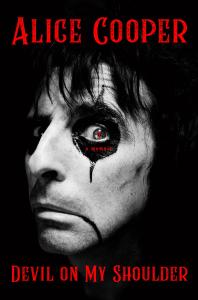
The definitive autobiography from Alice Cooper, the Godfather of Shock Rock and one of the world’s most iconic musicians with a career spanning six decades.
In the beginning, Alice Cooper was the name of a rock group. Then my stage name. And then a monster. Now I’ve written a book that tracks Alice’s evilution, how he and I became almost fatally intertwined, and how I’ve tamed him at last. After over thirty records and sixty-plus years, the story of Alice Cooper has become a tangle of embellishments, elaborations and outright fabrications, that I think it’s time to sort reality from myth: the slaughtered chickens, the bans and record burnings, the evangelical terrors, Ouija boards and poltergeists, resurrections and revenge from the grave, the cross-dressers, thieves, drug addicts and hopeless alcoholics, the house fires and car crashes—all will be revealed for what they really were.
I’m also coming clean about the extent of my addictions, my blackout years, the creative process fuelled by alcohol, drugs and round-the-clock TV, my scramble to the top of the pile and the terrible slide back down. I want to talk about the origin of Cold Ethyl, the guillotine and the dead babies, the best and worst of my reviews, my feelings of guilt and regret after people got hurt or died, what life was like on the road until the wheels came off the bus, what a romantic I am at heart and how I’ve stayed married for half a century even after my wife came at me with a frying pan.
And I want to talk about God. Don’t worry, I’m not gonna bang you on the head with a Bible, I just want to describe how it is that I found Him dwelling in me. Alice, that inveterate liar, was a voice in my ear for so long, whispering lies and sweet nothings, pretending to be my better conscience and my inspiration, pretending to be me, that I think it’s only right to present both sides of the story: the angel on one shoulder, the devil on the other.
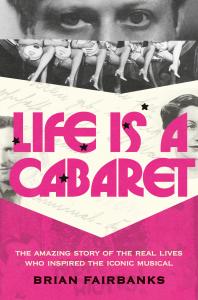
The untold story of the extraordinary people who inspired Christopher Isherwood’s characters in Cabaret, the landmark Broadway musical and Oscar-winning film, and the vibrant Bohemia that escaped from Berlin or endured under the Nazi regime.
Even diehard fans of Cabaret remain unaware that Isherwood’s Berlin Stories, celebrated as one of the best novels of the 20th Century, is based on a true story—and real people, from the larger-than-life landlady to the immortal, flighty, fantastical Sally Bowles, whose escapades in 1930s Weimar Berlin were comically exaggerated in one of the most memorable characters in Broadway history.
In a novelistic style that captures the joyful art-making and wild final parties of a democratic Germany before Hitler, Life is a Cabaret is a group biography of these enigmatic and provocative muses. Thanks to exhaustive research, investigative reporter Brian Fairbanks recounts the weird and wondrous lives of Jean Ross (the real Sally, a brilliant writer, free-loving film critic secretly working for Stalin’s communists), Wilfrid Israel (who saved more Jews than Oskar Schindler), Gerald Hamilton (a gay conman with questionable Nazi ties), and all of the others immortalized in the iconic, eternal Berlin Stories. Fairbanks unearths belief-defying details of survival, tragedy, sex, and brilliant art from these people and the world they inhabited—a world with illuminating, and at times disturbing, parallels to the one we live in today.
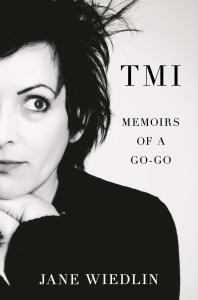
An intimate, behind-the-scenes glimpse into life as the rhythm guitarist, songwriter, and co-founder of the all-female, multi-platinum-selling band the Go-Go’s—both onstage and off.
The Go-Go’s were the first all-woman rock group to hit number one on the Billboard charts while playing their own instruments and performing original songs. As guitarist and lyricist, Jane Wiedlin helped define that revolution. In her memoir, she shares the raw, unvarnished journey of an artist who overcame it all.
From the early L.A. punk scene, Jane’s song “Our Lips Are Sealed” catapulted the band to fame. The Go-Go’s hit dizzying heights, only to splinter apart in a whirlwind of touring, tension, and chaos rivaling any band of the era. Yet Jane’s story goes far beyond the stage.
TMI is a vivid account of rock excess and Hollywood drama. Jane opens up about childhood tragedy, mental health struggles, shattered relationships, and her own relentless reinvention. She tells how she taught herself music from scratch, worked as a “slave” in a world-famous BDSM dungeon, and became the world’s first atheist minister. Through it all, Jane Wiedlin’s story is as candid, defiant, and unforgettable as the music that defined a generation.
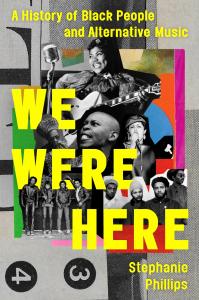
A long-overdue corrective to the history of rock ‘n’ roll and alternative music, repopulating it with the extraordinary Black artists and influential figures who steered its course, from an author, journalist, and front woman of the British post punk band Big Joanie.
The history of rock and roll and alternative music is often told in bold, sweeping, isolated moments that are removed from the context of their time. Upon closer inspection, however, it becomes clear that the stories we tell center primarily on the achievements of white men like Elvis Presley, The Ramones, Nirvana, and David Bowie. White men who were the stars, white men who supposedly changed the game, white men who seemingly were at the forefront of every musical innovation in the 20th and 21st centuries. These rock and roll retellings perpetuate the belief that white men were the most important people to wield a guitar, strut on stage, or pound out a pummeling drumbeat. What is missing in these stories is everything in between—the people, the places, and the scenes that connect the dots—and you can’t tell the history of any music scene, let alone alternative music, without the Black community.
From the genre’s earliest moments, Black musicians—like gospel entertainer Sister Rosetta Tharpe in the 1930s-40s and rock and roll legend Chuck Berry in the 1950s—have consistently pushed musical boundaries that forever impacted the music that followed. Throughout the decades, numerous Black entertainers continued to add their take on rock and alternative genres, expanding and building on what was already there to create what we know as alternative music today: look no further than the electric fire of Jimi Hendrix’s guitar licks in the ’60s, the kaleidoscopic melee of hardcore and reggae that was Bad Brains in the late ’70s, and the funkadelic swagger of Living Colour in the ’80s.
We Were Here tells the story of Black artists performing in alternative genres from punk to rock and roll, indie to new wave, alongside their Black fans. Through brand new interviews and meticulous research, Phillips documents the history of Black people’s influence on these genres, highlighting the key players, assessing the legacy of their work, and drawing attention to those who have been obscured from history. We Were Here centers their voices and attempts to right the wrongs of the past. Along the way, Phillips infuses her own coming-of-age story as a Black female musician in the punk scene, alongside a cultural analysis of rock and alternative music history.
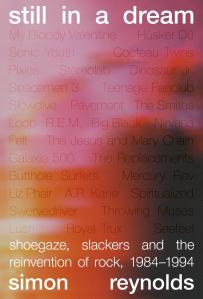
The thrilling story of underground rock in the late 1980s and early 1990s, tracing the emergence of shoegaze and grunge as the era’s defining sounds, from acclaimed music writer Simon Reynolds, author of Rip It Up and Start Again.
Twenty years after his celebrated postpunk best-seller, Rip It Up and Start Again, Simon Reynolds tells the tale of what happened next: the underground explosion of noisepop, shoegaze, slacker rock, and grunge that reverberated through the late Eighties into the early Nineties.
Capturing the musical exhilaration of the era along with the alienation of youth during a period of ascendant conservative politics and glitzy mainstream pop, Still in a Dream celebrates a golden age of guitar reinvention, a second psychedelia of mind-blowing sounds pioneered by bands like My Bloody Valentine and Sonic Youth. In Britain, groups like Cocteau Twins and Slowdive escaped into shimmering dreamworlds while American underground rockers like Dinosaur Jr. and Pavement blended apathy and urgency into thrilling noise.
A propulsive and personal account from a journalist who covered this music in real time from the frontlines, Still in a Dream vividly recreates a period that was the last blast for the analog culture of vinyl records and music papers, before the Internet changed everything.
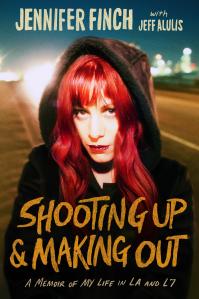
From Jennifer Finch (1966-2026), the bassist of L7, comes a disarmingly candid memoir that stands apart from the rest with its grounded perspective and bracing, edgy wisdom.
If overcoming obstacles makes for great art, then Jennifer Finch was the consummate artist. She was a recovering addict, a photographer, the co-founder of an influential pro-choice advocacy group, and the bassist for the groundbreaking all-female hard rock group L7. Driven to express herself despite neglect and abuse, Finch carved an artistic path and pulled herself out of a personal hell. This is the story of how she pulled it off and lived an extraordinary life, in her own words.
Finch was twelve when she dove into LA’s hardcore punk scene, fourteen when she first started shooting heroin, nineteen when she joined her first band with Courtney Love and Kat Bjelland, and in her early twenties when L7 got caught up in the maelstrom of the grunge phenomenon. She shared stages with bands like Pearl Jam and the Red Hot Chili Peppers in between overdosing, dating Dave Grohl, and coping with the tragic, early deaths of some of her closest friends. And she re-defined herself through sobriety, photography, and her courage in the face of a deadly illness.
Jennifer Finch was a beloved pillar of strength and compassion in LA’s creative community, and her death on July 18th, 2026, was an irreplaceable loss. Shooting Up and Making Out was completed just before her illness took hold, and every word of it–hard-hitting, funny, profane, and wise—is what she intended it to be.
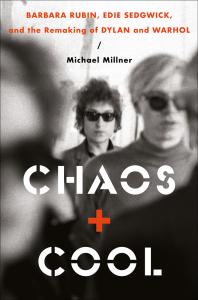
Follow Edie Sedgwick, Barbara Rubin, Andy Warhol, and Bob Dylan as they traverse the frenetic art and underground film world of the mid-60s in New York City.
New York City, 1964: a new scene is bringing together rock musicians, filmmakers, visual artists, and writers. This downtown network will profoundly impact two artists on the cusp of legend—Bob Dylan and Andy Warhol—and reshape the future of pop culture as we know it. At the center of the new scene are two young women: avant-garde filmmaker Barbara Rubin and iconic ingénue Edie Sedgwick.
Warhol, Rubin, Sedgwick, and Dylan sought out the paradoxical: mass fame and artistic transgression, attachment and individuality, the search for a fixed point within lives defined by constant self-invention. They helped each other, used each other, stole from each other, desired to be each other, and experimented together. And in their tempestuous, incestuous, and all-too-short time together, they were instrumental in shaping one of the most diverse and experimental art scenes in all of American history.
Chaos and Cool—a work of obsessively researched nonfiction weaving together interviews, artworks, underground newspapers, FBI files, and good old-fashioned gossip—narrates the most turbulent and transformative moment in these artists’ careers. Structured like a novel comprising love affairs, friendships, provocations, and inspirations, the book follows these four restless creators as their lives and art intertwine, juxtaposing their personal dramas with the political, social, and cultural conflicts erupting across the country.
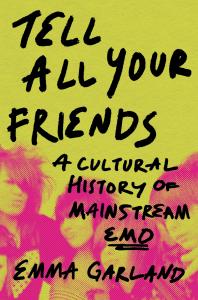
Emma Garland examines the lasting impact of 2000s mainstream emo—with original interviews from members of The All-American Rejects, Say Anything, Thursday, and more.
Emo is one of the most enduring subcultures of the 21st century. It’s also one of the most maligned. The stereotypical emo kid remains fixed in the cultural consciousness as a morose teenager with a lip piercing, a fringe plastered across one eye, and Converse scribbled with song lyrics. But that’s only part of the story. With Tell All Your Friends, Emma Garland offers a long-overdue corrective.
Beyond the stereotype is a world of music and fashion whose legacy has shaped pop culture for over two decades. With sharp wit and gleeful nostalgia, Garland unpacks the way emo exploded into the mainstream in the 2000s, and everything that came with it: the looks, the sounds, the MySpace profiles, the moral panics, the complicated sexual politics, the fan fiction, the genre-bending crossovers (some more questionable than others), and more. Along the way, we see how bands like Dashboard Confessional and Jimmy Eat World made male vulnerability a marketable product; how Say Anything and Taking Back Sunday upended conversations around sex; how My Chemical Romance and The Used gave teenagers space to talk about mental health; how Paramore blasted open the door for new voices in a male-dominated space; and how modern artists ranging from Lil Uzi Vert to The 1975 draw on the legacy of emo in their sound, aesthetics, and marketing. She also examines how a genre defined largely by straight, white men has since been reclaimed by female, queer, and global audiences alike.
Featuring original interviews with members of Say Anything, The All-American Rejects, Thursday, Funeral for a Friend, Tigers Jaw, From First to Last, Sweet Pill, Los Campesinos!, and more, Tell All Your Friends reframes emo for a new era—not as a scene or a passing fad, but as an enduring communal identity.
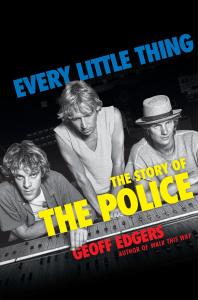
The definitive biography of The Police, one of the most successful and fractious bands in pop history, based on interviews with the trio’s members and those who surrounded them—from Geoff Edgers, national arts reporter for The Washington Post.
Every Little Thing excavates the history of the Police, one of the most iconic bands of a generation. This is a band that sold more than 100 million albums around the world, revolutionized MTV, and then disbanded at the height of their popularity, all without sacrificing their artistic integrity. It’s the story of the combustible, creative genius between three artists—Sting, Stewart Copeland, and Andy Summers—that led to five stellar albums over five years, peaking with 1983’s Synchronicity, a record that’s considered the defining work of the second British Invasion.
The power of the Police was in the immense sound created by Summers, a veteran guitarist with a pedalboard of sonic landscapes; Copeland, a fast-talking American drummer with a seemingly bottomless toolbox of rhythmic variations; and of course, Sting, he of the sucked‑in cheeks, spiky, blond hair, and penchant for making even a song about stalking sound romantic. But how could a band that played so well together fight so much? Edgers examines their working relationship and also gives The Police their due as one of the last rock bands to conquer the world before the landscape of popular music drastically changed.