
Books to Read if Gym Class was Your Favorite School Subject

Spotlights on remarkable athletes, guides to your own movement and exercise, and more! These books are perfect for the forever sports fans with titles that feature great stories from basketball, baseball, and football. Not a sports fans, but still interested in keeping active? We have titles for you too!
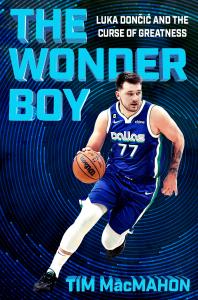
In 2018, the Dallas Mavericks landed the most hyped prospect in basketball history—teenaged Luka Doncic. With The Wonder Boy, MacMahon takes us beyond the highlights to the madness that ensues as the Mavericks try to avoid blowing their golden opportunity. From the internal power struggles in owner Mark Cuban’s front office during the early years of Doncic’s career, to the new regime’s effort to earn Doncic’s loyalty and put the ruthless competitor in position to win, readers will learn never-before-reported details about the saga’s biggest moments, including:
·The blockbuster deal for Kristaps Porzingis that blew up in the Mavs’ faces
·The divorces with coach Rick Carlisle and GM Donnie Nelson
·Jalen Brunson’s exit after a run to the Western Conference finals
·The new pairing with the mercurial Kyrie Irving
·The improbable journey to the 2024 Finals
As the clock ticks on the Mavs’ quest to win it all with their irreplaceable young star, The Wonder Boy pulls back the curtain on a dilemma every NBA team would love to have.

Everything in your life comes down to how connected you are to your own body. When things feel out of alignment, overwhelming or “too much,” it's a sign that you've already lost communication with yourself and the physical sensations within your body that let you know something is not right. Many of us have difficulty even fathoming what a healthy relationship with our body is. We are overscheduled, overcommitted, and overwhelmed, making it difficult to pay attention to what is happening in the present moment. Many of us have spent years disconnected from our physical sensations, and the thought of reestablishing a healthy connection to the body feels impossible and we don’t even know where to begin.
Through daily movement exercises and mindful reflection, BodyTalk will help readers form healthy boundaries and relationships with their own bodies in order to move through challenging emotions and feelings, as well as begin to find balance and a sense of vitality.
Over 365 days, you will be guided into more awareness as you're gently challenged to connect and communicate with your body. Through a combination of movement exercises and body-centered journal prompts, you can find your way back to yourself—your worth, value, confidence, even identity.
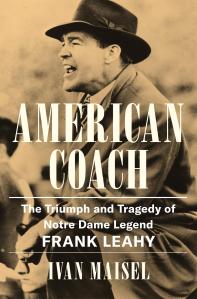
When Frank Leahy retired from Notre Dame after the 1953 season, he had the second‑best record in the history of the game (107‑13‑9, .864), second only to Knute Rockne, his college coach and mentor. Seven decades later, he still does. Rockne created the image of Notre Dame, then a small Catholic university in a remote town in northern Indiana, as the premier college football program in the nation. But it was Leahy who secured that image, with six undefeated seasons and four national championships in an 11-season span. By achievement alone, Leahy should be as beloved as Rockne, who nearly a century after his tragic death remains a legend. Yet Leahy is virtually forgotten today, in many ways a victim of his own insatiable need to compete and win.
The University of Notre Dame granted Ivan Maisel rare and complete access to its voluminous cache of historical material, and Maisel has the cooperation of Leahy's family, enabling him to tell the rich story of an archetypal coach who was a celebrity in his day. Leahy made the cover of Time magazine and befriended presidents and movie stars alike. Leahy brought innovation to a program reluctant to change anything Rockne had done. But Leahy rankled opposing coaches and clashed with the priests at Notre Dame who sought to make the university as elite in academia as it had become on the field. These conflicts, coupled with the toll that Leahy’s innate drive demanded of his health, brought his career to a premature end, hampering his legacy in the years to come. And what a legacy: only Nick Saban and Bear Bryant have won more national titles. The records of iconic coaches such as Bobby Bowden, Woody Hayes, and Eddie Robinson pale in comparison. Not only the Notre Dame fanbase but all college football fans will be hungry to rediscover a man and an era, the story of how Frank Leahy cemented Notre Dame’s status as the defining program of college football.
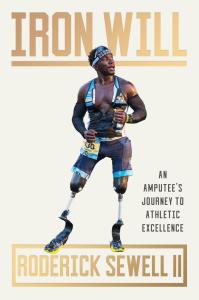
Roderick Sewell II was born without the tibia in both of his legs. Before he turned two years old, his mother, Marian, made the tough choice to have his legs amputated so that he could continue wrestling with his cousins and climbing his grandmother’s good furniture. But when Marian’s modest income couldn’t cover the prosthetics Roderick needed to attend school, she made another impossible decision: to leave her job so that California Children’s Services would pay for Roderick’s prosthetic legs.
Roderick and his mother were left homeless, keeping their long stays in shelters a secret while he learned to swim at the YMCA. All the while, Marian instilled in Roderick the lessons of gratitude, love, and patience to build his confidence in his disability, his identity as a Black boy, and his true passion, sports.
Roderick was still homeless when he met coaches from the Challenged Athletes Foundation. They gave him his running legs, and his life quickly changed for the better. He learned how to challenge his body to become a fierce competitor and athlete—with his mom cheering from the sidelines all the while.
Iron Will is the story of an athlete with an indomitable spirit and proof that a winner’s mindset is about more than physical and mental endurance. It’s about the unique places you can find love, and the rewards of conquering your fears.
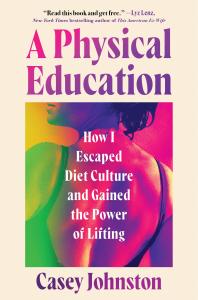
After an abusive relationship, the death of her father, and a running injury that left her limping, Casey Johnston was unmoored, alone, and burned out. Then she stumbled on a viral blog post about one woman’s experience lifting heavy weights—no dieting, no cardio, no weight loss, and no shame or guilt. With zero experience and nothing left to lose, Casey took a deep breath and stepped into Brooklyn’s grungiest gym. Then she began to question how she had treated her body, and what that treatment meant.
Combining wit, rage, and a reporter’s eye for detail, Johnston embarks on a radical mission to understand the process of rupture, rest, and repair—not just within her cells and muscles, but also within her spirit. Her personal story frames a take-down of diet culture, and the ways we try to “get healthy” that actively make our bodies weaker, as she dives deep into the science of rebuilding mental, emotional, and physical strength. This is a sharp cultural critique for anyone who has ever longed to reclaim their body.
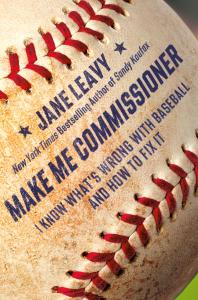
A New York Times bestselling biographer and lifelong baseball devotee takes readers on an epic journey through the game that baseball has become— a heartfelt manifesto that’s perfect for lovers of the sport.
Jane Leavy has always loved baseball. Her grandmother lived one long, loud foul ball away from Yankee Stadium—the same grandmother who took young Jane to Saks Fifth Avenue and bought her her first baseball glove. It’s no coincidence that Leavy was covering the game she loved for the Washington Post by the late 1970s. As a pioneering female sportswriter, she eventually turned her talent to books, penning three of the all-time best baseball biographies about three of the all-time best players: Sandy Koufax, Mickey Mantle, and Babe Ruth. But when she went searching for a fourth biographical subject, she realized that baseball had faltered. The Moneyball era of the last two decades obsessed over data and slowed the game down to a crawl, often at the expense of thrills, skills, and surprise. Major League Baseball has begun to address issues too long ignored, yet the questions linger: how much have these efforts helped to improve the game and reassert its place in American culture?
Leavy takes a whirlwind tour of the country seeking answers to these questions, talking with luminaries like Joe Torre, Dave Roberts, Jim Palmer, Dusty Baker, and more. What Leavy uncovers is not only what’s wrong with baseball—and how to fix it—but also what’s right with baseball, and how it illuminates characters, tells stories, and fires up the imagination of those who love it and everyone who could discover it anew.