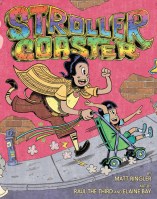




 Matt Ringler on STROLLERCOASTER
The walks were always there from the beginning. First, weaving in and out of the parks along the water near the Governor’s Mansion on the Upper East Side. And a year later, after the break-up, down and around the crowded storefronted streets and avenues of Astoria, Queens. I’d take my daughter out of the apartment and into the neighborhood. It wasn’t about getting quality time together—after that first year, we were always alone together when it was one of my nights. But the apartment was small-going-on-smaller when one of us wasn’t in a good mood. It was listed as a two bedroom railroad but that’s only if you counted one “bedroom” as the room where the living room should have been. We didn’t have a couch. But we had a stroller.
 Marcie Colleen on SURVIVOR TREE
I have yet to meet anyone who cannot recall exactly where they were when they learned of the attacks on September 11, 2001. But for a generation, those born around or after the attacks, that day is ancient history often veiled in curiosity and silence.
We live in a world shaped by those events, yet because of the distressful memories of September 11th, many adults grapple with how to broach the topic with young children. Some even ask why speak of it at all. Over the past two decades we have struggled to let go of the pain and trauma of that day. So many of us still feel the deep scars on our hearts and we want to shelter our children from knowing what we know.