People sometimes ask how I...
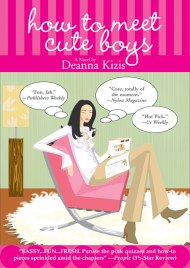
People sometimes ask how I got the idea for How to Meet Cute Boys. Because the book contains articles, quizzes, horoscopes--the stuff you'd expect to find in a women's magazine--and because I'm a journalist, they assume there's something behind the obvious comparisons.
They're right, of course.
Here's what happened: I was working for Elle magazine. I pitched my editors a story--essentially, "Five Dates, Five Silicon Valley Millionaires, Five Days." Silicon Valley had surpassed Alaska as having the highest ratio of single men to single women in the country, so my assignment was to find out if it was really the dating promised land. The story ran, it was amusing to some, and that's how I found myself delving into my personal life for more stories for Elle. My boyfriend was on Viagra and didn't tell me...Why you should never date a celebrity...you get the gist. Of course, this was profoundly humiliating in a certain sense, and strangely hilarious in another sense. I told complete strangers about things like putting on "the good panties" before I went on what I thought was a date, only to have the guy in question tell me the love of his life was going to be meeting up with us shortly. What can I say? Making fun of my life, such as it often is, was liberating but not always easy, and one thing you're not really trained to do as a journalist is to cover yourself. This got me thinking. Were the stories I was telling always the whole story? Did I really have enough space-because magazine articles are shorter then books by necessity-to tell all? What would happen if a fictional character was writing these types of articles, while at the same time having the romantic ups and downs that invariably occur in the real world? This is how Benjamina Franklin and her articles for the fictional Filly magazine came to be.
Putting the idea into practice was harder than I anticipated. Can you interrupt the narrative and still have it be compelling? Will the reader find this frustrating, or fun? My only hope is that, heck, since I divide so much of my time between reading books, taking quizzes in magazines, and scouring them for fashion tips and numerology charts, that readers will find the two mediums compatible.
A fun twist, however, is that now people want to know how much of the book is true. I've gone from a journalist who wanted to tell the story behind the story, to an author writing about a journalist, and now I'm being asked what the story is behind those stories within a story. When people ask such questions, I'd like to assume it's because they themselves have a great break-up tale, a Viagra debacle, and a Silicon Valley millionaire stuffed somewhere in their closet.
Which is why I say, well done ladies! Let's get together sometime and compare notes, shall we?
Copyright © Deanna Kizis