Cage's Bend is dedicated to...
Cage's Bend is dedicated to my mother, Mary Carter Hughes Coleman, who died after a four-year struggle with brain cancer eleven months before the book's publication.
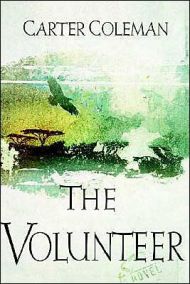
When my first novel, The Volunteer, was published in 1998, Mom packed her Memphis friends into two bookstore signings where, scandalized by the sexual content of some chapters, she told them, "Buy the book but don't read it!"
More than once she told me that Cage's Bend would be a more successful book because it was closer to my heart than the African misadventure that was my first novel. When Tuesdays with Morrie was riding the top of the best seller lists month after month, more than once Mom pointed to it and said, "See, son, he wrote that from the heart and look where it is."
She thought this novel was heartfelt because I was writing it in order to understand my own family. I have long believed that writers choose as their subjects what fascinates them, what they want to explore, what is most important to them. My first novel had taken me far from my roots into a place where nearly all of the characters and action had no connection to my real life. I was simply so taken by the breathtaking setting of Africa that I decided to invent a story to put against it. I knew that my first novel was training to take on a more complex subject-a family. One like my own, with a minister father, three brothers, one afflicted by manic depression. Mom knew that I would simplify and exaggerate and invent, but she knew that I loved all the characters because they reminded me of my own family.
For years at Thanksgiving when we all came together from points across the country, we raked leaves at Elmwood, the "old place" in the country outside Nashville on Cage's Bend Road, where Mom and her mother. In 2000, a year after she got sick and a few months before she could no longer walk, under the gray sky in a cold wind, I remember her crossing the lawn toward me with excitement in her eyes, smiling. Her smile could disarm terrorists. Tugging lightly at my sleeve, she said, "You should call it Cage's Bend."
Regrettably, I didn't note in my journal if she said why. I suppose she liked the way it sounded. I did, too. The main character would take the name Cage, and the old family place on a bend in the Cumberland River would be Cage's Bend. The title would suggest going 'round the bend and the question that if mental illness is a cage, can one break out of it, or do the bars just give a little?
The year before, in '99, after a tumor had hemorrhaged in her head and before her months of chemo and radiation began, I moved from New York back to Memphis. I stayed for the better part of two years, abusing the hospitality of my excellent friend Gil Stovall, who had a spare loft overlooking the Mississippi, walking with Mom every day until she could no longer walk, reading to her until she appeared to no longer hear. Every day when I left her, I would go to my laptop and stare at the screen, bereft and blocked. Stovall said writers were supposed to turn such adversity into powerful art. I couldn't. It was not until late 2001 when I married and moved to London, not until a long distance separated me from my parents' suffering, that I could throw myself into the novel, and finally it flowed quickly. Nearly four hundred pages came in two years. Of course I wonder what she would have said to her friends about the novel this time. "Buy the book but don't read it"? Possibly. She might have echoed her mother, who told me, "It's beautifully written but I wish you hadn't used so many bad words."
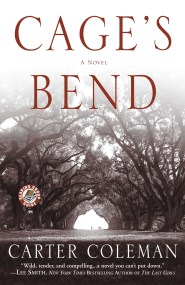
In the last year and a half of her life, Mom would go for weeks, sometimes months, without speaking. In 2003, on her last Christmas, I showed her a proof of the cover of Cage's Bend. She nodded and smiled. Her smile was the last thing to go.
Copyright © Carter Coleman