A few years ago, I...
A few years ago, I collaborated on a magazine feature about a Cornell researcher who'd discovered that pollen from a type of genetically engineered corn could kill monarch butterfly larvae. Another scientist on campus refuted his results, and before long the debate was playing out (loud and sometimes nasty) in the national and international news. On one side were people determined to protect the environment; on the other were those concerned about feeding the hungry. Add in accusations of excessive idealism, selfishness, and-especially-corporate greed, and you had yourself one hell of a story.
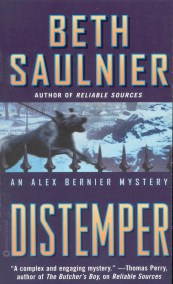
When I was casting about for a topic for my fourth Alex Bernier mystery, the subject of genetically engineered food seemed perfect. I've always gravitated toward the "sympathetic killer," the murderer who somehow thinks he's doing right by doing wrong. I find that kind of skewed morality fascinating, and the so-called "Frankenfoods" debate gave me the perfect opportunity to explore it. Those on both sides of the argument have an ethical banner to fly, and think that their opponents are being unforgivably small-minded. How do you referee a fight with starving children in one corner, and Mother Earth in the other?
I'd already done some research on the topic for the magazine article, but I knew I had a lot more to learn. I interviewed a rice-breeding professor at Cornell, who loaned me some books and (most importantly) confirmed that the rather outlandish scientific project I'd concocted was actually feasible. One of the best tidbits I picked up in my research was the true story of Vavilov's Seed Bank, in which a group of scientists barricaded them inside their institute during the siege of Leningrad-and felt so strongly about preserving the seed bank's biodiversity, they let themselves starve to death rather than eat its contents.
Every mystery series has its little in-jokes and traditions, and mine has several: the rotating cast of cop reporters; the misadventures that befall the vice presidents for P.R. at my fictional Benson University; and especially the ubiquity of protests in Alex's hometown of Gabriel, New York. (And whenever I worry that I'm exaggerating too much, five minutes in real-life Ithaca reminds me that truth is stranger than fiction.) In BAD SEED, the protestors come from the anti-Frankenfoods side and are modeled on events at the World Trade Organization and "actions" committed by the Earth Liberation Front. I wish I could say I made up the idea of people dressing up as vegetables with giant bloody fangs, but the truth is it came right off the evening news.
Anyone who understands the book industry knows that novels are written long before their publication date; I finished BAD SEED in the summer of 2001. It was with a fair amount of regret that I realized, in the wake of September 11, that one of its major themes is domestic terrorism, and that in it I kill someone by blowing up a building. Maybe that gives the story more resonance, but frankly I'd prefer if it didn't; I'm perfectly happy for my books to have a strong element of escapism. I'm not sure how much different BAD SEED would be if I were writing it today, but I'd almost certainly have shied away from the bombing. As it is, at the moment I'm content to be working on a Alex mystery (ECSTASY) involving an utterly different topic, drug overdoses at a music festival. I'm in need of a little escapism myself.
© 2002 by Beth Saulnier